



Most people know that Leif Eriksson and his band of Vikings were the first Europeans to set foot in North America, centuries before Columbus. Some remember that they also settled Greenland, misled by Erik the Red’s skillful marketing into colonizing one of the least green places on earth.
But today, almost no Greenlanders are of Scandinavian extraction. Though still administered by Denmark, the island’s population is over 90% Inuit. So what happened to the Vikings?
Author Jared Diamond in his work Collapse argues they vanished due to two linked causes: climate change and cultural rigidity. The Norse arrived in Greenland during a global warm period, when their traditional methods of farming and cattle-raising could meet their subsistence needs, though tenuously. As the climate cooled, these methods became unviable. Instead of adapting to Inuit techniques like seal hunting, the Greenland Norse clung to what they knew. Slowly, their society withered. Most returned to Europe, a small number assimilated, and the remainder died; freezing in wooden homes they refused to abandon for the igloos that would have kept them alive.
Like the Vikings, we face a changing climate today, and like them, we risk refusing to adapt. One of the clearest symbols of our cultural rigidity is our attachment to cars and the sprawling infrastructure that must be built to accommodate them.
Connecticut’s HB 5002, a housing bill recently passed by the legislature, aimed to push back against this by lifting parking mandates for small-scale residential developments. But its implementation now hangs in the balance, as opponents on both the left and right cling to one question: “Where will we park?”
This bipartisan resistance appears to be rooted in common sense, but is shortsighted. In an era of climate change, housing scarcity, and dysfunctional transportation systems, it’s exactly this kind of inflexible attachment to tradition that threatens our future.
We’re told that cars are convenient, even essential. But anyone who’s lived in Connecticut knows that that convenience is a myth. Visit any highway –I-95, 91, 84 –and you will most likely be at a dead-stop at least once. For 25 years, my father drove a commute that should have taken 30 minutes but almost always stretched past an hour.
Five days a week, for decades, he sat idly in a metal box, losing precious hours in excruciating traffic. Multiply that by thousands of lives across the state and you begin to see the scale of the loss; of time, energy, and connection. Even putting aside the lack of convenience, cars are dangerous. America’s love of hulking vehicles kills tens of thousands every year, despite advances in safety features, and emits roughly 28% of America’s total carbon output. In the face of these drawbacks, we still cling to the myth of the personal automobile because we assume that the alternatives are too impractical.
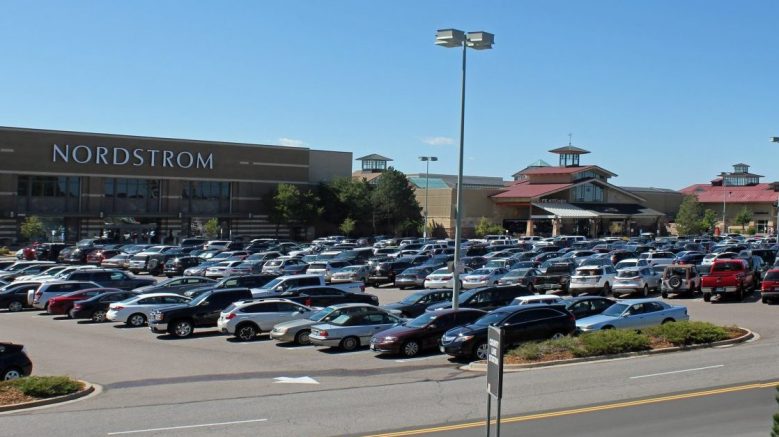
HB 5002 includes a provision to eliminate mandatory parking minimums for small-scale residential development. Basically, it gives builders the freedom to build homes without being forced to design around cars. Its opponents insist that more housing will make traffic worse, but they misunderstand the issue.
The only way to reduce traffic is to reduce the need for cars. Parking requirements that force developers to sprawl their buildings, separate land uses, and decrease density kills walkability, makes biking unappealing, and handicaps public transportation. If we want less traffic and fewer emissions, we have to stop designing everything around where the car will go. Let developers decide if parking is necessary, and let the rest of us step into the sunshine and stretch our legs for a change.
Connecticut needs more housing. Its lack of affordable housing options is pushing those who have the means to flee to other states, and those who don’t out onto the street. HB 5002 addresses this crisis by rationalizing the regulatory landscape, freeing us from outdated planning that elevates car travel. By easing parking mandates, it opens the door to a new kind of Connecticut, where people can walk to get groceries, bike to the movies, or take the train to the airport. Yet opposition to this bill reveals a deeper resistance: not just to the policy itself, but to change. Sometimes we cling to the past without considering whether that past is worth preserving.
Some defend America’s car-centric culture as a matter of tradition. But tradition is not automatically a virtue, nor does it only strengthen societies. The Qing emperors dismissed European traders as uncultured barbarians, until they were overrun by those same barbarians wielding cutting-edge industrial technology. Throughout history we see that great powers fall due to ritualized stagnation. When cultural habit replaces solutions-oriented curiosity, decline follows. Parking minimums are a ritual: an unquestioned norm that blocks progress. It may seem small, but it represents a stumbling block to our nation’s continued prosperity.
Unless we embrace change over sentimental custom, America may very well go the way of the old Chinese Dynasties and the Greenland Vikings: dominated by younger, more ambitious states, or quietly disappearing into the pages of history.
Matthew Silber lives in Norwalk.