



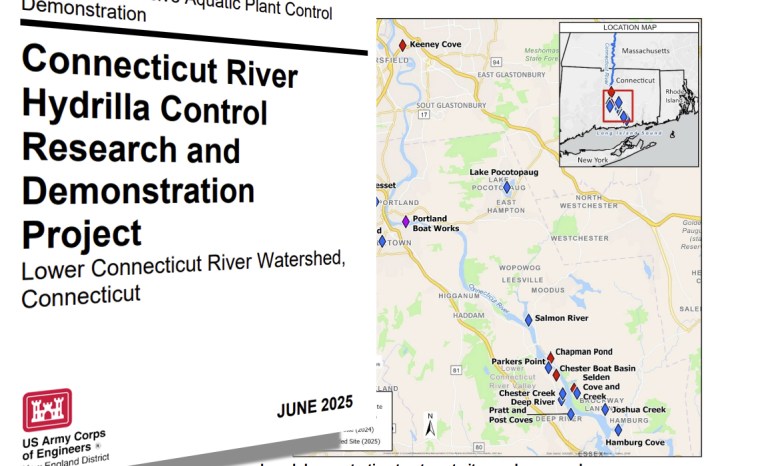
Connecticut gave permission to dump poison in the Connecticut River
And no one voted for it. No one even told you. But it’s real. It starts right after July 4th.
While most people are grilling and watching fireworks, a quiet but deeply consequential operation will begin. The U.S. Army Corps of Engineers and Connecticut’s DEEP will start injecting diquat dibromide, an herbicide banned in the European Union into public rivers and lakes.
The target? An invasive plant called hydrilla. The truth? This is a chemical shortcut. One that risks ecological collapse, damages native species, and puts public health in the crossfire.
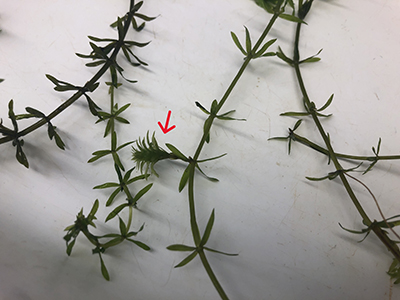
Yes, hydrilla’s a real problem. No one’s denying that. But spraying entire ecosystems with high-collateral poisons is like napalming a neighborhood to kill weeds in one yard. It’s not management. It’s failure.
And if it feels like a sci-fi plot, it is.
This is exactly what happened to Arthur Dent in The Hitchhiker’s Guide to the Galaxy. Some bureaucrat signed off on demolishing his house to make way for a bypass because “the plans were posted.” Now replace the house with a river. Replace the demolition company with the Army Corps. And replace the bypass with a toxic herbicide treatment that nobody knew was coming. Some pencil pusher woke up and decided our rivers needed purging. He doesn’t live here. He doesn’t swim here. He doesn’t drink from it. But his signature just altered your ecosystem. Colonel Justin R. Pabis signed the final authorization.
Yet if a private company tried to dump these toxins, you’d have cops and hazmat trucks blocking them within the hour. But because this came with a PDF and a federal logo, it sails through? Where’s the National Guard? If the governor gave a damn, he’d halt this right now and demand public hearings. Because no one gave consent to chemical warfare against a river.
This isn’t how a free people treat public water. This is how a collapsed bureaucracy poisons it. Because no one consented to this. No town hall. No vote. No opt-out.
This isn’t how a free people treat their water. It’s how a collapsed system poisons it.
Diquat dibromide is a bipyridyl herbicide. It kills by oxidizing plant cells on contact.
It doesn’t discriminate. It destroys all green tissue it touches. And it sticks in the sediment. It lingers.
It’s banned in Europe. It’s linked to fish kills. It’s dangerous to humans. But it’s coming to: Chester Creek, Hamburg Cove, Selden Creek, Salmon River, Deep River and Lake Pocotopaug. All of them.

These are public waterways. You use them. Your kids use them. Wildlife depends on them. There is no long-term monitoring plan. There is no consent. Just a quiet federal rollout.
And here’s the kicker: This is a pilot program. If they normalize chemical warfare on Connecticut rivers, this template spreads. To Massachusetts. To Georgia. To New York.
To everywhere.
And you know the reason why? Because its easier to poison us than do the real work to remove the plant. And the real worst part? They are not even that difficult. They make boats designed for this exact purpose. And the worst of all worst parts? They don’t even know if the plant is even that harmful in the first place. Its in their own PDF, section 4.6 It basically says the plant might be bad, but it might not.
This isn’t management. It’s pure laziness with brute force — a bulldozer.
And we don’t need more patches. We need ecological intelligence.
Speak now, before your river is next.
John Barker lives in East Hampton.
[An earlier version of this commentary incorrectly attributed a remark about the issue to Gov. Ned Lamont. The governor has made no public statement on this issue.]