

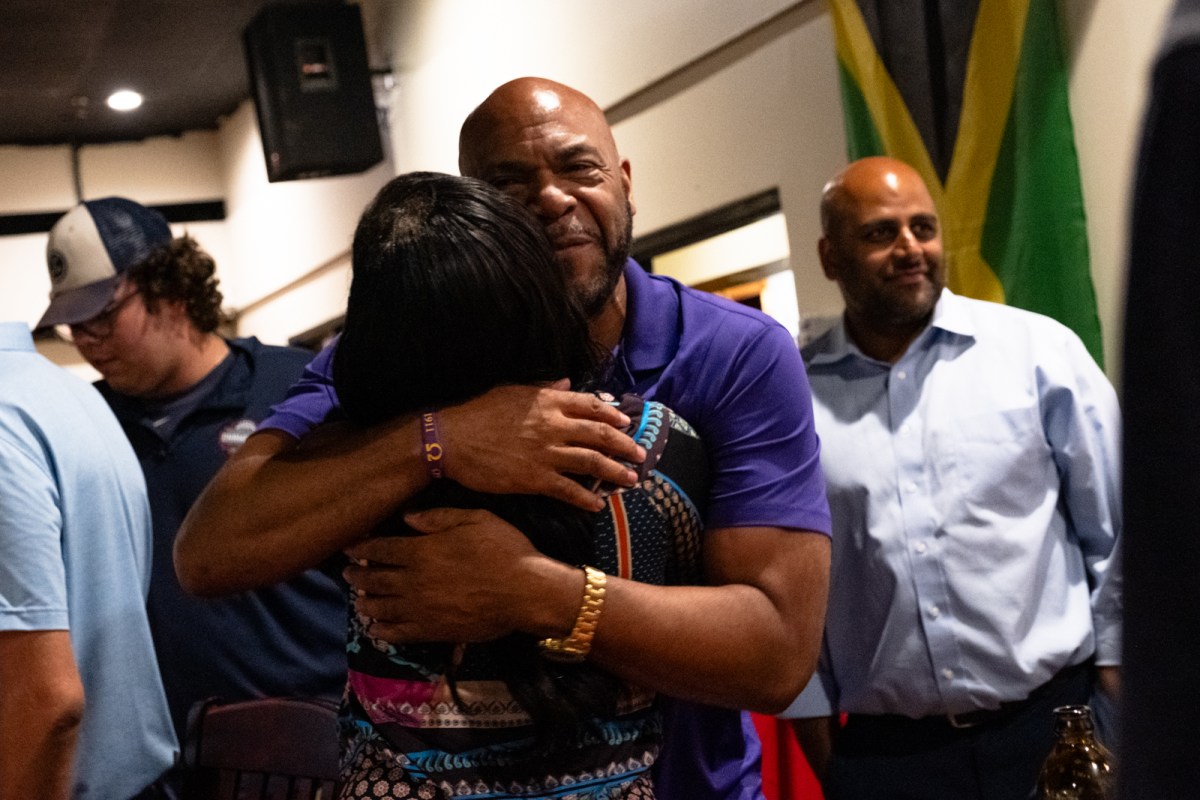


A few nonprofits serving constituents of Sen. Doug McCrory of Hartford did extraordinarily well when COVID relief arrived through the federal American Rescue Plan Act.
Funding for one, the Blue Hills Civic Association, tripled to $1.32 million one year, then quadrupled to $5.62 million the next.
The ARPA money was easy, flowed fast and came with a hard end date. It benefited the constituents of far more lawmakers than McCrory. And it whet the appetite for more.
The FBI is now investigating McCrory’s role in obtaining grants for nonprofits, and it comes during a time when Connecticut lawmakers are enjoying a golden age of grants that come with minimal vetting or transparency.
As the ARPA gusher began to go dry — the last of the money was obligated last year and must be spent by Dec. 31, 2026 — the state legislature’s Democratic majority tapped a new well: Appropriating nearly $60 million over two biennial budget cycles for unrestricted grants to be distributed at their discretion.
Earmarks, an endangered species after the arrival of the Great Recession of 2008 and start of decade-plus fiscal crisis in Connecticut, are flourishing.
The two-year budget adopted in 2023 directed the state Department of Economic and Community Development to disburse $17.9 million over two years from a line item labeled “various grants” — an unheralded new source of earmarks. The new biennial budget adopted in June more than doubled it to nearly $39 million.
“Legislators were very used to, with the ARPA dollars, having the capacity to help out different organizations within their communities,” said Sen. Cathy Osten, D-Sprague, co-chair of the Appropriations Committee. “And that’s how this has sort of blown up.”
The unrestricted DECD line item is sending money this year and next to more than 120 recipients, none of whom had to submit applications. The only requirement is to know a lawmaker on good terms with the House and Senate Democratic leaders or their top aides.
“It’s asinine,” said Rep. Tammy Nuccio of Tolland, the ranking House Republican on Appropriations. “There’s no vetting.”
Other funding — sometimes blandly labeled as “other expenses,” other times in accounts with names suggesting a purpose — also is directed by lawmakers to chosen recipients in grants distributed by other agencies.
Some are noted in budget working documents obtained by The Connecticut Mirror as priorities of “SD” or “HD,” short for Senate Democrats and House Democrats. There is $2.9 million in the state Department of Education budget labeled “Senate earmarks” and $1.7 million for “HD priority earmarks.”
“We are now patronizing public officials’ wants and desires, as opposed to vetting these projects and letting them stand on their own two feet,” said House Minority Leader Vincent J. Candelora, R-North Branford.
The impulse to earmark, to bring home the bacon, is as old as politics. When Connecticut had divided government — Republican governors held office for 16 years until January 2011, most often with Democratic legislatures — such spending greased the wheels of government.
The earmarks
How does one get an earmark today? That turned out to be an awkward question.
“It is really a process where individual legislators make an ask. I mean, I don’t know how else to put it,” said House Majority Leader Jason Rojas, D-East Hartford.
Senate Majority Leader Bob Duff, D-Norwalk, said, “I think there are a lot of different entry points.”
House Speaker Matt Ritter, D-Hartford, was slightly more effusive, acknowledging the answer can depend on who is doing the asking, where the money is going and what are the financial and political needs of a district and its representative.
“What do I look for? Is there an interesting story to be told, something where you sort of are sympathetic to the cause?” Ritter said. “Is it just simply a member that is in a tough district? Is it a member you really like? I mean, there’s different reasons you might give a grant like that out.”
It wasn’t like you could take the ARPA money and just sit on it.
House Speaker Matt Ritter
Candelora’s concerns echo those periodically voiced by the Auditors of Public Accounts, a legislative agency overseen by a Democrat and a Republican. In 2001, the focus was grants that flowed through the Office of Policy and Management, not the Department of Economic and Community Development.
The concerns were that the grants were inequitable, issued at the direction of politicians without vetting or competition, and too rarely were subjected to analysis of their efficacy.
“We were informed that the Other Expenses grants are issued by OPM without solicitation, but merely upon communication from political leaders,” the auditors wrote at the time. “Final reports and/or State Single Audits regarding the grantees’ use of funds were not always available or pursued. There was no evidence available to suggest that an evaluation of the relative merit of the projects was performed.”
ARPA funds are subject to audits.
Ritter said most of the earmark recipients are long-established organizations with clear missions. Some are municipal agencies. But he acknowledged the FBI investigation has heightened sensitivity about process and accountability.
“As someone who represents Hartford, and reading what I’m reading, I’m the first one to say the mechanisms could be better,” Ritter said. “There needs to be more checks and balances in place. No question about that.”
So far, the FBI investigation appears to be narrow, focused on McCrory and his relationship with a woman who runs a nonprofit and consults for others, and with several nonprofits that have obtained state funding with his support.
Earlier this month, federal prosecutors issued a subpoena seeking emails, financial records and other information from the DECD regarding McCrory and a dozen non-profits and other entities, including three well-established with a presence in his district: Blue Hills Civic Association, Upper Albany Neighborhood Collaborative and the YMCA of Greater Hartford.
One potential witness, an executive with deep familiarity with Hartford’s nonprofit ecosystem, told CT Mirror that they and others first were interviewed by the FBI in 2023, after the ARPA money began flowing. The person declined to be identified. The U.S. attorney’s office declined to say when the investigation began.
Connecticut state government’s share of ARPA funding was $2.8 billion, spread over five fiscal years. About $119 million went to nonprofits.
“What happened during ARPA was A) we had so much money, but B) it had to be spent. That’s what people forget,” Ritter said. “It wasn’t like you could take the ARPA money and just sit on it. And there was real concern at some point, like, can we actually spend all of this, get it out the door?”
No accounting
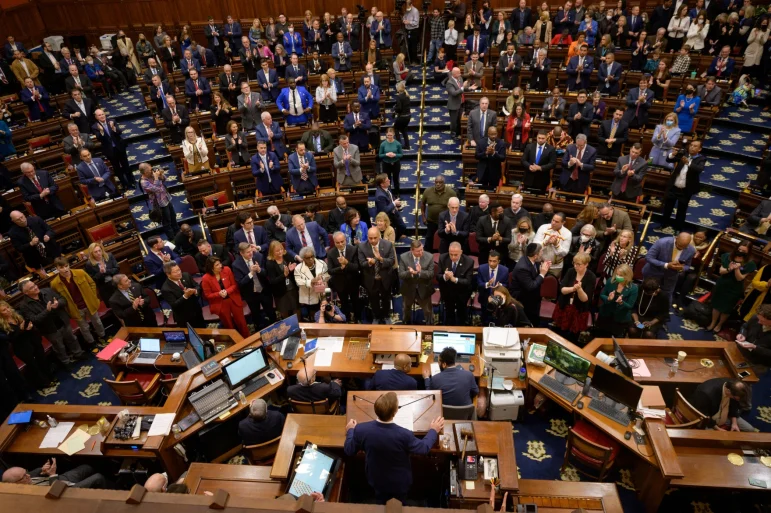
There is no precise account of what funding McCrory or any other legislator has helped deliver to grantees, either with state or federal funds. Unlike in Congress, where members publicly list their recommendations for earmarks, the General Assembly maintains no record of individual legislators’ requests for directed spending in their districts.
The U.S. Congress banned earmarks in 2011 then reinstated them with greater accountability in 2022 as “congressionally directed spending” in the Senate and “community project spending” in the House.
“Under the new system,” according to the Government Accountability Office, the nonpartisan congressional watchdog, “Members must provide information, such as the purpose and recipient of the funding to ensure no conflicts of interest. Another requirement is that GAO get involved in tracking the funds.”
None of that is required by the Connecticut General Assembly.
In the recently adopted budget, the intended recipients of funds from the DECD’s various-grants line are not identified.
There are no parameters on what that line item is for.
Matt Pugliese, deputy commissioner, DECD
But a budget worksheet obtained by CT Mirror lists more than 120 recipients in the two fiscal years, with annual awards ranging from $2,500 for the Iwo Jima Memorial Historical Foundation in New Britain to three grants of $1 million: for parks in Manchester, the Upper Albany neighborhood of Hartford, and to a “Consortium of 3 Faith Based Organizations” for counseling, mentoring and youth violence prevention.
No other details are available.
The unrestricted various-grants line items in the DECD budget are unlike others administered by the agency, which generally has an open application process and statutory or agency standards for when the money can be paid and how it can be used.
With no applications from which to work, the DECD sometimes has to track down the recipients intended by lawmakers for the unrestricted grants.
“We have to literally track down and figure out what the organization is,” said Matt Pugliese, a deputy commissioner at DECD. “Sometimes you have two organizations with very similar names. We do a little bit of detective work, confirm with the legislature that this is the entity that was intended in the budget.”
The DECD will execute a contract with few requirements. Recipients have until the end of the fiscal year to expend the funds.
“The organizations are supposed to provide a report to us at the end of the fiscal year as to how the funds were spent,” Pugliese said. “But, just to be clear, there are no parameters on what that line item is for. It can be used for operational expenses, could be used for a new program. It could be used for a capital project.”
The contrast with the Community Investment Fund, one of the competitive grants programs administered by DECD, is stark. It was created in 2021 as a compromise struck to overcome Gov. Ned Lamont’s tightfisted approach to borrowing for earmarks sought by lawmakers.
Lamont agreed to $175 million in annual bonding for five years for local capital projects awarded through the Community Investment Fund, which imposed transparency, standards and accountability on a process that was formerly ad hoc, often reflecting the influence of a single lawmaker.
Vetting is by DECD staff, which looks for broader community support and local financial contribution. Approval comes in a public vote by an oversight board co-chaired by Ritter and Senate President Pro Tem Martin M. Looney, D-New Haven. The grants have gone to governments and nonprofits in 35 of the 55 communities that meet eligibility standards assessing economic need and poverty.
State procurement rules, such as obtaining multiple appraisals to purchase land, are enforced.
Youth Services Prevention Grants
A decade ago, the legislature’s Black and Puerto Rican Caucus negotiated an unusual deal that has held to this day: the creation of Youth Services Prevention grants, their recipients chosen by caucus members.
Each of its 37 members can direct $150,000 annually in grants, up from $100,000 in recent years. This year, for the first time, four South Asian lawmakers were allotted the same. The grants are administered by the Judicial Department.
Members of the Black and Puerto Rican Caucus say their handling of Youth Services Prevention Grants might provide a model for improving the performance of other grant recipients.
Rep. Toni Walker, D-New Haven, a caucus member and long-time co-chair of the Appropriations Committee, said the grants were negotiated after the mass shooting at Sandy Hook Elementary School in Newtown.
Urban lawmakers and community advocates said the killing of 20 students and six educators was understandably galvanizing, and it led to passage of some of the nation’s strongest gun safety laws. But they said the reaction underscored to them the tolerance of a steady and largely unnoticed of violence claiming the lives of urban young.
The Youth Service Prevention grants and a related Youth Violence Initiative were the responses from legislative leaders.
Part of the earmarks controlled by the caucus are paying the Tow Youth Justice Institute and the University of New Haven to develop and run a performance-based accountability tool to train and assess Youth Service Prevention grantees.
“When you try and demonstrate the inequities of things that are going on in different neighborhoods, you’ve got to have the data to prove it, and then you’ve also got to prove there are better ways of doing it,” Walker said.
The Judicial Department requires grantees to report an annual summary of activities and individuals served but does not do a performance evaluation.
Rep. Antonio Felipe, D-Bridgeport, the chair of the Black and Puerto Rican Caucus, said the project with Tow takes the next step.
“It’s really laid out in a way that holds folks accountable, make sure they’re doing the work they say they’re doing, and doesn’t make this just a pot of money that goes poof — but something we can really point as making an impact,” Felipe said. “I think that our model is something that folks should feel free to try to emulate.”