Being unhoused is now a crime in the United States. That seems to be the message President Donald Trump sent by deploying the National Guard in Washington, DC, in response to a “crime emergency” despite 30-year low crime rates.
On July 24, he signed an executive order calling for the removal of unhoused individuals from public spaces and their forced placement into institutions like for-profit prisons —without any plan for due process or rehousing. This anti-homeless rhetoric is echoed across the country, including in New Haven, where police, city workers, and “outreach staff” conduct encampment sweeps.

After interviewing over a dozen unhoused people in New Haven this summer, my takeaway was clear: these sweeps only reinforce the cycle of homelessness.
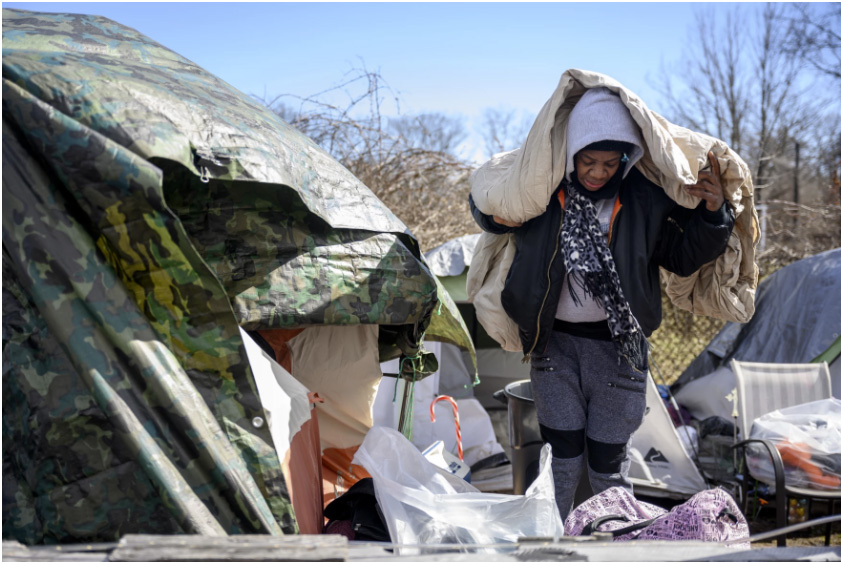
An encampment is defined as the congregation of at least one person in a public space as a means for shelter, with sweeps serving as the eviction from this land by city officials. Typical sites for encampments include wooded areas, underpasses, train stations, parks, and vacant lots.
The main reasons for selection include security, a sense of community among other unhoused people, and proximity to various services in the city. Site choice is rational and survival-based. Unhoused people in New Haven must exist unseen to balance safety, access to resources, and avoidance of police harassment and other types of aggressive enforcement.
The city may claim that sweeps serve to maintain public spaces; however, their actions are indefensible without offering real alternatives. As one unhoused resident put it: “They need to start housing the homeless if they want to conduct sweeps.”
The current alternatives —warming centers and shelters— are inadequate. While they provide relief for some, many of the interview respondents I spoke with outlined critical flaws. One said they had been placed at number 937 on a local shelter waitlist, underscoring the crisis of capacity. Those who were able to get into shelters expressed dissatisfaction with the facilities, highlighting inadequate supplies, undertrained staff, and major security concerns. The shelters’ inability to care for everyone’s needs coupled with the shortage of affordable housing lies at the foundation of the homelessness crisis.
Interview data demonstrates this instability. Most of the respondents had been unhoused previously, many citing cycles of prior encampment sweeps, incarceration, and job loss. Many reported being without shelter for over a year, and several had been without shelter for at least five years. This highlights long-term systemic displacement. Compounding this, nearly half of respondents said they received no official notice from city officials before a sweep, denying them even the pretense of due process.
As a consequence of these sweeps, respondents reported losing sleeping bags, tents, clothing, vital medications, legal/identification documents, electronic devices, cash, and even sentimental memorabilia. One respondent stated losing stuffed animals they received from a cherished family member. Many watched as city workers tossed their belongings into garbage trucks, with little or no information about retrieval. These losses stripped away necessities for survival, anchors of personal identity, and documents essential for escaping poverty. Encampments, fragile as they may be, provide community and stability; sweeps destroy both.
It is clear that these sweeps do nothing to address the root causes of homelessness. Instead, they destabilize lives, exacerbate health and safety risks, and entrench cycles of poverty. As long as homelessness is framed as a criminal act, these dehumanizing and ineffective measures will persist. And with public land stripped away, shelter capacity scarce, and affordable housing out of reach, the question remains, where else shall they go?
But it doesn’t have to be this way. Evidence from across the country shows that real solutions exist. The “housing first” model, which provides permanent supportive housing with wraparound services, has been proven both more effective and less costly than endless cycles of shelters, sweeps, and policing. Houston, for example, has dramatically reduced homelessness by investing in permanent housing, eviction prevention, and coordinated services.
While New Haven has taken some steps to expand affordable housing, the shortage remains severe. Other municipalities need to follow suit—and the governor’s veto of HB5002, a bill that could still pass in special session, only stalled further progress. New Haven—and Connecticut more broadly—could do the same. Expanding housing-first programs, investing in rental assistance and eviction diversion, strengthening tenant protections through measures like just cause eviction laws, designating public spaces for transitional housing such as tiny homes or sanctioned encampments, and guaranteeing transparency and due process during any encampment action are all concrete, proven steps. Temporary shelter is not enough; treating unhoused residents with dignity requires political will to make housing a human right.
Homelessness is not a crime. It is the predictable outcome of decades of failed housing policy. The question is whether Connecticut will continue punishing people for being poor —or commit to real solutions that break cycles of displacement and affirm housing as a right for all.
Shreyas Nair is a member of U-ACT the Unhoused Activists Community Team.