


Stamford’s transit history is rich and fruitful, yet the world continues to pass by without us looking back.
The first train arrived in Stamford almost two centuries ago and still today we ride these same trains that connect us deeper into New England and New York City. From wealthy businesspeople to blue collar workers, we all share one space in common: transit.

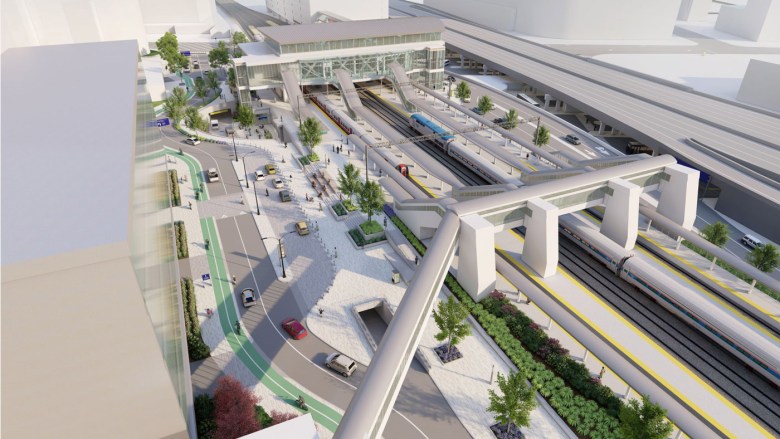
With the most expensive high school in New England history, we have another expensive infrastructure project under planning for our city. The Stamford Transportation Center Master Plan may improve our downtown transit center; but it is not the solution to the problem this city faces.
Like many cities in the U.S., our city has a car dependency problem and unlike many other U.S. cities, Connecticut cities have the potential for the most expansive transit networks in the United States. Our urban planning has been kept mostly intact below the Bulls Head intersection and there is massive potential for us to get back to our times of transit glory.
The Stamford streetcar network was one of the most expansive in all of New England when it started rolling back in 1894. It connected up and down Route 1 to Norwalk and Greenwich, throughout Glenbrook and Springdale, up the historic Bedford Street and past Washington Boulevard. It made our city accessible, not just for the few but for all. Everyone loves to talk about traffic on our streets, but no one wants to talk about the real solution: public transportation.
The Connecticut Department of Transportation and lawmakers in Hartford provide CT Transit with the money to do the bare minimum in our cities. Even with a recent federal grant providing brand new electric buses it hasn’t changed the fact that the frequencies are not often enough, the routes don’t cover every part of our city, there are not enough dedicated busways, there are no orbital connectors, they don’t run late enough, and have loop routes on weekends and evenings.
Hundreds if not thousands of commuters in our city drive right past a bus station every morning on their way to work or the train, perhaps even passing the exact bus that is already going where they are going. These buses are nice, but there has not been enough of a push to make people aware of our transit system and that is not the fault of the residents; it is the fault of our city government and CDOT.

While our city government has made a push to make biking in our city safer, they have forgotten about the one form of transportation that is truly accessible to all: the bus and rail. Since our former Mayor Dannel Malloy was making a push to be the Transportation Secretary during the 2016 Clinton Campaign not one lawmaker has brought up the subject of transportation in any serious capacity. The 2010 planning for streetcar network rebuilding in Stamford and New Haven has been all but forgotten and, in a period where the federal government has been hesitant in its transit spending and the state has been lacking true innovation and out-of-the-box thinking, it must be noted that a time for real change is needed.
While our governor has done an excellent job controlling many issues that our state faced eight years ago, such as the state pension debt, there must be a new push to address the problems we have now as well. Stamford, New Haven, Bridgeport, and Hartford will struggle with growth if we do not push for higher spending on transit projects and operations.
People in power must begin to think about a new future for transit in Connecticut or it will be a dark future for our state’s biggest cities and suburbs. The glory days may be behind us although much of the work has already been done to show that it is possible to get more people on transit. Unless the urban planners in Hartford want to have a new push for streetcars or even just an orbital bus system that is not only hub and spoke they will not help enough people, not now, and not ever.
It is time the politicians come to realize that ridership does not indicate your budget like we have seen with the current trickle flow of funding towards Shore Line East , instead to quote a great movie about the American Pastime “If you build it, they will come.”
Isaac Theodore Reicin is a lifelong Stamford resident and undergraduate student at The University of Vermont.