


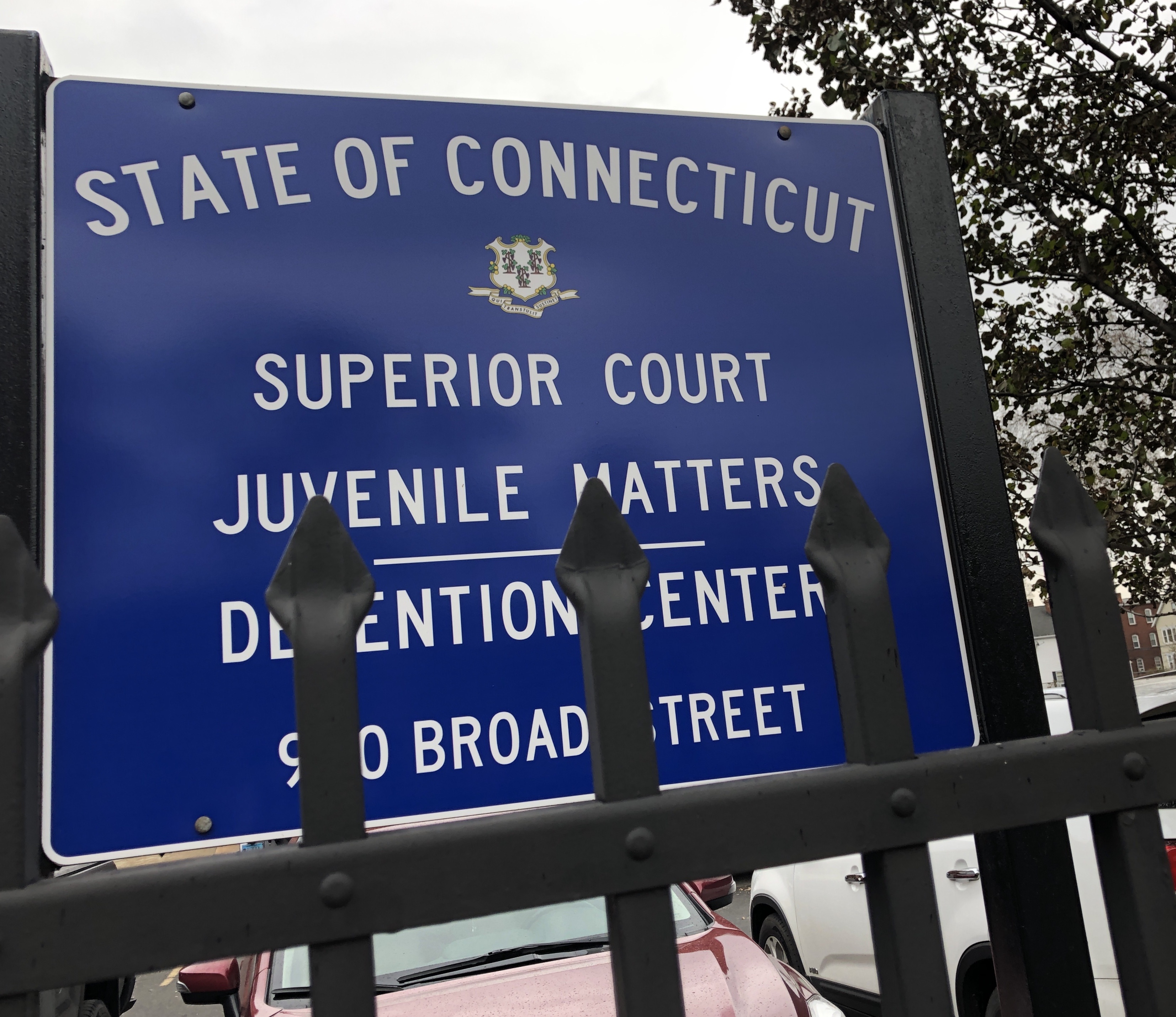
State and local Tolland officials say they were blindsided this week when the Judicial Branch revealed it intended to open a juvenile detention facility in their community.
Tolland Town Manager Brian Foley wrote in a Facebook post on Thursday that he only found out about the 20-bed facility’s location, which is planned for 303 Merrow Road, after being contacted by the town’s state representative, Republican Tammy Nuccio, on Tuesday.
“At no time did the state of Connecticut make contact with, or provide notification to, the town of Tolland; in fact, this was conducted in private without public hearings,” Foley wrote.
In a Friday statement, Judicial Branch Chief Court Administrator Joan Alexander said that the property in Tolland had been identified after a lengthy search, and that she regretted that “lines of communication with all stakeholders were not as strong as we would have wished.”
“Going forward, it is our intention to foster an open dialogue with area legislators, town officials, our partners in state government, and other interested parties to discuss any concerns that exist and to ensure that the goal of creating a safe environment for Connecticut’s youth to learn, to grow, and to succeed moves ahead,” Alexander said.
Foley said that his staff discovered that the state Properties Review Board had held a meeting in executive session regarding the property. The meeting, which occurred on Nov. 12, included a real estate agent for Berkshire Hathaway and the property owner, Kevin Bouley. The property is on Route 195, just south of Interstate 84 on the way to the University of Connecticut’s Storrs campus.
Nuccio told the Connecticut Mirror that she learned Tuesday about the plans for a Tolland juvenile detention center from a Judicial Branch official just prior to a meeting of the Appropriations Committee. She said the last-minute notification reflected “a continuation of the lack of transparency and accountability” that has typified state government in recent years.
“There has been no consultation with the local reps, the senators, or the local government,” said Nuccio. “This has all been done to the town of Tolland and not with the town of Tolland.”
Sen. Jeff Gordon, R-Woodstock, whose district includes Tolland, said he is concerned about the location of the detention facility, which he said is in an area that is heavily trafficked by UConn students and where the town is attempting to develop its commercial district.
“We couldn’t support it in the area. You can’t put a 20-bed criminal youth detention center … within a mile of two daycares and within a mile of an elementary school and across the road from a busy supermarket and a whole bunch of new residential housing going in,” Gordon told CT Mirror.
Gordon also raised public safety concerns, noting that the town does not have its own police force, instead relying on a resident state trooper.
“Things done in secret like this by state government are a huge disservice to the people of Tolland. It is massively disappointing that the Judicial Branch and state government would behave this way. It is obvious that they did not want the people and town government of Tolland to know till the deal was completed and thereby limit what could be done in response,” Gordon wrote in a Facebook post.
Gordon said there might be a more isolated place in Tolland that would be suitable for a juvenile facility and said he would have been open-minded about other locations.
Foley also raised concerns about the location of the site.
“While some may characterize our residents’ concerns as classic NIMBY-ism (“Not In My Backyard”), one could argue that this is not our backyard — it’s our front yard. This property sits on our main thoroughfare within our primary business district corridor,” he wrote.
Foley said that the town is considering any potential economic, fiscal or public safety impacts that the new facility might present.
“ We’re not passing any judgment, but the secrecy is confounding and unfair. And we’d like to know whose decision it was to keep it in secret, and why,” Foley told CT Mirror.
In a budget presentation at the Appropriations Committee on Tuesday, Gary Roberge, the executive director of the Court Support Services Division with the Judicial Branch, told lawmakers that the Judicial Branch has been trying for the past eight years to find a place where they could house young people who need to be placed in a residential, therapeutic setting. He said they had put out more than six Requests For Proposals without success and had looked at over 30 possible facilities.
The Tolland residential treatment facility would join several other REGIONs programs operated in juvenile residential facilities in Hartford, Hamden, Bridgeport and Mansfield.
REGIONS, which is designed to last for six months to a year, provides teens with education, job training and recreational activities as well as a variety of therapies addressing trauma, managing emotions, improving family relationships and dealing with substance abuse. The program’s purpose is to help young people address challenges they were facing in their homes and successfully reintegrate into their communities.
“REGIONS is a comprehensive treatment model designed to ensure that adolescents directed by the Court are put on a path of success,” Alexander said in her statement on Friday.
Roberge said the Tolland facility would house up to 18 teenage boys who are currently being held in state juvenile detention centers in Hartford and Bridgeport, which were not meant to house the young people for a long period of time.
The state Bond Commission approved $2 million in borrowing on Oct. 22, 2024 for the Judicial Branch for “acquisition and development of a secure residential treatment center” as part of the REGIONS program. The funds could be used for “design, site selection and land acquisition” according to meeting minutes, but those records do not mention the Tolland parcel or any other specific location.
Roberge said the agency planned to acquire the property using the capital funds that had already been authorized in bonding, and that they would ask for additional money from the bond commission. He said they hoped to close on the property within the next 60 days.
The state can not purchase the Merrow Road parcel without approval from the Office of Policy and Management. OPM spokesman Chris Collibee confirmed at noon on Friday that the agency has reviewed the potential purchase, at the request of judicial branch officials, but OPM Secretary Joshua Wojcik had not signed any purchase and sale agreement.
In testimony to the Appropriations Committee, the Judicial Branch said they planned to open the facility by 2029, and that they would ask for operating funds from the legislature in the next two fiscal years.
Foley said the facility will likely be on the agenda for the next Town Council meeting on Feb. 24 at 7 p.m.