


The task of crafting a state budget is never easy.
And with shrinking federal aid, complex state budget gaps and pressure growing to offset Connecticut’s high cost of living, lawmakers are scrambling to adopt a new fiscal plan before the 2026 session closes May 6.
Three of the legislature’s four caucuses — Democrats in the Senate and both parties in the House — have produced detailed plans on spending and revenue. Gov. Ned Lamont began the debate with his own budget proposal on Feb. 4, the session’s opening day.
But Senate Republicans, the caucus that has proposed far more tax relief than any other, has decided to play their cards close to the vest.
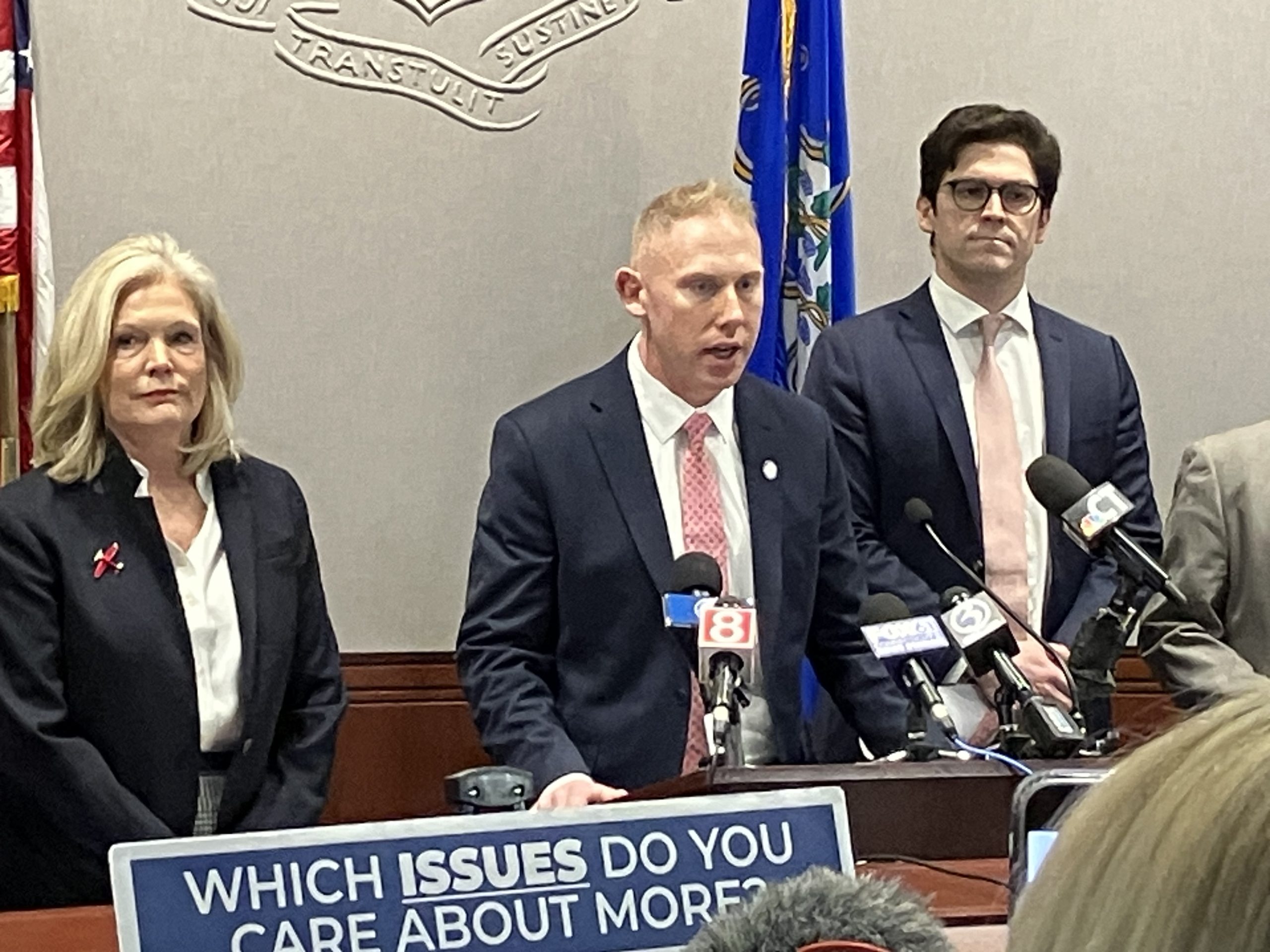
Minority Leader Stephen Harding, R-Brookfield, who had told the Connecticut Mirror on April 1 that he expected his caucus would release a detailed budget proposal, said this week Senate Republicans have decided against that. But he didn’t rule out the possibility his caucus may offer amendments to reshape the next state budget when a final plan is debated in the coming days on the Senate floor.
“It’s completely fair to wait and see,” Harding said, adding that Democrats, by virtue of holding majorities in the House and Senate, bear the responsibility of crafting the first legislative budget proposals.
Democrats met that burden on March 31 when the Appropriations Committee adopted a $28.7 billion spending plan for the fiscal year that begins July 1, and on March 30 and 31 when the Finance, Revenue and Bonding Committee adopted a package of tax and other revenue adjustments.
Those plans included hundreds of millions in relief involving new income and sales tax credits, along with new Medicaid investments to broaden access to health care. But they also relied on unconventional use of the state surplus to work around Connecticut’s spending cap.
Harding’s caucus often has chastised Democrats for not adhering strictly to state budget limitations. Meanwhile, the Senate GOP two months ago proposed an unprecedented relief package that could return as much as $1.5 billion — more than 5% of the General Fund — to taxpayers.
But Democrats note Senate Republicans never released that giveback proposal in the context of a full budget.
In other words, can they really deliver this relief without taking away other vital services or tax breaks?
Senate President Pro Tem Martin M. Looney, D-New Haven, and Majority Leader Bob Duff, D-Norwalk, issued a joint statement Monday challenging their Republican counterparts to prove their claims.
“With the clock ticking down on this legislative session, there is still nothing on paper,” Looney and Duff wrote. “The public, the media and legislators have no bill number, no fiscal analysis and no public hearing. Just more campaign talking points and empty promises.”
The Senate Democratic leaders also noted that, based on state analysts’ revenue projections, the GOP plan would eliminate nearly all surplus funds in future years, potentially pushing state finances in deficit.
Looney and Duff added, “Connecticut families deserve better from their elected representatives than a press release dressed up as legislation.”
House Speaker Matt Ritter, D-Hartford, didn’t address the Senate Republican Caucus’ decision not to release a spending plan directly but said, “I was appreciative that the House Republicans proposed a budget.”
Minority Republicans in the House did not criticize their Senate counterparts on April 13 when the House GOP released a $27.9 billion budget, complete with hundreds of line items. But House Minority Leader Vincent J. Candelora, R-North Branford, said it was important to his caucus to show exactly how it could provide more than $400 million in annual tax relief and boost municipal aid by more than $330 million next fiscal year.
House Republicans, who also argue for strict adherence to state spending limits, acknowledged they had to move certain state payments to hospitals outside of the formal budget and cap system to make their plan work.
But Harding said Senate Republicans are acting no differently than the Democratic majority has for decades.
Republicans often charge that once the Democratic majority negotiates a final budget proposal with the governor’s office, Republican caucuses have 24 hours — and sometimes less — to review hundreds of pages of line items and related policy changes before being forced to vote.
“They don’t share their official budget with us until literally hours before we vote on it,” Harding said.
