


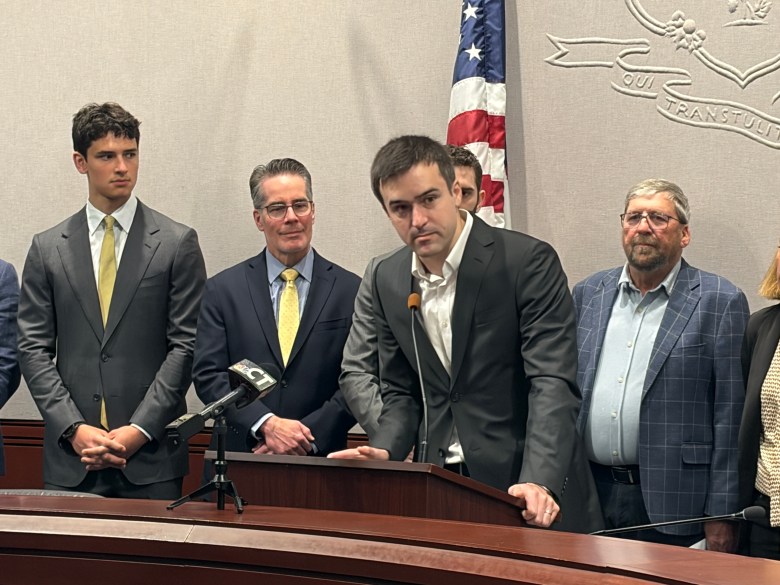
A new Connecticut coalition is calling on Gov. Ned Lamont and state leaders to support microtransit services after the Appropriations Committee proposed allocating $10.5 million to extend the pilot service program for another year.
The coalition — composed of transit districts, town municipality groups and other transportation advocates — reported that without the state funding, more than 10,000 riders across 15 microtransit zones face the threat of service eliminations and have to seek other transportation alternatives.
The one-year funding extension will allow riders to still use the services while transportation leaders examine sustainable state funding strategies for the next year.
The two-year microtransit pilot program is set to expire at the end of June, and Lamont did not have funding allocated in his proposed budget to continue the services. The Transportation Committee proposed extending the program for another year, requesting state funding totaling $9 million for the effort through Senate Bill 9 at the start of the spring legislative session in March.
“I am grateful the Appropriations Committee recognized what we heard loud and clear in the Transportation Committee with SB9: overwhelming public support for continuing this service,” Sen. Christine Cohen, chair of the Transportation Committee, said. “I am hopeful the full legislature will act to keep these rides running.”
The microtransit services in Connecticut began in spring 2024 when Lamont and the Connecticut Department of Transportation awarded $19.5 million to support ride-hailing services in nine transit districts and municipalities for two years.
“The federal ARPA funding that supported the microtransit pilot program has now been exhausted, and the administration recognizes the value these services provide to the communities they serve,” said Cathryn Vaulman, a spokesperson for Lamont. “The governor looks forward to continuing to work with the legislature as they weigh this and other priorities in the budget process.”
Vaulman said that Lamont “is committed to supporting accessible, affordable and reliable public transportation for Connecticut residents, and that commitment is reflected in his budget proposals to provide free bus service for veterans and reduced-fare passes for high school students.”
The microtransit program operates similarly to Uber or Lyft, but the prices, $0.85 to $4, are similar to that of public transportation because of the state subsidies. More than 50% of Connecticut riders report that they use microtransit to connect to other forms of public transportation, and 60% of them report having no access to a personal vehicle, according to the coalition’s April 20 letter to Lamont’s office.
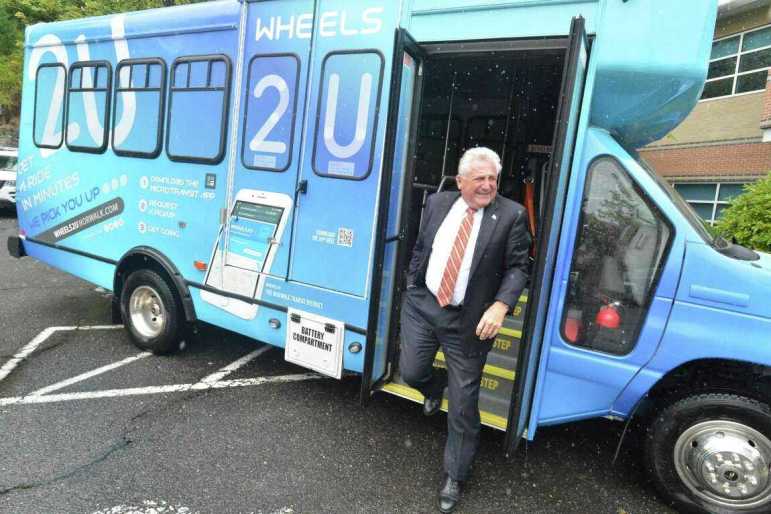
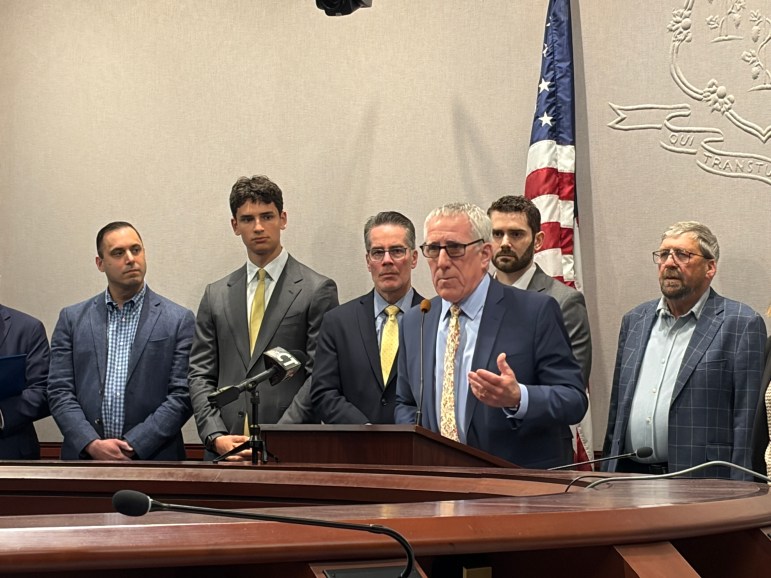
At a press conference at the Legislative Office Building in Hartford on Monday, Jeremy Tillunger, director of public policy at Via, one of the companies contracted to provide the software and transportation service support, said over the last two years, the services provided more than 375,000 rides statewide.
Tillunger, who is one of the leaders of the coalition, said at a time when many are concerned about affordability and the rise of gas prices, microtransit must continue.
“Microtransit is providing an innovative, cost-efficient solution for many Connecticut communities,” Tillunger said.
Matt Hoey, Guilford’s first selectman, said the service has expanded across socioeconomic statuses and generations. He said he has seen elderly people using it to get to medical appointments and teenagers who do not have their licenses yet using it to visit with their friends at the beach or the park.
“It is rare to see policies or programs that result in such a wide array of benefits to different types of communities,” Hoey said. “We are providing access and mobility to people of widely varying ages, abilities, disabilities and work opportunities.”
Hoey said he is not just an advocate for the service — he has used it himself.
“I have used it on a numerous occasions to do things as simple as when I have to take my car to get worked on, I will use the River Valley Transit bus to get back to my office, and then at the end of the day, I can use it to go pick up my car,” he said.
Microtransit is not a replacement for fixed route services or other forms of more sustainable public transportation. Advocates say microtransit identifies a gap and allows people better access to these fixed routes.
“This is transit for education, transit for housing, transit for work, transit for health care, and all of those other things that are so important to the other work that the General Assembly is considering right now,” said Doug Holcomb, executive director at Greater Hartford Transit.
A public hearing at the Legislative Office Building in March heard support from several riders who use the service. More than 370 people submitted written testimony on the bill. None opposed it.
Jia Li, an associate professor at Wake Forest University, led a study on microtransit riders in North Carolina and their influence on designing effective transit pricing policies. As Connecticut looks to develop their program and examine sustainable state funding strategies, Li said, microtransit should offer different costs for on and off peak pricing and include employers in negotiations to help fund the services.
Li said Connecticut is different from other states in that the state’s transportation fund primarily funds the services. Other states such as North Carolina and California have statewide programs too and receive funding from other grants, partnerships and local initiatives.
He said while state funding is important for program longevity and growth, he thinks employers should also help fund the services too, since a lot of riders are commuters who are working locally.
“Employers can also function as a part of the workforce infrastructure, helping employers expand their labor pool, reduce parking pressure and improve access to jobs,” Li said. “If employers can help subsidize rides, it can make the demand more stable and improve long-term sustainability,” Li said.
Danielle Cloud, a policy director at the Connecticut Business and Industry Association, said transportation gaps continue to limit hiring and retention when people can’t consistently get to work, and microtransit helps with that.
“For many Connecticut residents, transportation is the deciding factor on whether you can keep or accept a job,” Cloud said. “We view this as a smart investment in workforce participation, economic stability and competitiveness.”
Advocates say if they receive the funding for another year to continue the program, they will work to reevaluate the efficiency and effectiveness of the services and examine other funding alternatives.
Senate Bill 390, which was passed by the Appropriations Committee and awaits approval from the Senate chamber, will require the commissioner of transportation to conduct a study on microtransit.
