This reporting was supported by the International Women’s Media Foundation’s Women on the Ground: Reporting from Ukraine’s Unseen Frontlines Initiative in partnership with the Howard G. Buffett Foundation.
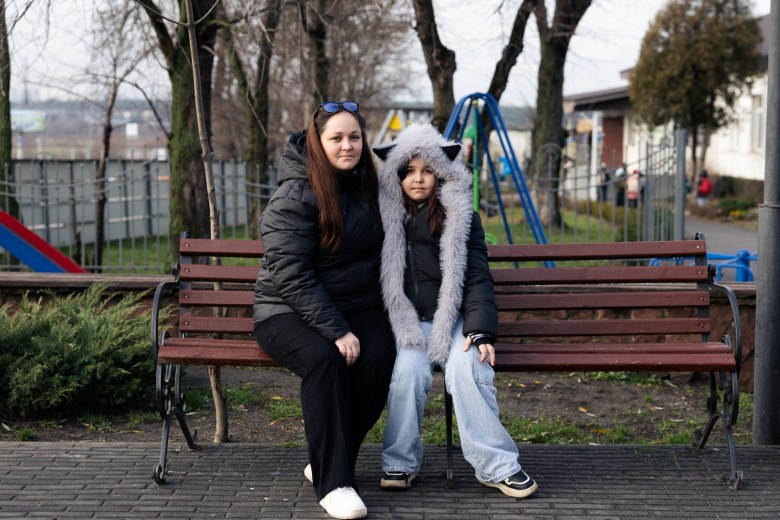
On the first day of Russia’s full-scale invasion of Ukraine, Iryna Berezhna immediately went into hiding with her 5-year-old daughter. As a veteran of the Ukrainian National Guard, Berezhna had been told she was a target of Russian forces, who were moving into her village in Ukraine’s easternmost region of Luhansk.
“So I ran away,” she said.
For months, Berezhna and her daughter made their way northwest to safety, passing through 15 Russian checkpoints along the way. Her daughter clutched a bag of her favorite toys as they crossed destroyed bridges and passed abandoned cars, Berezhna recalled. Eventually they made it to a spot about 60 miles east of Kharkiv, where volunteers were waiting for them.
Four years later, Berezhna knows she and her daughter were fortunate. They now live in a settlement about 20 miles northwest of Kyiv, and Berezhna works as a case manager for the project that aided in their escape — known as Helping to Leave — to reintegrate other repatriated Ukrainian children who were separated from their families.
Since the start of the war, Russian forces have abducted tens of thousands of Ukrainian children, according to researchers with the Humanitarian Research Lab at the Yale School of Public Health. Russia has targeted the children through coerced adoption and family separation, forcing them to speak the Russian language and take on its cultural identity and customs — what’s known as Russification.
Yale’s Humanitarian Research Lab has tracked more than 30,000 Ukrainian children to locations outside the country. Its work, which launched just weeks after the full-scale invasion began, has helped both to quantify the scope of the abductions and to raise global awareness about Russia’s actions.
But the lab’s work and its funding — which came largely from the U.S. State Department — have been undermined since President Donald Trump returned to office. Last year, the administration froze the lab’s efforts to track Ukrainian children and ended its contract. Leaders say its current funds will last only until May 1.
Their partners on the ground in Ukraine — service groups working to evacuate children from combat zones and Russian-occupied territories — say they depend on the lab’s reports. And they’ve served together on task forces, in both the U.S. and Ukraine, providing expertise and testimony to federal and international officials to secure support for the cause.
“If Yale wasn’t producing the reports, if people doing the advocacy weren’t relying on those reports, there wouldn’t be that much attention to the issue of Ukrainian kids being kidnapped,” said Daria Rabinovitsch, co-chief executive of Helping to Leave.
The Connecticut Mirror visited Ukraine to observe the work of projects like Helping to Leave as they coordinated evacuations from occupied territories and frontline zones, and guided young people through the process of reintegrating into Ukrainian culture.

The journey back from Russification
Marta, an 18-year-old college student living in Kyiv, was repatriated with the help of the Ukrainian Child Rights Network, as a part of an initiative of President Volodymyr Zelenskyy’s, Bring Kids Back UA.
Marta, who requested that her last name not be published due to safety concerns, grew up in the Ukrainian city of Donetsk in southeastern Ukraine — a region Russia has occupied since 2014. She’s old enough to remember what things were like before the occupation.
“I remember my city is like a city of happy people,” Marta recalled.
She was 7 years old when that all changed. That year, Donetsk “became gray,” Marta recalled.
Describing the experience of undergoing Russification, she said, “One day, you’re Ukrainian. … Another, they say, ‘No, it’s Russia. It’s always been Russia.’”
As high school progressed, Marta observed a shift in the curriculum. Her school brought in Russian soldiers, who attempted to persuade Marta and her peers to fight for Russia in its war on Ukraine.
“This whole system was built for just brainwashing kids,” she said.
A few years into the occupation, Marta began thinking to herself, “Why am I in this gray zone?” She decided to seek the help of Bring Kids Back, which had already helped one of her friends leave home in the occupied territory.
It wasn’t easy. But Marta waited until she was 18 to escape. Being an adult limited legal complications; she was able to gather documents and money and buy her train tickets — with some help from volunteers.
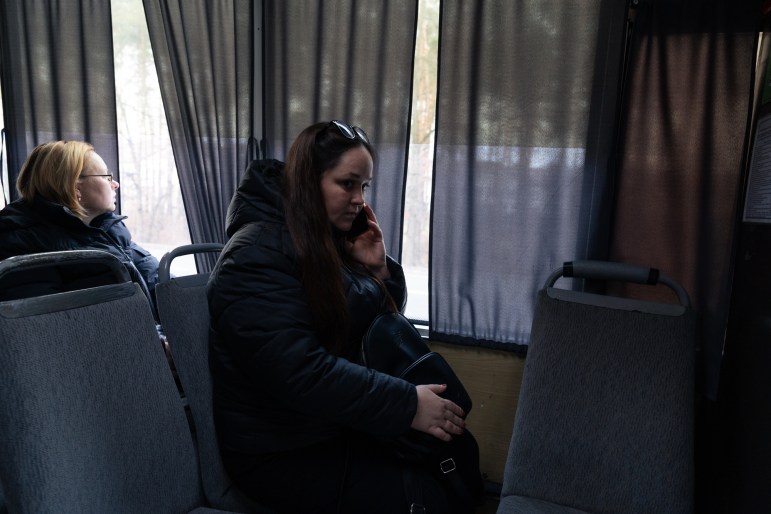
After months of preparation, she began to make her way to Kyiv, first moving through Rostov, a Russian city just over 150 miles from Donetsk. “I was always on the phone with my volunteers,” Marta recalled. “Then they sent us tickets to the train to Belarus. And then we moved first to Minsk.”
There, she met up with ten other people also en route to Ukraine. After spending a few days in Minsk waiting for a white passport, a temporary diplomatic document, she was able to make it past the last checkpoint. The journey took her about nine days.
Today, Marta’s life in Kyiv is vibrant. She enrolled in a Japanese philology program at a university and she enjoys attending concerts and visiting art exhibitions.
An uncertain future for the helpers
The work of this coalition of nonprofit and research groups — tracking and repatriating young Ukrainians — has faced new obstacles since President Donald Trump took office last year.
Yale’s Humanitarian Research Lab, which had received funding through the U.S. State Department, saw that support slashed last year, causing researchers to lose access to crucial data. After a brief reinstatement, they were able to salvage that data and transfer it to Europol, the European Union’s central law enforcement agency. Since then they’ve been operating on a shaky financial foundation, which they expect to run out this month.
Humanitarian organizations providing aid in Ukraine have also lost funding from the U.S. as a result of the dismantling of the United States Agency for International Development, USAID. That has strained their ability to provide services.
“We didn’t expect it at all, because we weren’t working with USAID directly,” said Rabinovitsch, of Helping to Leave, which had received money from USAID-funded organizations. “It was actually a really scary time, because we were receiving money from different entities. And then one wrote us an email saying ‘You need to stop,’ and then another one…”
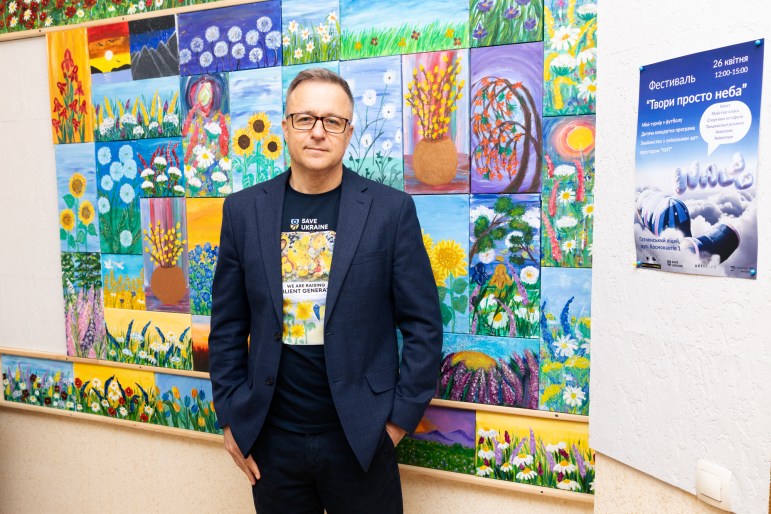
Another organization, Save Ukraine, was established by Mykola Kuleba, Ukraine’s former commissioner for children’s rights, in response to the Russian occupation of Eastern areas like Marta’s hometown. In 2025 alone, the organization returned more than 1,300 children.
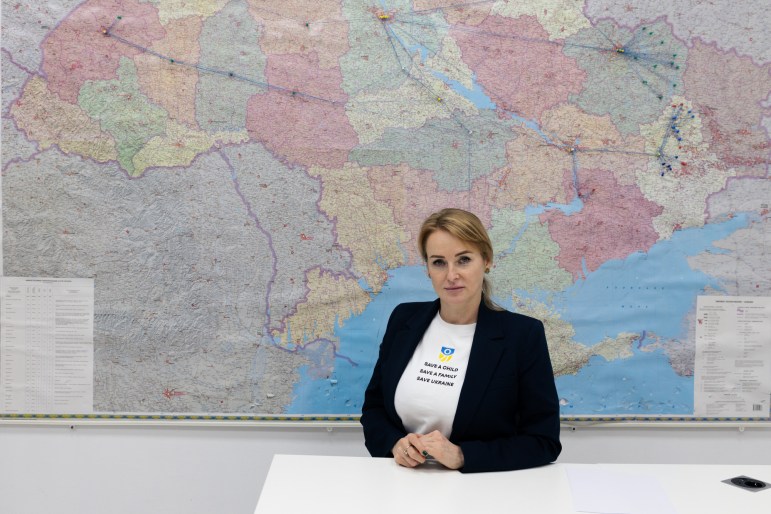
Myroslava Kharchenko, the organization’s chief legal officer, said research produced by the Yale lab has been crucial to Save Ukraine’s work because it has shed light on Russia’s offenses and generated international pressure.
That “creates an opportunity to bring the children back,” Kharchenko said. “These are interconnected things. We cannot do it without them, and they cannot do it without us. It is essential that they continue their work.”
Researchers at the Yale lab haven’t allowed the uncertainty to dampen the pace of their work. Just last month, they released a report detailing the involvement of two Russian energy companies in the indoctrination of Ukrainian children.
“The mentality that we have as a team is that we will keep going with everything we can until the lights turn out,” said Caitlin Howarth, director of conflict analytics at the Humanitarian Research Lab.
Howarth is also confident the lab’s work will be important years from now, when Russia’s actions during the Ukraine invasion are considered by international legal bodies. In a report last year, the lab described Russia as perpetrating “the largest child abduction case since World War 2.”
“Our objective has always been to build a case that is easier for the courts to work with many, many years down the road,” Howarth said.
Liubov Sholudko contributed reporting in Ukraine.
This story was updated to clarify which groups are involved in the repatriation process in Ukraine.