


Gov. Ned Lamont mentioned the word “affordability” or some derivative of the word six times in his Feb. 4 State of the State Address to legislators, insisting government must do more to help residents and businesses cope with Connecticut’s high cost of living.
The governor and his fellow Democrats in the General Assembly’s majority insist the state budget they will adopt in the coming days will do that, giving municipalities an extra $270 million — hopefully to avert local tax hikes — and investing $300 million more to expand affordable child care.
But that package won’t include Lamont’s plan to give most residents a $200 tax rebate this October. Gone are Democratic proposals for new credits that would have returned hundreds of millions annually to renters and filers with children.
And Republican initiatives to cut income tax rates and bolster a state credit that offsets a portion of local property tax bills also were left by the wayside.
So, can Connecticut become more affordable with a budget that includes no major tax cuts?
Democrats: Taxpayer relief comes in many forms
“We’re doing everything we can, because I know how expensive life is right now,” Lamont said Tuesday as he outlined key elements of the tentative budget deal he struck with legislative leaders. “We wanted to do what we could.”
“Leadership is defined in a lot of ways,” House Speaker Matt Ritter, D-Hartford, said this week during a press conference in his Capitol office.
That means building on legislative efforts in recent years to bolster town aid and dramatically expand Connecticut’s dearth of affordable child care program slots, the speaker said, calling the early childhood education investment “a gamechanger for our state” and its economy.
More importantly, Ritter and House Majority Leader Jason Rojas added, the new budget avoids the big mistake government made in the 2010s: dangling big tax relief then quickly reneging as finances tightened.
For example, the 2015 legislature and Gov. Dannel P. Malloy pledged to share a half-penny of Connecticut’s 6.35% sales tax with cities and towns by 2018. But even as they adopted the plan, nonpartisan analysts were projecting a deficit two-and-a-half times the size of the promised funding.
By 2018, the program was suspended, and legislators, in its place, set up three grants that collectively committed less than one-third of promised funds to municipal aid.
“We’re not having to walk back things that we did,” Ritter said.
Lamont and the legislature just three years ago approved the first state income tax rate cut since the mid-1990s. That, coupled with other income tax changes, saved poor and middle-class households more than $450 million last year.
“We don’t want to erode our revenue sources any more than we have over the last couple of years,” added Rojas, an East Hartford Democrat.
And there are threats to state finances on the horizon.
Based upon cuts ordered last July by Congress and President Donald Trump, Connecticut, starting in the next budget cycle, must accept huge cuts to Medicaid and other human service programs or use hundreds of millions of state dollars annually to offset vanishing federal funds.
And while the state has a $4.3 billion rainy day fund, a Lamont administration analysis last fall showed even a moderate recession could drain reserves and push Connecticut into deficit within four years.
Is CT hoarding huge piles of cash?
But critics from both sides of the aisle say state government is sitting on unprecedented piles of cash and needs to provide direct relief in the form of tax cuts.
Since adopting an aggressive package of budget caps in 2017, the state has closed the last eight fiscal years with an average of more than $1.8 billion unspent. That’s a huge total equal to 8% to 9% of the General Fund. In the two decades prior to these caps, state government never had a surplus greater than 3.3%.
Connecticut failed to save properly for pensions for seven decades prior to 2011, racking up tens of billions in unfunded obligations. It chips away at this debt annually with regular required payments in its budget. This year’s exceed $3.4 billion or 12% of the General Fund.
But since 2020, it’s used an average of $1.7 billion in surpluses — forced by budget caps that siphon dollars away from core programs and potential tax cuts — each year to make a second round of voluntary payments.
In other words, critics say, Lamont and the legislature effectively are forcing one generation to resolve a legacy of pension debt created by three. The price, they add, is higher-than-necessary tax rates and weaker-than-necessary public services.
“We’re paying down our pensions at breakneck speed on the backs of our working families,” said Rep. Josh Elliott, a progressive from Hamden who’s challenging Lamont for the Democratic gubernatorial nomination.
“I think it is a major failure if the state government fails to deliver tax relief,” said Sen. Ryan Fazio of Greenwich, ranking Senate Republican on the Finance, Revenue and Bonding Committee and a 2026 gubernatorial contender. “It is not that difficult in Connecticut to deliver permanent tax relief.”
Fazio and his fellow Senate Republicans proposed the largest tax-cutting package this session, involving income tax rate reductions and other changes estimated to return $1.5 billion annually to households in total and as much as $1,500 to some families.
But that plan also would curtail all state efforts to pay down pension debt in a faster-than-normal fashion. Connecticut still owes more than $33 billion, one of the largest burdens, per capita, in the nation.
The Senate GOP tax-cutting plan also would likely push state finances into deficit in the next few years, based on state analysts’ revenue projections.
“Gov. Lamont has focused on affordability and fiscal discipline by cutting taxes, lowering costs for working families and paying down pension debt,” said Rob Blanchard, the spokesman for the governor’s reelection campaign. “It’s a strategy built on stability and predictability for taxpayers. By contrast, the Republican plan relies on one-off gimmicks and volatile funding schemes that don’t last. It may sound appealing in the short term, but their dangerous math doesn’t add up.”
House Republicans pitched a more modest $420 million in ongoing income and other tax cuts but also recommended boosting town aid by more than $330 million per year.
“We haven’t gone far enough in addressing the affordability issue in the state of Connecticut,” House Minority Leader Vincent J. Candelora, R-North Branford, said Wednesday. “Republicans are hearing [concerns] on the streets. I have to believe Democrats are hearing as well.”
Child tax credit stalls for sixth consecutive year
More than half of Democrats, who control both the House and Senate, agreed this year to co-sponsor at least one bill to create a new state income tax credit for low- and middle-income families with children.
The most popular proposal would have given $600 per child, up to $1,800 per household, at a cost of $300 million to $400 million to the state.
Advocates who have been pushing for this relief since 2021 note all of Connecticut’s neighboring states except for Rhode Island offer a state income tax-based credit to offset the costs of raising children, and Rhode Island Gov. Dan McKee proposed his state’s first child tax credit earlier this winter.
“Connecticut parents are struggling every day with sharp increases in the cost of basics like food and gas,” said Lisa Tepper Bates, president and CEO of the United Way of Connecticut, which has spearheaded efforts for a child tax credit. “They are looking for meaningful help from Connecticut’s leadership.”
Bates added that the proposed investments in child care and town aid are appreciated, “but for more than 580,000 Connecticut households who are struggling just to afford the gas to get to work, those steps alone aren’t enough.”
And because poor and many middle-class families would be the prime beneficiaries of a child tax credit, most of their state tax refunds would be quickly spent on groceries, clothing, utilities and other necessities. Advocates estimate $300 million to $400 million in tax relief would generate more than $1.5 billion in annual economic activity.
Lamont hasn’t argued publicly against the child tax credit but has shown a preference for relief that reaches more households.
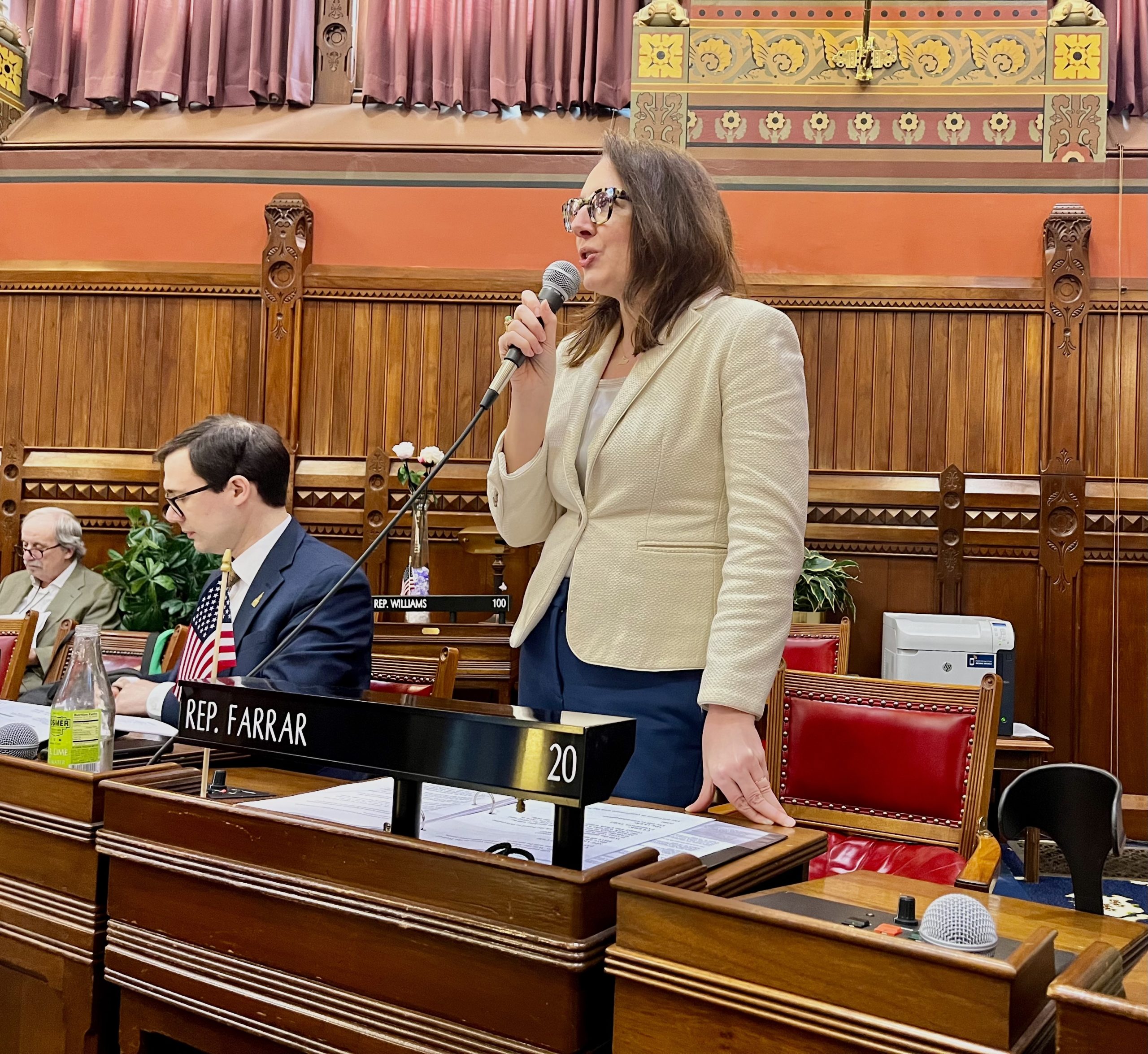
Still, Rep. Kate Farrar, D-West Hartford, a member of the finance committee and another leader in the fight for a child-based credit, said her side continues to gain supporters and momentum.
And with state government’s own tax fairness study showing that the tax system disproportionately burdens low- and middle-income households, the push for family-targeted relief won’t go away, she said.
“Fixing our upside-down tax code and delivering sustainable tax relief to our working and middle-class families is something we’ve heard time and time again is desperately needed,” Farrar added. “I’m not done advocating for something that is incredibly popular among my constituents and the population of Connecticut.”
