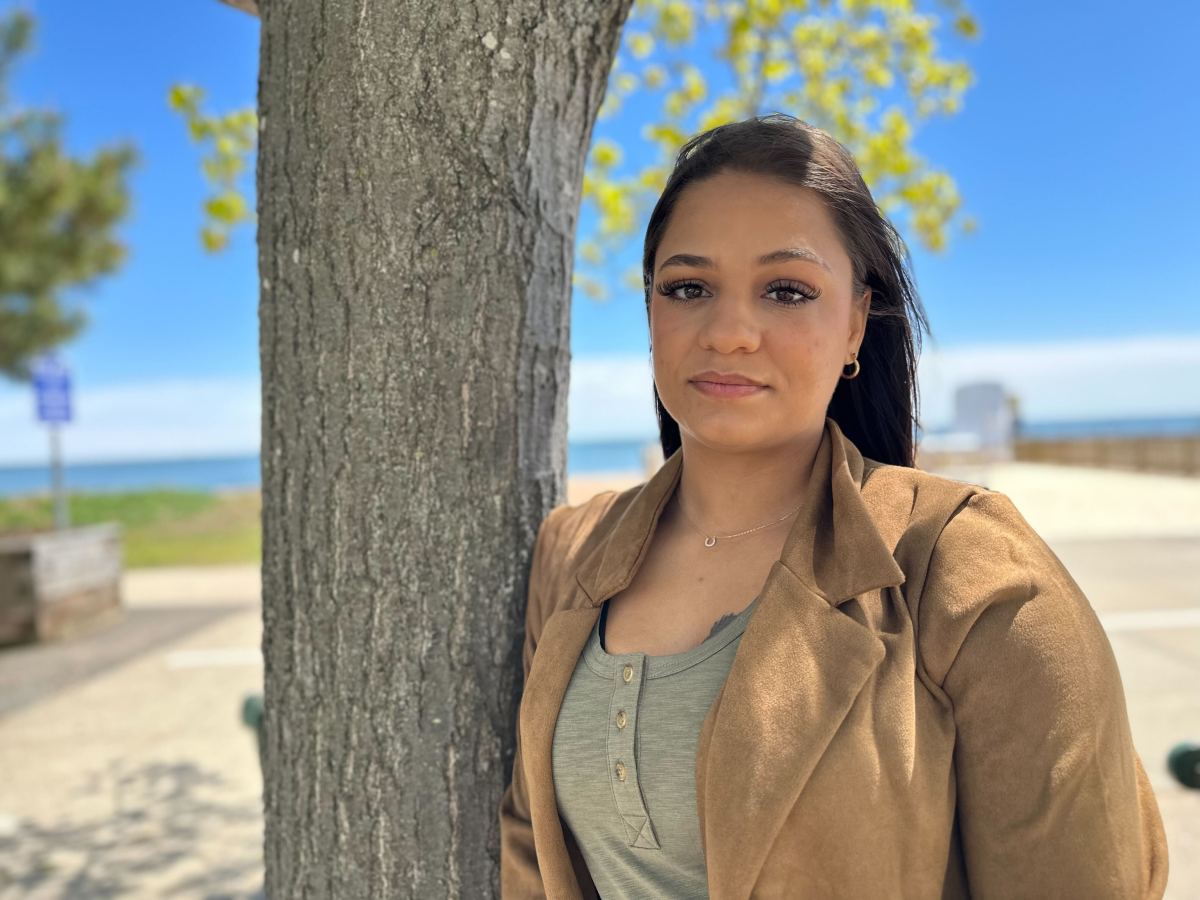


Much was uncertain in Rylee Carew’s childhood. She was removed from her biological mother’s care at age 2 and, after cycling through foster homes, said she was adopted in first grade. At age 16, she entered foster care yet again — removed from her adoptive family by the Department of Children and Families. She became pregnant at 17 and remained in foster care until adulthood.
Yet, despite all this early trauma, Carew still carries the memory of one of the many caseworkers she met, a woman who seemed exhausted yet determined to help. The worker used her own money to buy the frightened teenager clothes as her belly grew, and to take her to Taco Bell to satisfy her pregnancy cravings. Then one day she was gone. The whiplash of that experience was shared by other kids Carew met in foster homes.
“We didn’t get a goodbye. We made relationships with these workers and at the next pickup we’d find out we had another worker,” she said. Carew, now 29, remembers thinking, “‘Wow, there’s just another adult in my life who doesn’t care.’”
The impact of staff turnover at the Department of Children and Families has been deeply felt by people like Carew, even if the reasons why workers disappear aren’t always understood by the youth the agency serves.
The problem is neither small nor easily solved. DCF has lost as many social workers as it has gained over the past five years, according to department data, and nearly half leave within their first two years at the agency.
As lawmakers and advocates have pressed DCF officials for accountability in the deaths of children under the agency’s watch over the past year, the scale of staff turnover has emerged repeatedly as a factor in the agency’s troubles.
DCF officials say they are trying to confront the problem head-on by recruiting new staff and supporting existing workers. But through interviews with former employees, current staff and clients, advocates and elected officials, the Connecticut Mirror has found that the true cost of that turnover is high.
Families and children are often subjected to a revolving door of caseworkers, making it hard to build relationships. New workers are assigned complex cases they may not have the experience to handle and many employees, often the longtime staffers, work excessive overtime. And when workers burn out and resign, the agency sees institutional knowledge walk out the door. Turnover also seeds distrust in the agency among its clients, making it harder for DCF to improve public perception and attract workers.
Ironically, turnover itself — and the high caseloads and stress left in its wake — drives more turnover.
Advocates say there is no direct cause and effect between staff turnover and these recent tragedies, yet they worry about the consequences of employee churn in scores of cases, including those that go unseen by the public. They worry details fall through the cracks when cases are passed along, kids in chaos experience deepened trauma and children waiting for caseworkers to get up to speed see delays in efforts to help them achieve permanency.
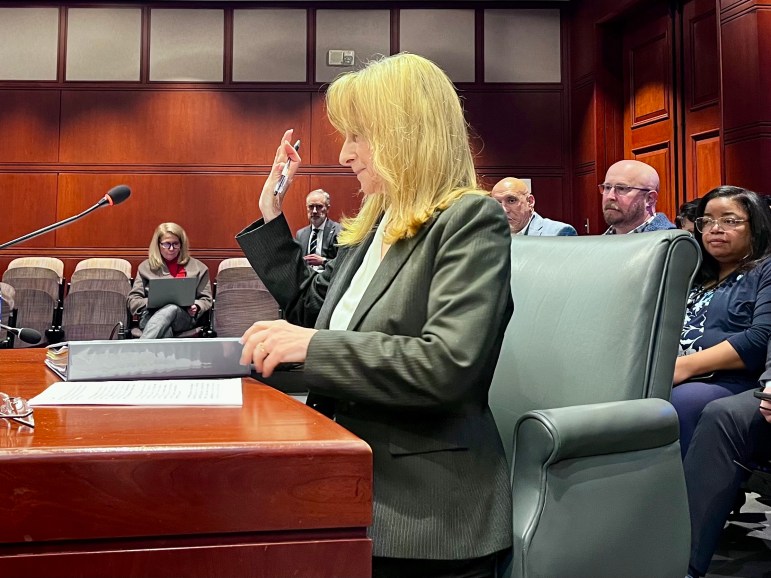
Turnover has long plagued child welfare agencies across the nation. But as new leadership takes the helm with the appointment of Susan Hamilton as commissioner, DCF is being taken to account for a downward trend in the quality of its casework. Employees, lawmakers and advocates all say that stanching the departure of workers is imperative if the agency hopes to improve.
‘Who are these scary, strange adults?’
Carew has the rare perspective of having seen turnover through the eyes of a young child, as a teenager, and finally as a mother whose children came under DCF supervision when she was a victim of domestic violence.
As a young child, she said she thought, “who are these scary, strange adults? As a teenager, you’re very apprehensive about who you can trust.”
When that memorable caseworker left, Carew wasn’t warned or given an explanation. It’s an experience she said sent a message: “You’re not even worthy of being told you’re getting a new worker.” And at that age, when Carew didn’t like her caseworker, she would run away — a problem that has also grown in recent years, according to a 2025 audit.
As an adult, Carew watched as caseworkers interpreted DCF’s rules and guidelines differently, creating inconsistency. When caseworkers changed, her sons “didn’t really know who to trust. It’s a high-conflict time, their entire lives are upturned, and then they have this adult they think is the one in charge, making all the decisions. Then it changes to someone else and they’re dysregulated. It makes a difficult situation even harder.”
During the legislative session that ended Wednesday, elected officials gathered at the Capitol to debate how best to safeguard children following several high profile cases of deaths and abuse of children whose families had been previously investigated by DCF. Policy discussions focused on regulations around issues like homeschooling.
But in the discussions, the problem of workforce turnover came up at every turn — threaded through public testimony, during executive confirmations and embedded in investigative reports.
In reports by the Office of the Child Advocate about the deaths of 2-year-old Liam Rivera in 2022 and 10-month-old Marcello Meadows in 2023, the OCA pointed to self-reporting by DCF about a workforce crisis during a Child Fatality Review Panel meeting: “DCF administrators have expressed significant and understandable concern about recruitment and retention of qualified child welfare workers.”
During a 2025 agency conference, Hamilton shared how challenging the issue is to overcome: “We do what we can to pay to attract people. The work is hard…but we do have to, as a system, figure out ways to retain people because we’re putting in a lot of effort, training and support in that first year.”
Experts say high turnover is a dilemma across the nation that has worsened post-COVID, as the children that child welfare agencies serve tend to have more complex needs. Though statistics on turnover aren’t routinely published in most states, those who study the issue estimate that rates range from 15% to 40%, and even as high as60%.
“It’s not a short-term problem. It’s a chronic, systems-level problem,” said Robin Leake, who has been studying turnover for 25 years, now at the Butler Institute for Families at the University of Denver.
“Families experience this deep, repeated loss and lack of trust in the system and emotional distress because they have to keep telling their story every time a caseworker leaves and builds that relationship again,” Leake said.
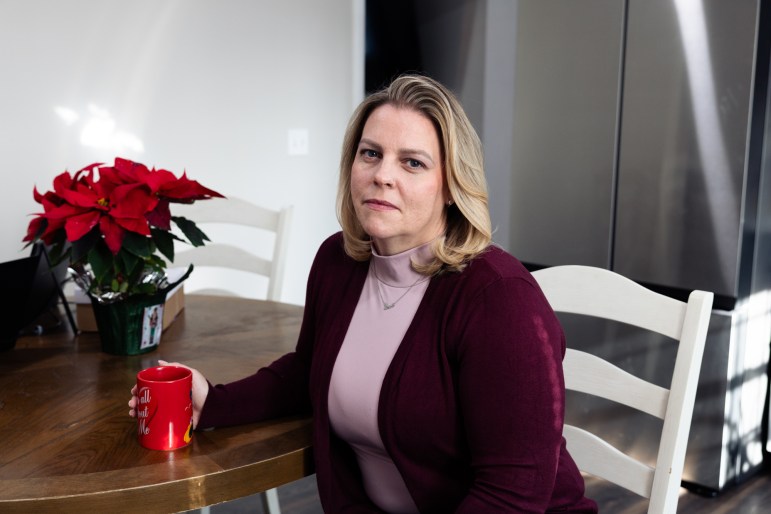
Victoria Woody experienced this when she took in her sister’s five kids in 2024 in what is called a kinship placement by DCF. Five different caseworkers were assigned to the family in the first three months, she said.
“You end up with people that haven’t been trained yet. It’s just another piece of inconsistency for them [the kids], coming from places where things aren’t consistent or structured,” Woody said. Some caseworkers who worked with Woody and the children were new to the job, while others connected deeply with the kids only to be reassigned, she said.
“I get that in any employment you’re gonna have turnover and people are gonna leave — I get all of that,” she said. “But this isn’t something at a computer, this isn’t something at a desk, these are people’s lives. These are children.”
Ashlie Ruggiero Steinau, a foster parent in Wallingford, said that working with the agency can feel chaotic because caseworkers are often overwhelmed and overworked. That inconsistency has resulted in delays in permanency for the kids in Steinau’s care. In one case, she said that a child was supposed to go to a pre-adoptive home, but because a green caseworker didn’t act quickly, the child remained in Steinau’s care for an extended period.
“I get that in any employment you’re gonna have turnover and people are gonna leave — I get all of that. But this isn’t something at a computer, this isn’t something at a desk, these are people’s lives. These are children.”
victoria woody, former dcf kinship placement
Advocates and researchers who study the issue said the churn of workers touches nearly every corner of the agency and the families they serve.
“The turnover creates a lot of inconsistency in practice, huge holes in institutional knowledge about good safety practice, good service delivery, good family engagement,” said Sarah Eagan, executive director for the Center for Children’s Advocacy and the former state child advocate.
Jodi Hill-Lilly, Hamilton’s predecessor, also pointed to the impact on children who are already in the midst of destabilizing shifts in their guardianship and living situations.
“Not only is institutional knowledge going out the door, but for a family who is working with an assigned worker, and then you know that worker leaves and a new person comes in, there’s just an obvious restart, and there have been many studies linking that to delayed permanency,” meaning children spend more time in foster care before they find forever homes, said Hill-Lilly, who now works for the Doris Duke Foundation.
A Connecticut Mirror analysis of payroll data found that turnover is also driving an extraordinary amount of overtime being worked at DCF: about 50 workers made about half of their salaries in overtime, with one social worker earning $125,775 in overtime — more than doubling her salary. Two other workers crossed this milestone, earning more than 100% of their regular salaries in overtime. On average, social workers and supervisors earned nearly $13,000 in overtime last year.
The payroll data shows that almost all DCF social workers and their supervisors earned overtime — 96% — in 2024 and 2025. That’s up from 89% in 2022.
“The more you change the personnel, the more likely things are to slip through the cracks,” said Josh Michtom, an attorney with the Center for Children’s Advocacy.
Logan Williams, a spokesperson for the Council 4 AFSCME Local group that represents DCF workers, said the caseloads were the reason the agency’s overtime spending increased more than any other agency from 2024 to 2025. He said DCF would have to hire at least 500 more caseworkers “to bring caseloads back to a manageable level and ensure that children and families receive the attention and care they deserve.”
He said in a statement that understaffing drives still more turnover: “intake social workers, who are responsible for investigating initial reports of abuse or neglect, are frequently managing caseloads that are three times higher than what is considered a full workload, a level that makes an already demanding job even more difficult.”
What’s driving turnover?
Turnover is driven by many factors. First and foremost, Hamilton said that the nature of the work drives burnout.
“Recruitment and retention in this unique field of social work has always been challenging,” Hamilton said. “Demanding is probably an understatement.”
“About 47% of caseworkers of our direct frontline staff experience burnout that reaches levels of PTSD levels, where they really have that somatic symptomology.”
Robin Leake, turonver researcher, Butler Institute for Families at university of denver
Workers remove children from parents, often under emotionally painful circumstances. They must comply with policies designed to protect children but that in practice can be exhausting, from extensive paperwork to transporting siblings to visit one another every week. They are also under a tremendous amount of pressure: if they fail, the consequences can be catastrophic.
In data from the National Child Welfare Workforce Institute, Leake has found that 70% of staff report some level of burnout.
“About 47% of caseworkers — of our direct frontline staff — experience burnout that reaches levels of PTSD levels, where they really have that somatic symptomology,” Leake said. In other words, their stress is expressed in physical symptoms like fatigue, headaches, anxiety or sleeplessness. That rate can be even higher among supervisors.
When workers churn through the agencies, remaining workers must shoulder higher caseloads, causing them to quit, according to Leake.
Jonelle Stanley was finishing up a master’s degree in social work in 2021 when she began an internship with DCF investigating allegations of neglect and abuse. It was tough work, but Stanley was impressed by her supervisor and felt like she was learning a lot.
“The salary was great, I know they have great benefits,” Stanley said. But when she was offered a full-time position, she declined.
“The emotional stress and turmoil would be a greater price tag,” than the salary, Stanley said. As a new mom, the unpredictable hours gave Stanley pause and a state of “overwhelm” seemed to be a reality of the job, both “from the high caseload and from the emotional component of seeing really disturbing things.”
DCF battles to keep workers – who are mostly women – in a stressful job with unpredictable hours through motherhood. Some women don’t even consider a job at DCF, while others may find that social workers are in demand for well-paying jobs that often also include remote work opportunities post-COVID.
“They lost a lot of really seasoned workers in 2022,” Christina Ghio, the child advocate, said, referring to a wave of thousands of state worker retirements, including many supervisors at the agency.
Ghio said that these supervisors are critical in a department that has a large share of new workers. “It takes some time for new workers to learn the job. For less experienced workers, frequent high-quality supervision is absolutely necessary.”
Recent data released by the OCA found casework quality is on the decline — in some cases precipitously. Workers are making fewer home visits to children and caregivers. Supervisors, Ghio said, are responsible for ensuring such visits get made. Currently, for in-home cases, the quality of supervision at DCF meets expectations less than 20% of the time.
Making sure that potential recruits see the rewards of working with the agency is also key. Yesenia Rodriguez, another former intern who is now a social work supervisor with DCF’s Milford office, often accompanies social workers on home visits. She said she understands how crucial that support is, especially for new hires.
“We always hear about some of the negative stuff regarding DCF, but during my internship, I was able to shadow different divisions at DCF — so not only investigations, but foster care and ongoing treatment. So it really gave me a view of the differences we can make within the community,” Rodriguez said.
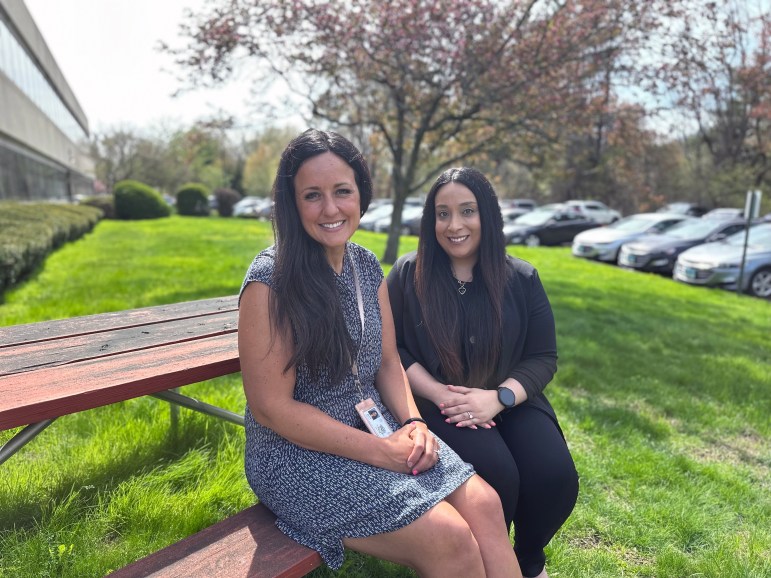
Deanna Spero, a treatment social worker also based in Milford, said she’d always wanted to work for DCF. As a child, she had seen another family in her community interact with the agency, with positive results.
Spero said that potential employees may only see the difficult trials of DCF work. But “there’s a lot of good, too.” Recently, Spero witnessed her first in-person adoption.
“I left there and I was thinking, ‘why is this not recognized more?’” Spero said. “We do more than just removing children. We give them permanency. We break cycles.”
COVID-era changes
Hill-Lilly said turnover wasn’t such a problem for the agency a decade ago. Just before the pandemic, she said, things started to shift. She said the employees DCF is trying to recruit today place more importance on work-life balance than the longevity of a job.
Neither Hill-Lilly nor DCF had specific numbers about previous turnover rates, but according to the minutes of a 2023 meeting about child deaths, DCF officials said turnover jumped from 10-12% pre-pandemic, to 20-30% in the years after.
The pandemic brought new concerns about getting up close with clients.
“I think the pandemic had a major impact on folks’ willingness to go inside of the house and to provide services,” she said.
It also reshaped remote work for state workers writ large, a change that many elected officials worry impacts cohesion.
Prior to COVID, DCF required social workers to come into the office, unless they were doing site visits. But an agreement between Gov. Ned Lamont and state workers in 2021 now allows DCF staff to work from home most of the time unless they are conducting in-person fieldwork such as home visits, or going to court. Workers are also required to use agency cars for fieldwork, meaning they first have to get to the office to retrieve those vehicles.
For many workers, the option to work from home is a huge selling point. But critics of the policy say it can ultimately drive more turnover, because the taxing nature of the work necessitates in-person support and communication.
“Back in the day when we all started, when I came back from a home visit and something was really tough, I wanted to vent or to share or to connect,” Hamilton told CT Mirror, recalling her early days at the agency before telework was permitted. “We do believe it impacts the work.”
House Minority Leader Vincent Candelora, R-North Branford, put forward a bill in 2024 that would have allowed state agencies to create their own in-office work policies. Candelora said he drafted the bill in response to concerns about how remote work might be impacting DCF after a spate of child deaths but it received “complete opposition.”
“It wasn’t a blanket, ‘you need to all come back to work.’ It was a bill that would have given the commissioners authority when they deemed appropriate to pull people back into the office,” Candelora said.
“Field work has always been a critical component of DCF social workers’ jobs, long before remote work arrangements were put in place.”
Logan Williams, Council 4 AFSCME Local spokesperson
While remote work may ultimately cause some workers to burn out, with more remote-eligible mental health roles available to job candidates, the policy also attracts workers, including parents.
“If you looked at our surveys right now, everyone’s like, ‘We love the telework arrangement, but we feel disconnected,’” said Stacey Gerber, DCF’s deputy commissioner. “So it is a balance of how to create those connections.”
Williams, of the workers’ union, pushed back on the assertion that remote work is a problem. He said that although social workers may complete administrative duties from home, they are in the field most days.
“The agency classifies any day a worker is not in an office as ‘remote,’ but in reality, the vast majority of those days are spent in the field, engaged in direct, in-person engagement and significant travel — and field work has always been a critical component of DCF social workers’ jobs, long before remote work arrangements were put in place,” Williams said.
He said any implication that remote work “has had any impact on the delivery or quality of DCF services are baseless, disingenuous, and absurd.”
Candelora has given up on the issue for now, after he said the Lamont administration and lawmakers were unwilling to support the bill so as not to “upset the unions.”
Asked about the remote work issue, a spokesperson for Lamont instead addressed recent negotiations with SEBAC about wages and benefits. The statement said, in part:
“For his part, the Governor is working to ensure these dedicated professionals make a fair and competitive wage and recently submitted state employee contracts to the legislature for approval. Reasonable wages and benefits are necessary to attracting and retaining employees.”
“Turnover is an industry-wide reality given the emotionally taxing and even dangerous work social workers perform, and DCF is no exception.”
What can be done about turnover?
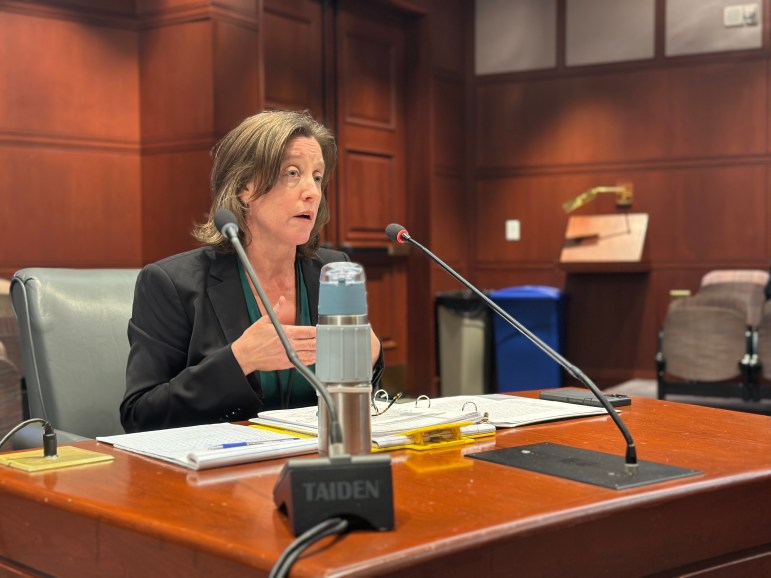
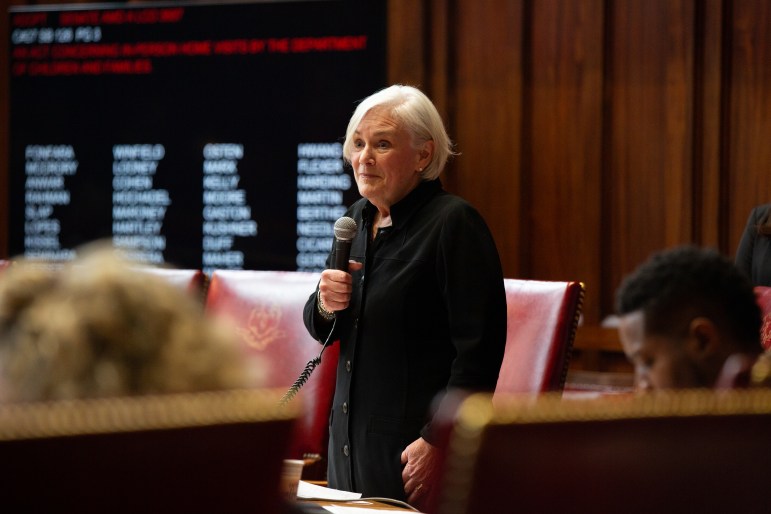
At a hearing in March on her appointment to be DCF’s new commissioner, Sen. Ceci Maher, D-Wilton, pressed Hamilton on what she was going to do about turnover given the many constraints being faced by the department, including a lower budget despite higher cost of living.
Hamilton told Maher that the agency is developing mentoring programs to help workers during the critical first two years.
She also said DCF is filling empty social work case aide positions, roles responsible for tasks like transporting kids to and from visitations or school. Hamilton said the case workers were excited about that change, especially.
The agency is also trying to lower workers’ caseload. That has yielded limited results, in part because of something the agency is doing right: keeping kids out of DCF care in the first place. DCF has worked to provide resources to families who are on the brink of having their children removed from their home, so that more families can stay together — which is ultimately in the best interest of children most of the time. But that means the cases that DCF takes on tend to be more acute, involving children going through a crisis that can’t be easily resolved.
Though many states struggle with turnover, some have found ways to keep it in check. In New Jersey, where the turnover rate has consistently hovered between 6% and 10% since 2006, the state has made concerted efforts in six key areas. They include improving employee satisfaction, which has involved the creation of a robust peer support hotline supported by retired employees. New Jersey’s DCF also has curated job fairs to ensure applicants have a clear understanding of the position before they move forward.
A spokesman for DCF said the agency is looking to other New England states for best practices. Tina Jefferson, DCF’s bureau child welfare chief, said a monthly newsletter now highlights good work done by staff. The agency is also encouraging workers to think of DCF as a “learning organization.”
“We have done a lot of work over the years to not be a punitive agency and not jump to progressive discipline unless it’s absolutely necessary,” she said.
Hamilton said the agency does exit interviews with departing staff as well as “stay interviews” with staff that remain, so the agency can synthesize that data to make improvements.
Rodriguez and Spero, the current DCF workers, both acknowledged that turnover is a challenge, one that is discussed internally “all the time.” Rodriguez said DCF is working on the issue, including the increased attention on hiring social worker case aides and bringing in more trainees.
For her part, Spero tries to ensure that trainees see a positive side of the working experience.
“When new trainees start to shadow, I try to show positivity,” she said. “I wish everybody could have at least one good experience right off the bat, to be like, ‘Oh, OK, this is really rewarding.’ You just have to be patient and you just have to have the passion going into it, knowing that it could take time, but there’s rewards that will come out of it.”