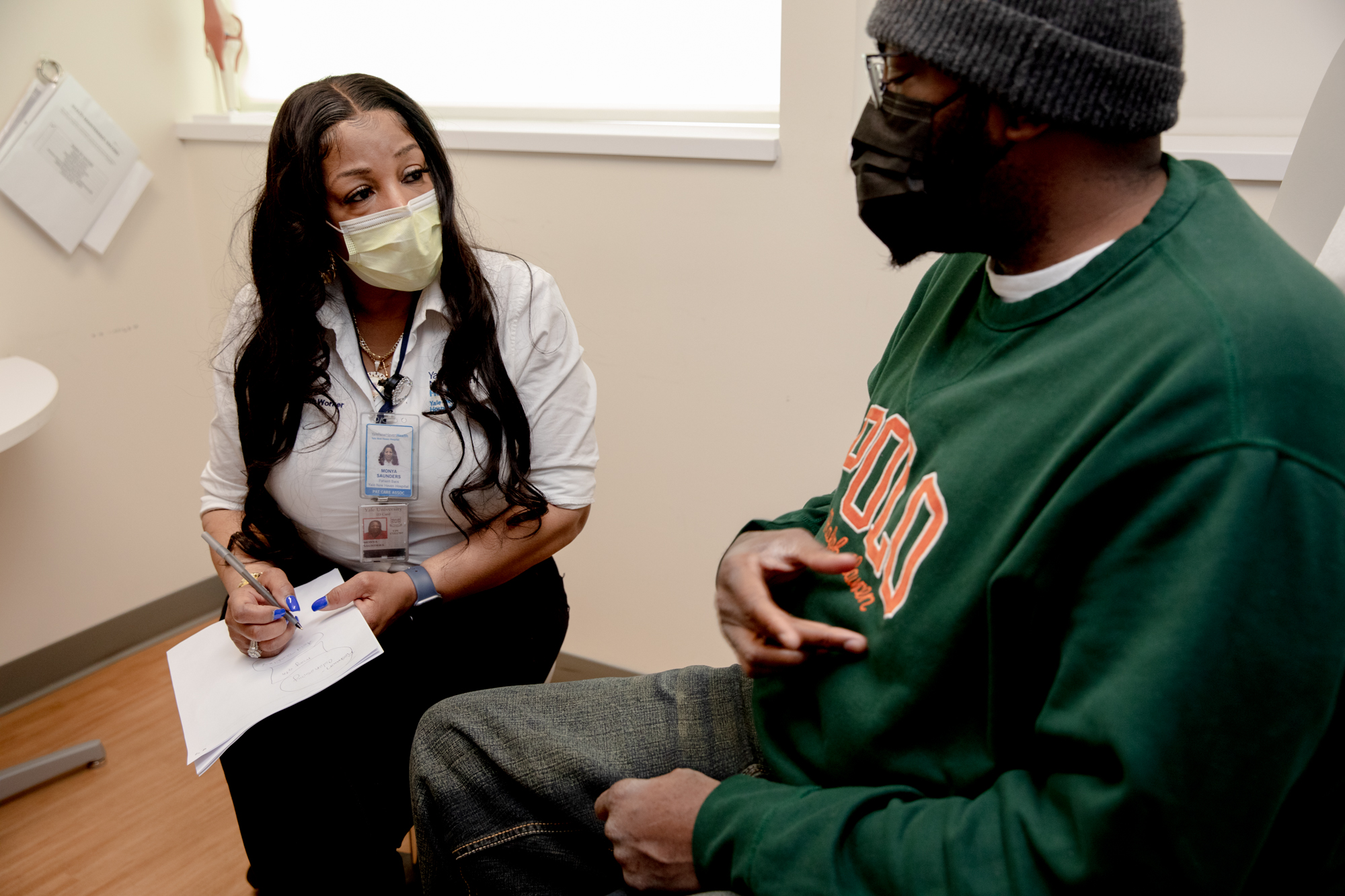
In 2023, lawmakers passed a measure requiring the state’s Medicaid program to pay for services provided by community health workers who help patients navigate the medical system.
The law passed but didn’t specify an implementation date, and the budget didn’t earmark funding for the initiative. Today, community health workers and advocates are still waiting for the state to come up with the money to make the measure a reality.
“We were all very excited when the legislature passed this three years ago,” Deb Polun, chief strategy officer at the Community Health Center Association of Connecticut, or CHCACT, said. “And then it just didn’t happen.”
Community health workers — known by a variety of names, including CHWs, outreach workers, case managers and patient navigators — guide people who are at particular risk of falling through the cracks of the healthcare system.
Without Medicaid reimbursement, funding for CHW roles is piecemeal and largely sustained through grants, which can be insufficient and unreliable. Medicaid funding would enable more organizations across the state to employ community health workers and make jobs more stable for the workforce.
CHWs help people access medical care by, for example, scheduling follow-up appointments and appealing insurance denials, but they also help support people maintain healthy lives by dropping off fresh groceries or assisting with rental subsidy applications. Often, CHWs come from the communities they serve, so they’re also able to care for people left out of the healthcare system because of culture or language.
Advocates said that, during the 2026 legislative session, they thought they had nearly secured the funding necessary to implement Medicaid reimbursement for CHWs. Both Polun and Karen Siegel, deputy director of Health Equity Solutions, said they were told the funding was included in the budget bill passed by the Appropriations Committee. But by the time the budget gained final passage, the funds weren’t included.
Sashamarie Ayala-Nieves has worked formally as a community health worker since 2022 and loves the job. But most CHW positions are grant-funded, so workers only have job security for the duration of the grant, which typically lasts just a few years, Ayala-Nieves said, and Medicaid reimbursement would help alleviate some uncertainty.
“It would create a heavy source of funding and it would also stabilize a bunch of positions that are grant-funded,” she said.
A fight over funding
Earlier this week, members of the CT Community Health Worker coalition sent a letter to the secretaries of the state Department of Social Services and the Office of Policy and Management requesting a meeting to discuss a path to implementing Medicaid reimbursement for community health work.
The letter also stated that DSS is currently in violation of the state law passed in 2023 requiring CHW Medicaid reimbursement.
“The administration works collaboratively with the General Assembly to pass a balanced budget that adheres to all statutory and constitutional requirements,” OPM spokesperson Chris Collibee wrote in an emailed statement. “Connecticut is in full compliance with PA 23-186.”
Last year, members of the coalition met with the state Department of Social Services to discuss the delay in implementation.
Both Polun and Siegel said DSS officials claimed the agency didn’t have capacity to carry out certain tasks in advance of implementation, like conducting a financial analysis or drafting a state plan amendment, which states must file with the federal government before implementing changes to their Medicaid programs. The coalition ended up drafting both in an effort to move the process along.
The financial analysis recommended a Medicaid reimbursement rate of $33 for every 30 minutes of community health work, estimated one-time implementation costs of $1 million and total annual expenses of $3 million once the program was fully implemented.
At least 20 states provide Medicaid reimbursement for community health workers. Advocates said community health workers are more important than ever, given that people will need help navigating changes to Medicaid and SNAP as a result of H.R.1, also known as the One Big Beautiful Bill Act.
The state has allocated $2 million through its Emergency State Response Reserve for community health workers to “ensure individuals and families remain connected to the benefits they need.” In the letter to state officials, the CT CHW coalition acknowledged the state funding as “crucial” but added that a “grant-funded outreach program is not a substitute for Medicaid reimbursement.”
Polun said it’s frustrating to see the state drag its feet on implementation, given all the work by advocates, examples from other states and research showing the effectiveness of community health workers in improving health outcomes and controlling healthcare costs.
“It feels like all of the pieces are there,” Polun said. “I just don’t know why it hasn’t happened.”