


This story has been updated.
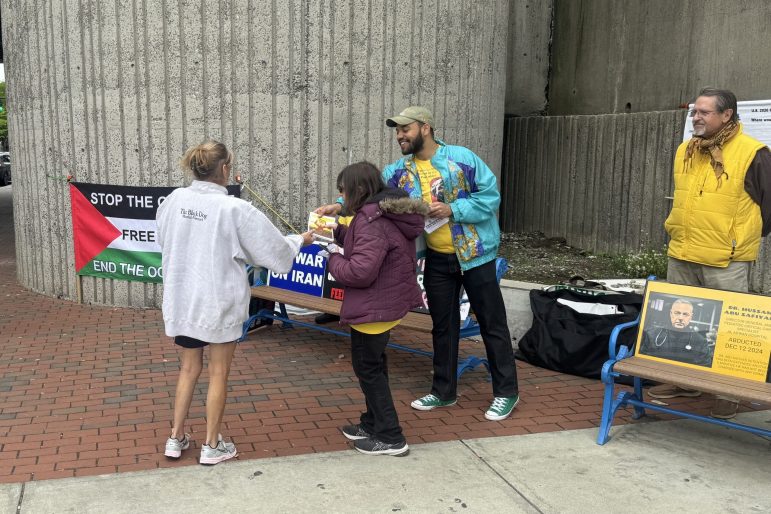
As commuters make their way toward trains and buses at the Bridgeport Transportation Center every Monday afternoon, a small group stands near the entrance holding signs and talking with anyone willing to stop.
Some walk by without a glance. Others pause for a few minutes. A handful stay longer, asking questions about military spending, local budgets and life in Bridgeport.
For members of Peace Pact, those conversations are the point.
The grassroots organization gathers outside the train station every Monday from noon to 1 p.m., turning one of the city’s busiest public spaces into an informal forum on issues ranging from war and government spending to housing, food insecurity and civic engagement.
At the heart of their work is a question that resonates far beyond (or perhaps, more locally than) foreign policy in communities like Bridgeport that struggle with poverty, housing costs and underfunded services: What is the most effective use for limited public funds?
“We are trying to fulfill Dr. King’s dream by saying, ‘Hey, look, man, we can’t keep doing this over and over again,'” said Benjamin Wesley, founder of Peace Pact.
Wesley said the organization was created to promote mutual aid, community engagement and what he sees as a shift away from militarism and toward investments in people’s everyday needs.
For him, the train station is more than a place where people catch trains. It’s where residents from different backgrounds pass each other every day, making it one of the few places where conversations can happen across communities.

“Bridgeport’s a blue collar town,” Wesley said. “We got people telling us, ‘Hey, look, I was homeless.’ They tell us of their needs, and I try to tell them where the shelters are, where the food distribution is.”
Those conversations often reveal frustrations that are more complex than any single issue.
Wesley said many residents express feelings of being overlooked by elected officials and disconnected from government decision making.
“This city obviously feels like nobody cares, nobody knows,” he said. “If you don’t think your government, the people that represent you, have any power, then people start to get apathetic and frustrated. We want to fight that.”
That message resonated with Bridgeport resident Jonathan Mejia, who joins the weekly gatherings.
Born and raised in the city, Mejia said he has seen firsthand the challenges many residents face and believes community involvement is one way to address them.
“I’m definitely trying to just be more active in Bridgeport and kind of try and bring them together,” Mejia said. “I think that we produce enough, and we’re hard working enough that we deserve a good quality of life.”
Mejia said he gets the sense that many people, particularly young residents, often feel their voices don’t matter.
“When we show up here and we show solidarity for one another, it kind of makes that platform a little bit bigger,” he said.
The weekly gathering has also become a meeting place for members of other advocacy organizations, including Healthcare Workers for Palestine and Doctors Against Genocide.
For clinical social worker Stephanie Carrow, continuing to show up is about keeping attention on what she views as an ongoing humanitarian crisis in Gaza.
“People are still dying, their children are still dying,” Caro said. “They’re living in tents, they’re exposed to the elements, there’s no sanitation, there’s very little food.”
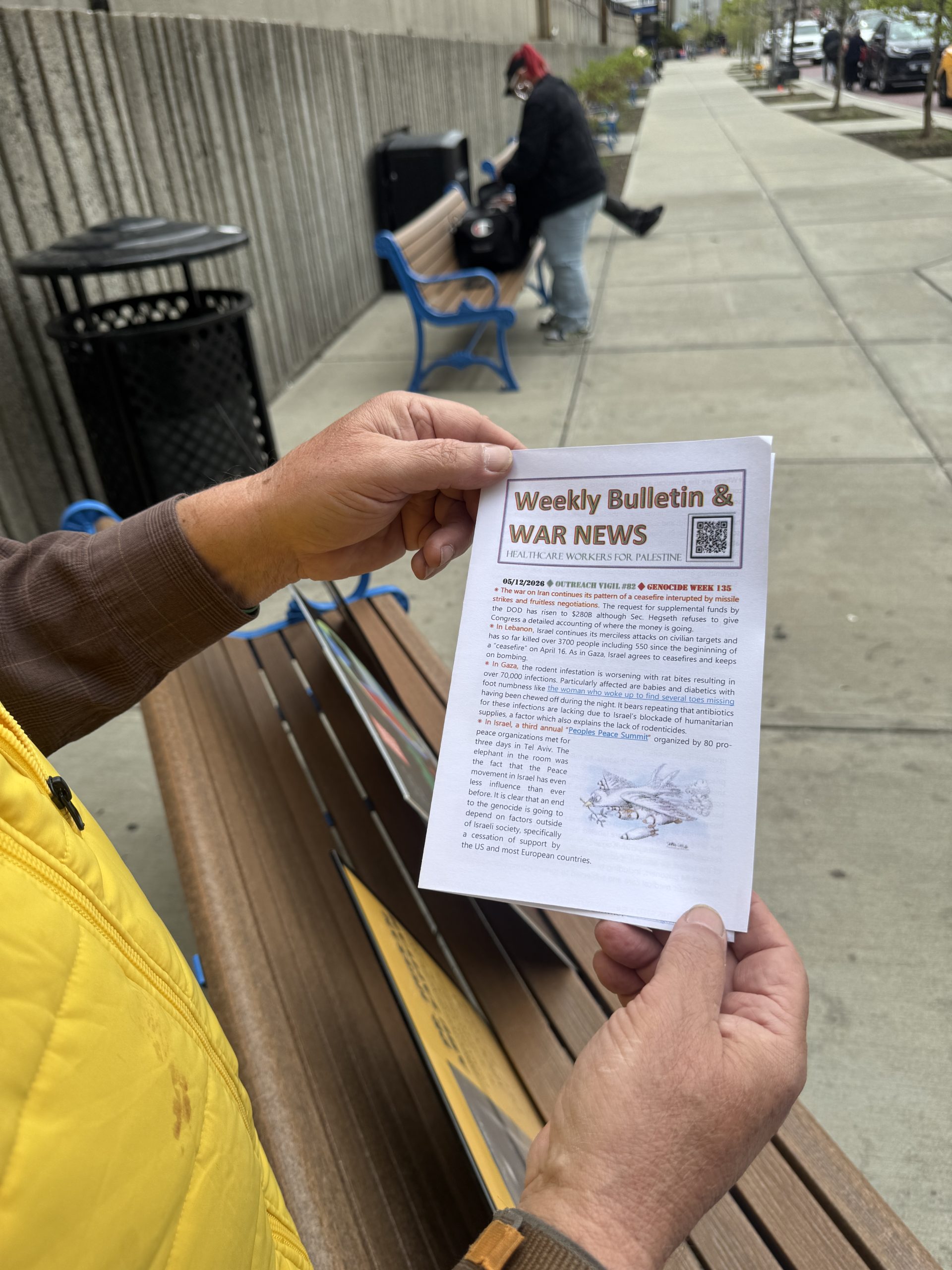
Others see the train station gatherings as part of a broader effort to educate the public about issues they believe receive little attention.
Phil Brewer, who is involved with several advocacy organizations, said sustained public engagement is essential.
Brewer said he’s focused on the crisis in Gaza, “but we’re not limited to that.” He said members of the group also discuss conflicts and humanitarian concerns in other parts of the world.
While members bring different perspectives and priorities, they share a common belief that public spaces still have the power to bring people into conversations they might not otherwise have.
That belief comes at a time when civic participation remains a challenge in many communities. Local elections often draw low turnout, and many residents say they feel disconnected from political institutions.
Peace Pact members acknowledge they’re unlikely to change minds with a single conversation. But they believe showing up consistently matters.
Every Monday, they return to the same spot outside the train station.
Some commuters stop. Others keep moving.
Either way, the group sees value in being present.
For Wesley, the goal is to remind people that their voices still matter.
“We have the power and we have the numbers,” he said.
Whether Bridgeport residents agree with Peace Pact’s views or not, the group’s weekly presence raises a larger question about civic life in the city: In an era when many people feel unheard, what happens when strangers slow down — and start talking?
Correction:
An earlier version of this story misspelled Stephanie Carrow’s surname.
