



It was the fall of 1991 when I sat in Professor Richard Hiskes’s Political Theory class at the University of Connecticut, pursuing my first master’s degree in political science. We studied the texts that shaped the nation’s founding: Locke’s treatises on natural rights, Rousseau’s social contract, the Federalist Papers.
We examined the intellectual scaffolding upon which a nation claimed to rest its legitimacy. Democracy, we learned, was not a gift but a fragile edifice requiring constant tending, and a commitment to the principle that legitimate power flows from the consent of the governed.
That was 35 years ago. Today, as America marks its 250th anniversary, I return to those discussions with a question that has haunted me. Where does democracy actually live for those of us whose faces were not imagined by the Framers, whose voices were deliberately excluded from that founding conversation?
The Framers understood something vital that we have begun to forget. In Federalist 10, Madison warned of faction and the tyranny of the majority. In Federalist 51, he argued for separated powers as a check against concentrated authority. Yet as I survey American governance today, those checks appear fundamentally compromised. The balance has tilted.
But this crisis runs deeper than institutional misalignment. It is a crisis of whose democracy we are defending. It strikes at the soul of the nation.
I served across three Presidential administrations—George W. Bush, Barack Obama, and, during COVID, Donald Trump —as a highly requested State Department contractor, trainer, and speaker promoting public diplomacy. I spoke at the Romanian parliament. I worked across 14 African and 20 Muslim and Arab nations, articulating through my leadership training what makes this country great. As President Bush put it, we were working to win the hearts and minds of the people. We believed democracy could inspire the world toward freedom and self-governance.
I witnessed that belief tested during the Arab Spring. In Tunisia, young people rose up demanding dignity, voice, and representation. Were those movements perfect? No. But they represented something essential: the human yearning for agency over one’s own future. Democracy is not merely a system of voting but a commitment that ordinary people deserve to shape their own destinies.
When President Obama stood before the nation and invoked E Pluribus Unum —out of many, one— he articulated what the Framers understood: American strength lies in unity born from genuine inclusion, not uniformity born from erasure.
So where does that unity live now?
As a woman of color, I watch the anniversary celebrations with a complicated heart. I see the parades and flags; I hear the national pride. I do not dispute American greatness. But I ask: what has made this nation great? It has been its capacity to expand the circle of belonging —to imagine that the self-evident truths it proclaimed might actually extend to all. It has been immigration. There have been persistent voices demanding that democracy’s promises apply to them as well.
Yet I watch as equity, the very tool by which we widened that circle, becomes a curse word. I watch as the best and brightest are sidelined or silenced. I watch as we treat the pursuit of genuine inclusion as a threat. The recidivism is real, the work undone—now a heavier lift than most imagined we would carry again.
As James Baldwin wrote, “Not everything that is faced can be changed, but nothing can be changed until it is faced.” We face a moment in which citizens have been erased from democracy itself, denied voice, denied vote, denied equal opportunity. We have fought for these rights before. And America is still young enough to set itself right.
We stand at a crossroads. The next 250 years will unfold in a world unimaginable to the Framers. Artificial intelligence will reshape work and society, and the nation’s composition will keep changing. This moment questions the very foundation on which the country stands; the balance of power among its branches is fractured.
The electorate and the people themselves must rise together and ask: Will we choose unity for the few, or democracy for the many?
The hearts and minds of a people cannot be won through nostalgia or coercion. They can only be won through the fulfillment of a promise: that in this nation, all of us have a voice. All of us belong. All of us are counted in the great “we” the Framers invoked but never fully realized.
That is the democracy worth celebrating. That is the work of the next 250 years. America must make that choice now.
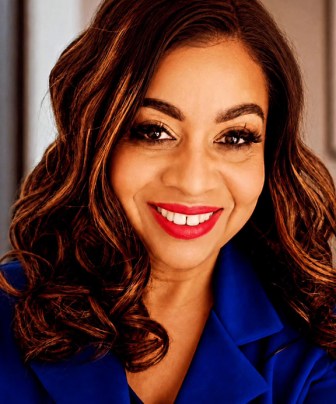
Yvonne Renee Davis of Windsor, is a former Appointee under President George W. Bush who is a consultant specializing in media, crisis communications, leadership and strategic counsel.