



There used to be a time when cameras did not exist on every street corner nor in the hands of every person with a cell phone.
If you did have a video of an event, it would take a few days to prepare it to share, and doing so would take a long time. I remember there was a time when we did not have social media where we could post things in an instant or even go live to share what was occurring in real time. In 2007, 19 years ago, the invention of the iPhone changed everything! Now you can record what is happening at a moment’s notice and even stream it live for the whole world to see.
Six years ago, in 2020, when everyone was locked in their homes because of the COVID-19 Pandemic, restricted from going anywhere, it was our mobile devices that allowed us to still experience the world around us. However, while our phones helped us stay connected with our loved ones, it was also opening people’s eyes to some of the most evil sides of human existence: hate and racism.
During 2020, our social media feeds were not only filled with current happenings of racist incidents, but they also had us reliving past racist events that occurred all over the country. All these incidents were recorded by bystanders or the targeted individuals in an act of brave documentation of the racist behavior exhibited by white women toward people of color doing everyday things.
In 2018, we met “Permit Patty,” Alison Ettel, who called the police on a young Black girl who was selling water to raise money to go to Disney World. She exhibited racist behavior.
We met “BBQ Becky” in 2018, also known as Jennifer Schulte, who called the police on a Black family enjoying a cookout in Oakland, California, even though it was legal to grill in the park. She exhibited racist behavior.
“Pool Patrol Paula” came on the scene in 2018 after she, Stephanie Sebby-Strempel, assaulted a Black teenager at a pool and screamed racial slurs at him. She exhibited racist behavior.
These videos became popular memes that “use alliteration, humor, and satire to draw attention to the white woman who acted as a white supremist vigilante to call the police on a Black [individual] for doing everyday activity…or living while Black.”
Then, on May 25, 2020, a white woman named Amy Cooper was walking with her dog in Central Park when a Black man, Christian Cooper, asked her to put the leash on her dog. Now known as the “Central Park Karen,” Amy called the police and lied, saying that Cooper was threatening her when in reality she was harassing him while he was in the park bird-watching and she was violating a city law to keep her dog on a leash. She exhibited racist behavior.
The term “Karen” became a widely used term to label white women who “weaponize their relative privilege against people of color — for example, when making police complaints against Black people for minor or even, in numerous cases, fictitious infringements.”
Having a term to identify white men and women who are surveilling or policing people of color is not a new phenomenon, nor are the racist or hateful acts of the individuals who have been called these names. It can be brought back to a time of segregation and enslavement when Black individuals were told what they could do and where they could be.
During Reconstruction (1865–1877) and Jim Crow (1877-1964), the terms Miss Ann and Mr. Charlie were used to identify a white woman or white man who used their privilege against people of color to keep them oppressed. In the NPR podcast “Code Switch,” Karen Grisby Bates described Miss Ann as “a woman who knew her place in society, was complicit in maintaining it, and who was at the upper end of the hierarchy. Even if she was a nice Miss Ann, she was still upholding this system that said: ‘white womanhood above all else, except white manhood.’”
In the present day, unlike with the countless events that happened in history, people have video footage to prove what happened. No one could now deny the racism that occurred. With the invention of social media, videos of such incidents spread like wildfire across everyone’s screens.
However, just six years after the term “Karen” was being used to identify racist behavior, the term has now become diluted to mean much less: a white woman who is whiny or complaining. The term is now being used in communities in ways the original term was not intended.
In speaking with some of my white colleagues and friends, they have shared with me that the term is used frequently about a white woman when they just speak up about something. They shared that a white child told their mother that they were acting like a Karen because they wanted to speak with the manager of the store about a concern they had.
The term is now being used if a white woman is perceived to be whining or overreacting in a situation, and the racial component is out the door. For example, if a person returns a shirt to the store because of an imperfection, they are called a “Karen.”
The meaning of the term has been diluted, and the impact lessened. In these contexts, the term begins to be watered down. However, the term was created to be used to identify when a white woman was being racist toward a person of color. Casually using this term in your home or everyday life lessens the seriousness of the use of the term in events that are overtly racist.
For example, if a white woman is at a coffee shop and the sales associate makes their coffee wrong, are they a Karen if they politely ask the associate to make the coffee over? No. What if the sales associate is a person of color, and instead of just asking for them to remake the coffee, the white female customer degrades them for making it wrong and demands to speak with the manager to have the employee fired? That is a Karen; it fits the context of the word.
Language is dynamic and is constantly changing and evolving as our society and culture shift. Words can take on new meanings and become obsolete altogether. However, it is critical that we are aware of the meaning behind the words we use and the historical implications and contexts they carry.
With an awareness of what being a “Karen” means, it is important for people to reject using the term casually and be intentional about its use. With this term and others, be conscious of the historical impact and purpose of the words that you use.
As our language continues to evolve, let’s not get too comfortable using words outside of their context. It is dangerous to allow words with strong meanings and intended strong impacts to be diluted so quickly, like in the case of the term “Karen.” The speed at which this term was watered down could signify the desire of some to dilute the impact of racism in our society.
Let’s uplift one another, call out racist behavior for what it is, and not suppress others’ voices when they speak up against racism and oppression.
As a Black man, I do not want anyone suppressing my voice. I know it is important to call out individuals who exhibit racist tendencies. Continue educating oneself and be conscious and aware.
Let’s continue pushing ourselves to always learn the true meaning of a term and educate our families, friends, and community, so we ensure that history is not diluted.
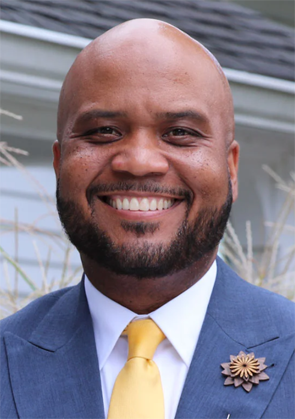
Kevin L. Booker, Jr. of New London is a former member of the Connecticut Mirror’s Community Editorial Board.