



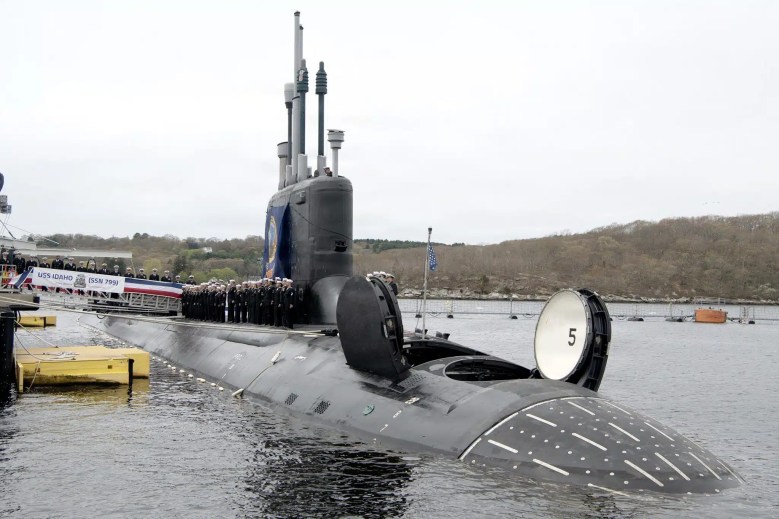
Early this month, an extraordinary gathering occurred in Westerly, Rhode Island, consisting of representatives of the U.S. Navy, state and federal officials from Connecticut and Rhode Island, and employer and employee leaders from industry organized by the Southeastern New England Defense Industry Alliance (SENEDIA).
They were there to mark a major milestone: 10,000 workers have now completed training through our region’s submarine workforce training pipelines and are hard at work rebuilding our nation’s undersea fleet.

This achievement – happening in the midst of an historic hiring surge at the Electric Boat shipyards in Groton and Quonset Point, Rhode Island –-powerfully defied the conventional wisdom that our nation had lost its manufacturing base for good and was incapable of “making it in America.”
Fifteen years ago, the naysayers could legitimately question whether our K-12 schools, community colleges, and adult job training programs had the size and focus on address the growing recapitalization.
As Vice Admiral Robert Gaucher, head of the Department of the Navy’s submarine industrial policy, stated at the Westerly gathering, starting in 2011 when Congress got serious about funding new submarine construction with budgets year after year, the volume of tonnage and increase in man – and woman – hours has today grown to record highs.
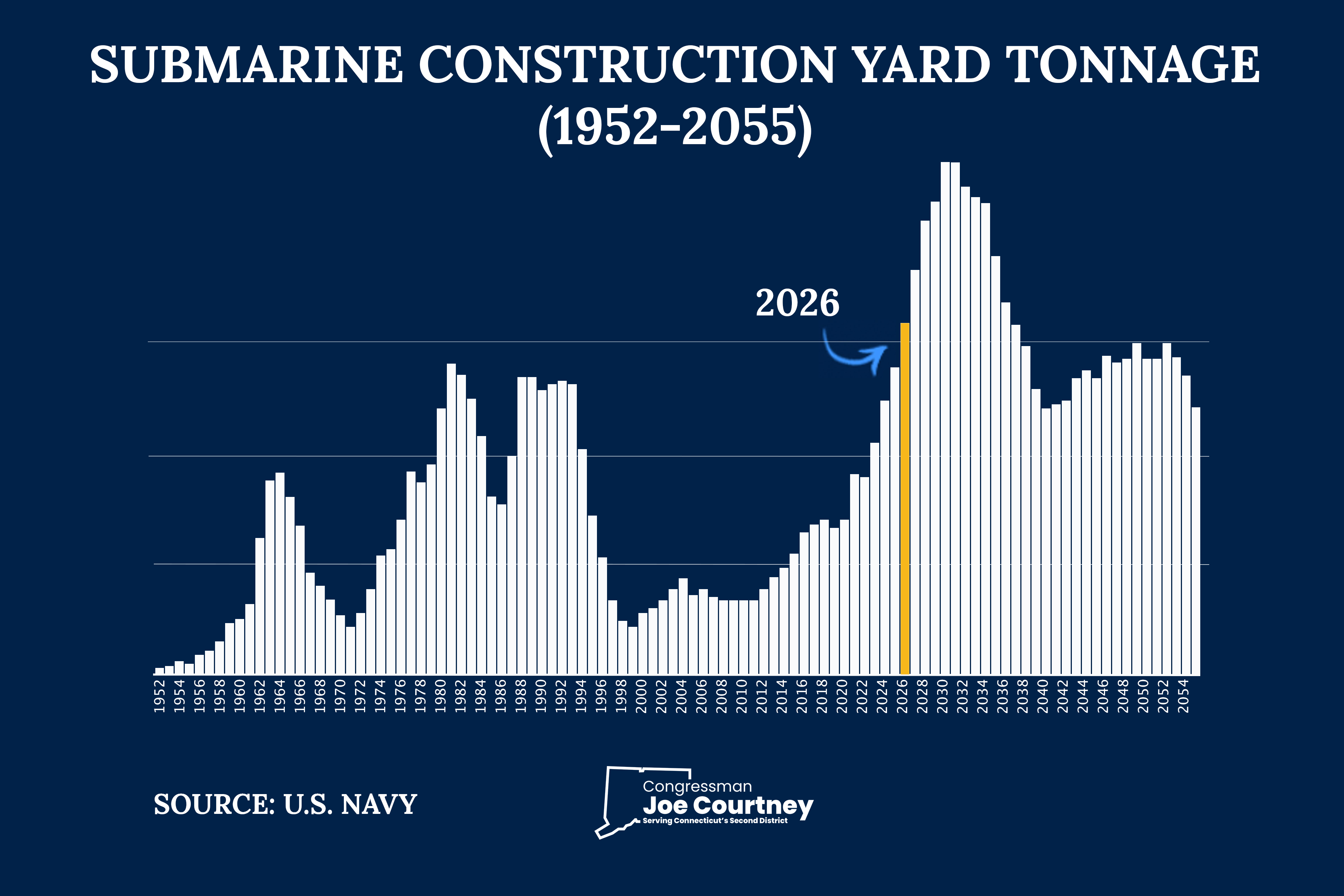

This surge, of course, could not happen without highly skilled engineers, designers, and metal trades workers. That’s where SENEDIA’s network of partners has transformed the curriculum of southern New England’s public schools, higher education, and job training programs, such as the state-of-the-art Westerly Education Center where the 10,000-trainee milestone celebration took place.
That center, like its counterparts in Connecticut, is using new technology – digital and virtual devices that did not exist even a few years ago – as well as robotics, additive manufacturing, and some AI to make the work safer and more efficient. But those devices will never displace the need for people.
Electric Boat’s 2026 hiring target of 8,000 new workers – the biggest number in the 120-year history of the company – emphatically settles that question.
Vice Admiral Gaucher also made it crystal clear: this milestone isn’t the end of our work. The historic demand signal from Congress and the Navy for submarine construction between 2026 and the 2040s will multiply many times over the need for skilled workers to satisfy the shipbuilding backlog of the Columbia- and Virginia-class subs already on the books, as well as the forthcoming new “block contracts” which the House Seapower Subcommittee and Congress authorized for both programs, in 2023 for Virginia and 2025 for Columbia.
The final execution of these contracts will happen soon and will send a profound message to southern New England that the work in our region is far from cresting but instead is just beginning to build a 21st century Navy.
Congressional funding for the joint University of Connecticut and University of Rhode Island National Institute for Undersea Vehicle Technology (NIUVT) has also fostered additive manufacturing and high-end engineering input to industry.
The skills training movement is happening in southern New England high schools too. In Connecticut, trade schools and comprehensive high schools, in partnership with the Youth Manufacturing Pipeline Initiative, are equipping students with in-demand manufacturing skills through career pathways programs. With tech schools and career pathway programs certificates of completion, high school graduates are entering the shipyards, at as young as age 18, to good paying careers with top notch benefits.

Just last May, I joined over 300 graduating high school seniors from across Connecticut for “Electric Boat Signing Day” at the Garde Arts Theater in New London. The students, surrounded by parents and family, were celebrated at a ceremony that resembled an NFL Draft Day with cheering, applause, shirts, and swag. Electric Boat hosted similar events in Rhode Island, bringing the total recruitment to 700 new hires.
SENEDIA’s 10,000 milestone event concluded last week with remarks by Tiffany Kominski, a dynamic supervisor at EB, who not only graduated from a pipeline program just a few years ago but also is the mother of a recent graduate who together are creating a new generation of shipbuilders. They have received training and employment on both sides of the Connecticut-Rhode Island border, perfectly representing the regional uplift that Congressional and state collaboration is achieving every single day.
Her speech describing her complete change of career from non-manufacturing to a highly skilled shipyard leader was a powerful rebuttal to the cynics who claim that America cannot or will not reconstitute our industrial base.
In a December 1940 fireside chat, President Franklin Roosevelt recognized the critical importance of Americas skilled industrial workforce, describing them as “the arsenal of democracy.” In 2026, those words still ring true in southern New England for the 10,000 graduates of SENEDIA’s network of training programs, who have answered the call for a new generation of skilled American shipbuilders.
Joe Courtney, a Democrat, has served as the U.S. representative for Connecticut’s second congressional district since 2007. He is a Ranking Member of the Seapower and Projection Forces Subcommittee and a senior Member of the House Education and Workforce Committee.