



Next year I will be a pediatrician. As a medical student, I have learned what that means: to not only practice good medicine, but to advocate for children and work closely with parents to protect their family’s health.
In today’s age of misinformation and medical mistrust, this task seems harder and harder. Physicians’ voices are muddled by Instagram reels and TikToks, artificial intelligence, and a federal administration that often strays away from evidence-based guidelines.
I write this now as a plea and a hope: parents, we are on your side and we want to help.
On August 10, President Trump signed an executive order about childhood vaccination schedules that goes against the guidance of major health organizations. This order recommends that vaccine visits be separate from well-child visits as well as separating the measles, mumps and Rubella vaccine from one to three shots. If implemented, this will mean more barriers to getting vaccines and decreased access to seeing the pediatrician, especially for the most underserved patients.
This past year, I have watched countless parents decline Vitamin K shots, reject Hepatitis B, and delay the MMRV for their kids. I remember sitting down with a nervous new mother who wanted to cherry-pick each vaccine her child received. She just wanted what was best for her baby. As medical providers, we wanted what was best for her baby too!
In the face of public distrust and conflicting messages on vaccines, our voices as physicians are increasingly drowned out. The study that linked vaccines to autism was repeatedly debunked, and although its author was found guilty of fraud for falsifying data, its influence persists. The COVID-19 pandemic and its vaccine mandates turned vaccines into a battle about preserving individual rights, rather than protecting public health. This left a tangible impact: the CDC released a report revealing a decline in children’s vaccination rates, due in part to vaccine hesitancy and misinformation.
After Robert F. Kennedy Jr., a vocal vaccine critic, was appointed as U.S. Secretary of Health and Human Services, federal vaccine policy shifted dramatically. Even though the government historically supported vaccines, the CDC’s vaccine advisory committee was replaced largely by vaccine skeptics. Childhood immunization recommendations were narrowed from 17 preventable diseases to 11. The American Academy of Pediatrics publicly opposed these changes and the Connecticut legislature reaffirmed its existing schedule this year.
Clearly, the public voice on vaccines is fragmented, which is affecting public policy, how physicians practice, and parents’ concerns. I can see why that new mother did not trust us.
But we have forgotten what happens when we do not immunize our children.
Vaccines save lives. In countries with low immunization rates, hundreds of thousands of children are continuing to needlessly die from preventable illnesses, including pneumococcal disease, pertussis, Hib, and influenza.
We do not fear what we do not see. The rates of life-threatening illnesses are lower in America because of herd immunity, which is when enough people are vaccinated that the disease is virtually eradicated. In 2000, measles was nationally eliminated from the U.S. after decades of vaccination. But after the last 20 years of misinformation and distrust, vaccination rates fell and measles cases rose. This year, the CDC reported 2,371 confirmed measles cases in America, including two in Connecticut.
The threat of dismissing vaccines is not just a problem for resource-poor countries: it is real and it is here.
Public health should not be political. But in the past two years, it has become a political lightning rod, as highlighted by Trump’s new executive order. Vaccine misinformation takes away the ability to make fully informed decisions, resulting in risks to children’s health.
Parents, you have power. You can protect your children from life-threatening illness. You can stop the spread of disease. You can trust us to support you and fight for your children. You can visit parent-led resources such as Voices for Vaccines, or nonprofit organizations dedicated to providing evidence-based information, such as Vaccinate Your Family, to make informed decisions about your children’s health. You can also check out local vaccine guidelines here.
I don’t know if my words will reach that new mother. I know she wants the best for her child and the cloud of misinformation is challenging to dissipate. As I begin my career as a pediatrician, I hope to rebuild trust between parents and physicians by engaging in open, respectful conversation.
I hope that the public can see that we are on your side. Together, we can help the children of Connecticut live healthy lives.
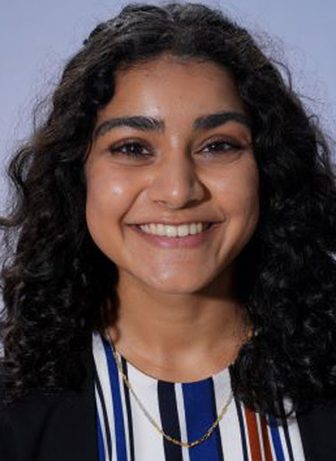
Nishika Navrange of Westport is a medical student at the University of Connecticut School of Medicine.