



Muslims are sometimes portrayed as newcomers to the American story. History tells us otherwise.
The Muslim presence in this country reaches back centuries, long before many modern waves of immigration. Some of the earliest Muslims in America were West Africans brought here against their will through the transatlantic slave trade. Historians estimate that a significant proportion of enslaved Africans were Muslims, although the precise number remains uncertain. The National Park Service notes that the first substantial Muslim presence in what became the United States resulted not from voluntary migration from the Middle East but from the forced transportation of enslaved Africans.
Their names and writings offer powerful evidence.
Omar ibn Said was a Muslim scholar from West Africa who was captured in 1807 and transported to South Carolina. In 1831, while still enslaved in North Carolina, he wrote his autobiography in Arabic. Preserved by the Library of Congress, it is the only known surviving autobiography written in Arabic by an enslaved person in the United States.
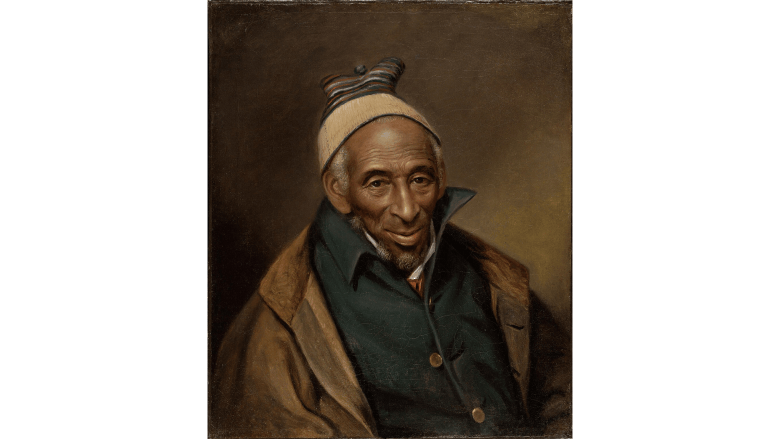
Ayuba Suleiman Diallo, born in what is now Senegal, was another educated Muslim who was enslaved in Maryland during the 1730s. Yarrow Mamout, an African Muslim enslaved for decades before gaining his freedom, later became a respected resident and property owner in Georgetown. His portrait is one of the earliest known portraits of an African Muslim in the United States. These lives remind us that Islam is not foreign to American history; it is woven into that history, including its most painful chapters.
Muslim Americans also serve this country as teachers, scientists, engineers, entrepreneurs, public officials, first responders, and members of the armed forces. They care for patients, educate children, create businesses, and strengthen neighborhoods. They are not standing outside the American community asking to be admitted. They are already part of its fabric.
This history matters as Bridgeport considers recognizing Eid al-Adha as an official public school holiday.
Eid al-Adha, the Festival of Sacrifice, commemorates Prophet Abraham’s devotion to God and willingness to make a profound sacrifice. Abraham’s story connects Islam to the wider Abrahamic tradition shared by Muslims, Christians, and Jews. The holiday emphasizes values that people of every background can appreciate: devotion, sacrifice, generosity, compassion, family, and care for those in need.
Recognizing Eid al-Adha would accommodate Muslim students, educators, and families on one of their faith’s most important days. But its importance goes beyond accommodation. It would create an educational opportunity for the entire school community.
My family’s experience demonstrates the urgency of spreading awareness and why such education matters. My wife is a certified schoolteacher and was the only Muslim teacher at her school. Her students often asked why she wore a headscarf, and she welcomed their curiosity. She treated their questions as opportunities for learning.
One day, however, a student forcefully opened her classroom door, threw a bag inside, and shouted, “Allahu Akbar,” in an attempt to mock and frighten her while she was teaching. A colleague intervened, and the school administration responded appropriately.
My wife could have responded only with anger. Instead, she responded as an educator. She understood that the student’s behavior likely arose from ignorance and stereotypes, including images of Muslims repeatedly presented through the lens of violence. With the school’s permission, she later taught a lesson about Muslims, Islamic civilization, and its contributions to humanity.
That incident demonstrates what happens when stereotypes fill the space that education leaves empty. Students should learn that civilizations do not develop inside sealed containers. Human advancement is a long conversation across peoples, religions, and continents. Knowledge moved from Mesopotamia and ancient Egypt to Greece and Rome; from Greek, Persian, and Indian scholarship into the Arabic-speaking world; and from centers such as Baghdad, Cairo, Damascus, Cordoba, and Toledo into medieval and Renaissance Europe. European scholars later expanded this inherited knowledge, contributing to the Scientific and Industrial Revolutions.
Every civilization preserved, questioned, translated, and developed ideas received from others. The story of progress is therefore not a story of isolated greatness. It is a story of exchange.
The history of mathematics provides a compelling example. The numerals used throughout much of the world are properly called Hindu-Arabic numerals because their earliest forms developed in India and were later studied, developed, and transmitted by scholars writing in Arabic during the Islamic Golden Age. This scholarship flourished while much of medieval Europe experienced periods of comparatively limited access to classical scientific and philosophical works.
Muhammad ibn Musa al-Khwarizmi helped introduce this system of calculation to a wider intellectual world. The word “algebra” comes from al-jabr, a term appearing in the title of his famous mathematical treatise, while “algorithm” derives from a Latinized form of al-Khwarizmi’s name. Every modern computer, search engine, and artificial-intelligence system relies on algorithms, giving his intellectual legacy remarkable contemporary relevance.
Ibn al-Haytham transformed the study of light, vision, and optics by combining mathematical reasoning with careful observation and experimentation. His works were translated into Latin and influenced later European scientific scholarship. Physicians and scholars such as al-Razi and Ibn Sina — known in the West as Avicenna — produced influential medical works. Ibn Sina’s Canon of Medicine, for example, became an authoritative medical text in both the Islamic world and Europe for centuries.
Jabir ibn Hayyan became associated with an influential body of works on alchemy, chemical substances, and experimental processes, although historians continue to debate the authorship and dating of some writings attributed to him. Muslim astronomers improved observational instruments, corrected astronomical models, and produced tables that supported navigation, timekeeping, and later scientific investigation. In Muslim-ruled Andalusia, scholars preserved, translated, debated, and expanded knowledge drawn from Greek, Roman, Persian, Indian, Jewish, Christian, and Islamic traditions while also producing original scholarship.
Political scientist Samuel Huntington famously argued that cultural and religious divisions could become major sources of global conflict in what became known as the “clash of civilizations.” Our schools should teach a more constructive lesson: Civilizations are not destined merely to clash. They meet, borrow, translate, debate, and enrich one another.
Recognizing Eid al-Adha would help Bridgeport teach precisely that lesson.
This is therefore not simply a request for another day off. It is an invitation to acknowledge the students, families, and educators who already contribute to Bridgeport. It is also an opportunity to replace unfamiliarity with knowledge and stereotypes with understanding.
When Muslim children see their holiday recognized, they receive a message that they belong. When non-Muslim children learn why the holiday matters, they discover shared values and develop a broader understanding of the world. When schools teach the contributions of Muslim, African, Asian, European, and Indigenous civilizations together, students learn that no community has a monopoly on knowledge or human achievement.
Muslims have been part of America from the era of slavery to the present day. They are part of our classrooms, hospitals, universities, armed forces, and neighborhoods. Recognizing Eid al-Adha would honor that reality and help prepare our children to live together with knowledge, dignity, and mutual respect.
Mostafa Hassan is a professor, lecturer, and educator in history and cultural studies. He is a husband and father of three children and lives in Connecticut with his family.