



Speaking before more than 400 members of Connecticut’s business community on Thursday morning, the state’s candidates for governor mapped out plans for the economy that shared common roots but veered in very different directions, highlighting key policy distinctions in the weeks leading up to their first debate.
The incumbent Democrat Gov. Ned Lamont and his Republican challenger, Greenwich Sen. Ryan Fazio both spoke at an event organized by the Connecticut Business and Industry Association, the state’s largest business group. The candidates did not share the stage and were interviewed separately by CBIA leader Chris DiPentima.
The competition loomed over the candidates’ remarks, with both seeking to frame their economic plans as the best for Connecticut, a state that has seen a fair share of ups and downs in recent months with rising unemployment alongside GDP growth. The discussion comes less than two months before Election Day and as new polling shows Lamont with a double-digit lead in the race, even as prospective voters express a desire for change.
While both candidates agreed that affordability, cost of living, and jobs remain top concerns, they differed on the specifics, with Fazio arguing the state needs to turn its economy around. Fazio pledged to pursue tax reforms, cut several regulations for businesses and reduce red tape around occupational licensing and expand apprenticeships.
“Connecticut really does have all the fundamental attributes to succeed, like no other state economy in the entire country, and yet people are pessimistic,” Fazio said. “People are struggling to pay their bills. I know that this state and the state economy can grow and succeed like no other place, but it’s going to take a change in direction and policy from the top in order to accomplish that.”
Lamont, meanwhile, countered that his work over the past eight years has improved the state’s financial situation and that with four more years he could further deliver on recent progress. He called attention to his plans for healthcare in the state, increasing housing supply, improving workforce pathways, and continuing to support the state’s efforts in innovation and the life sciences.
“We’ve had eight balanced budgets in a row, and are becoming increasingly a place of economic opportunity,” he said, adding the state has “gone from one of the slowest growing states in the country to, I think, it’s the 12th fastest.”
The visions presented highlight that the differences between the candidates largely rest on a question of change versus maintaining momentum, and how state government should provide relief amid national economic changes. Those questions will likely weigh heavily in the minds of the state’s business community, which argues that lawmakers and state officials need to be doing more to address Connecticut’s uneven economic picture, particularly the workforce and affordability issues that continue to affect both employers and employees.
The Fazio plan
The 36-year-old state senator was up first and he used his time to call attention to various proposals that would make a variety of cuts, from income taxes to reductions in electricity bills.
The Republican candidate also discussed his proposal to reduce healthcare costs by supporting more competition in the marketplace. That includes through association health plans, a proposal that would allow small businesses to form a group and purchase insurance for employees.
Several of these points have been raised by the Republican politician before, with Fazio regularly arguing that the state’s economy has been failed by Lamont’s vision. On Thursday, the senator challenged the Lamont administration’s figures when it comes to economic growth and said cutting spending would put the state on a path to economic success.
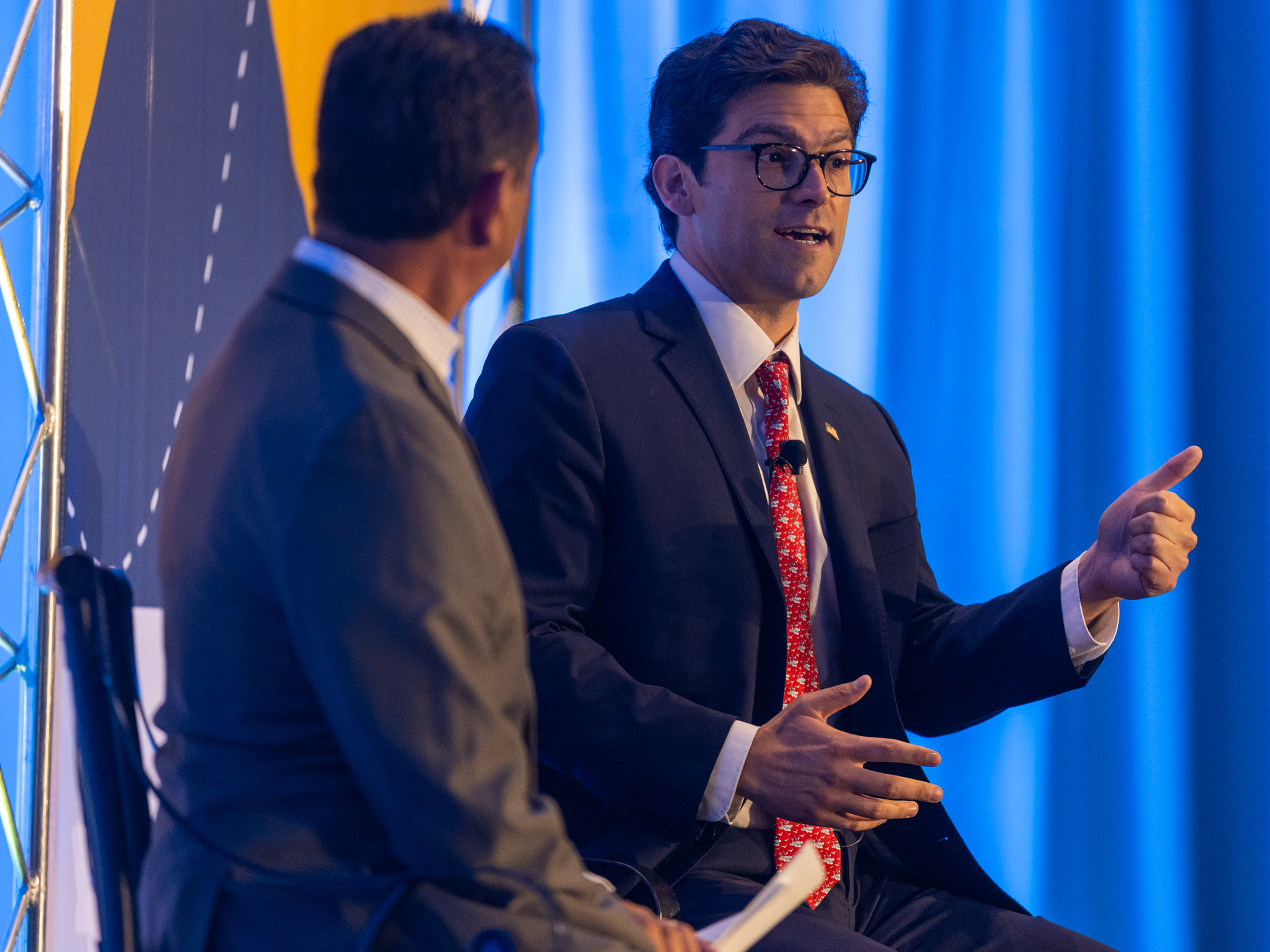
“We could limit spending, find savings to the tune of $2 billion per year or more in a state budget over $20 billion, and use that to reduce taxes on middle-class families, make our state affordable, and help our economy grow,” he said.
Throughout the conversation, Fazio argued that the state’s regulations often stifle economic growth, making it harder for businesses to operate.
“This state can flourish like no other place in the entire country, but we need change in policy, leadership, affordability and relief,” he said. “Then we can create jobs and opportunity.”
The Lamont plan
The two-term incumbent was up next, framing his time in office as an improvement for the state’s finances while adding that a third term would enable him to take things further.
During his remarks, Lamont sought to strike a middle-ground at an event where many in the room have criticized the economic policies enacted under his administration.
“Going back 10, 20 years, the business community and the state government have a pretty lousy relationship, and there was a lot of back and forth. It was not very helpful,” the governor said.
But in recent years, Lamont said, that has changed. “ We’ve had a good opportunity to work together,” he said.
He said if he wins a third term he would focus on healthcare, a growing area of concern for residents that has only intensified in the wake of federal cuts to benefits.
The governor also called attention to the need to increase housing supply, build out pathways from education to the workforce, and continue to promote and support both Connecticut’s innovation-based economic development efforts, as well as the state’s small businesses.

But the governor took a sharper tone when speaking to reporters after his appearance, noting that as the incumbent, he faces different expectations than his challenger.
“I made some promises eight years ago. I was going to get our fiscal house in order, balance the budget, and cut taxes for the middle class. Eight years later we’ve delivered on that,” he said. “I can get out-promised in a campaign, but nobody’s going to out-deliver what we’ve been able to accomplish.”
Affordability and economic issues
The candidates remarks came at end of event marked by several calls for Connecticut officials to address economic issues, from job openings to the state’s lack of affordability, with the dual goals of boosting the state’s quality of life and economic competitiveness.
The organization’s recent publications have focused on these issues.
A recent CBIA consumer survey found that half of Connecticut residents feel worse off than they were a year ago. Two additional releases Thursday morning — the state’s latest annual survey of Connecticut businesses and new data on CT’s economic competitiveness — both found that even as the state sees improvements in some economic figures, it is also struggling with high costs. That’s straining companies and the people working for them.
