


Connecticut is making progress in reducing its greenhouse gas emissions, but new projections show the state is unlikely to meet its target by 2030 – making it harder to stave off the local impacts of global warming.
“Cutting greenhouse gas emissions is critical,” said Emma Cimino, acting commissioner for Connecticut’s Department of Energy and Environmental Protection.
“Preventing the worst impact of climate change is far, far cheaper than repairing the damage that more and more extreme weather events can have on our infrastructure, our natural resources, and our public health,” she said.
Cimino pointed to a rain bomb in September that dumped more than 7 inches of precipitation in Fairfield County, flooding homes, businesses and parts of I-95.
“When it rains, it can rain much harder. This means more pressure on roads, drainage systems, homes, businesses, and public infrastructure,” she said. “Addressing climate change is an affordability issue for our state.”
Connecticut’s greenhouse gas emissions are 28% less than what they were in 2001, but in order to meet its target by 2030, the state will need to bring that reduction to 45%. Current projections show the state is likely to miss that goal by about 9%.
What CT’s climate projections show
Greenhouse gas emissions from homes, commercial buildings and electric power decreased from 2023 to 2024, according to data released by the Governor’s Council on Climate Change in November.
Emissions from buildings are down as more people switch from home heating oil to natural gas, while the number of people using electricity has risen to approximately 20%. That’s according to Michael Malmrose, associate research analyst with DEEP’s Office of Energy Supply and Infrastructure.
Emissions from electric power are down as dirtier power plants are being replaced with gas generators and the Millstone Nuclear Power Station has been online for all of 2024, Malmrose said.(Reactors at Millstone were offline for 89 days for refueling in 2023).
Cimino called the emission reductions “real progress”.
“This is really significant because emissions continue to stay below pre-pandemic levels, even as Connecticut’s economy has recovered,” she said.
But emissions from transportation increased by approximately half a million metric tons from 2023 to 2024. That’s equivalent to the amount of gas emitted by more than 110,000 motor vehicles in an entire year, according to the Environmental Protection Agency.
“The numbers are a little daunting,” Cimino said.
What’s driving transportation emissions
A spokesperson for DEEP said the uptick was largely driven by increased gasoline consumption. Part of that was caused by a 2% bump in the number of miles travelled, but it’s not clear what else could be contributing to the rise.
One thing is certain – state environment officials don’t expect the issue to get any better now that the Trump administration has rolled back regulations on air pollution and fuel efficiency standards for new cars.
“Connecticut cannot meet our goals on our own. We need our federal partners to engage as well. Unfortunately, we’re seeing the opposite of that right now,” Cimino said.
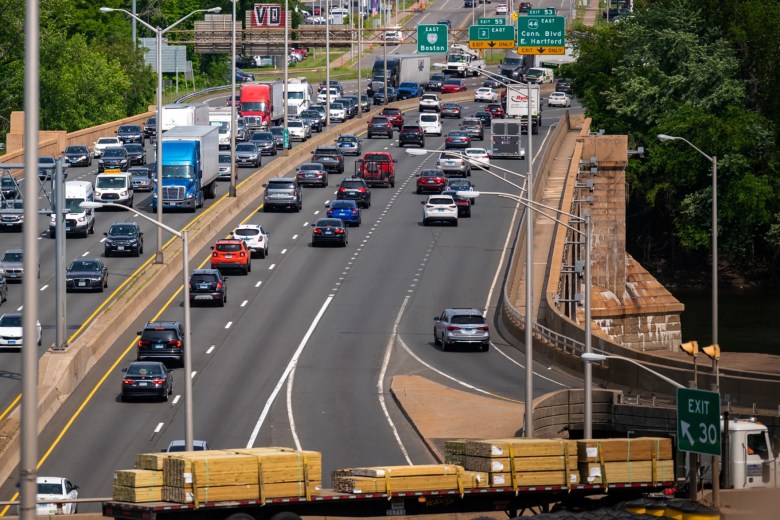
The transportation sector is the highest source of greenhouse gas emissions in Connecticut, releasing more than twice as much carbon as residential buildings.
One way to fix that? Electric vehicles.
“EV adoption is going to be a key to getting those emissions down lower,” Malmrose said.
As of July 2027, more than 75,000 electric vehicles were registered in Connecticut, making up 3% percent of all motor vehicles on the road.
DEEP recently expanded the state’s EV rebate program, known as CHEAPR, to include more used electric vehicles. Under the new guidelines, used EVs with a purchase price of $35,000 or less may become eligible for the state’s Rebate+ Used incentive of up to $5,000.
“We continue to recognize, as a state, that some of the upfront costs are higher for those technologies,” Cimino said.
This story was first published Nov. 18, 2026 by Connecticut Public.