


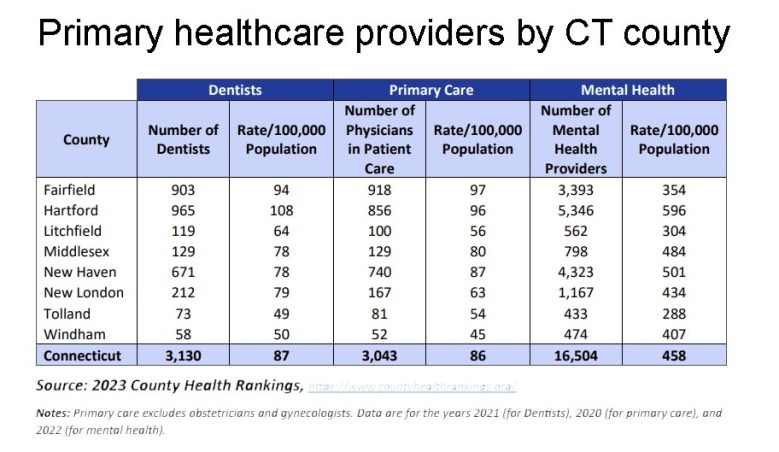
In Connecticut, access to a primary care doctor often depends on where you live. The state’s 2025 rural health application demonstrates this gap: 97 primary care physicians per 100,000 residents in Fairfield County, compared with 56 in Litchfield County, and 45 in Windham County.
National Rural Health Day, on Nov. 19, recognizes the clinicians caring for communities like these. As a family physician who helps train rural doctors, I believe sustaining their work requires investing in the people who will follow them. Connecticut should fund medical scholarships tied to service so more students can afford to become the physicians our rural communities need.
The need is already clear. Workforce data show that 34.1% of Connecticut physicians were older than 60. Yet among physicians who completed residency here from 2015 through 2024, only 46.7% were practicing in Connecticut. Connecticut must replace retiring physicians while addressing existing shortages, and it cannot assume the doctors it trains will stay to do that work.
For communities where patients already have few options, losing physicians can mean losing access to care. People in the Northwest Corner describe practices closing and offices that no longer accept new patients. As care becomes harder to find, screenings are put off, chronic conditions go longer without treatment adjustments, and manageable problems can become emergencies. Older residents are especially vulnerable. Staying well at home often requires regular medical care, and traveling farther for that care becomes more difficult as people age.
Preparing the next generation of physicians takes years, and the cost of that preparation can work against these communities’ needs. Some students leave medical school with debt approaching $400,000, while primary care pays less than most other specialties. Debt does not determine every career choice, but students considering family medicine must weigh substantial loan payments against lower expected earnings. If Connecticut wants more physicians to choose that work, helping them afford their education is a practical place to start.
That was a central conclusion of Connecticut’s Physician Recruitment and Retention Working Group, on which I served. Its May report made service-based medical scholarships its top recommendation. The group proposed one year of practice in a medically underserved Connecticut community for each year of scholarship support, with highest priority for family medicine and psychiatry.
This approach would give students financial support while establishing a clear obligation to Connecticut patients. Loan repayment programs remain valuable recruitment tools, helping physicians address debt already incurred. Scholarships help students finance their education while they are still forming career plans. They make primary care more affordable to pursue and connect the state’s investment to service in communities where physicians are needed.
That service can also give physicians an opportunity to build careers they want to continue after their obligation ends. In the family medicine residency program I direct, physicians spend their final two years training in Northwest Connecticut. They learn to care for rural patients, work with local colleagues, and understand the resources available in the communities they serve.
One national study estimated that, three years after residency, 50.9% of family physicians trained in rural programs were practicing in rural areas, compared with 18% of those trained in urban programs. Rural training and a service commitment offer different but complementary opportunities to establish professional and community connections. As physicians build patient panels, relationships with colleagues, and lives outside work, they gain reasons to stay.
Scholarships cannot guarantee lifelong retention, and keeping physicians will also require attention to their working conditions. The working group addressed those needs as well. But Connecticut can support the doctors practicing here today while helping students prepare to follow them. Funding scholarships tied to service would begin that work with a commitment to practice in underserved Connecticut communities.
The time required to prepare those students makes this a decision we should make now. A student entering medical school in 2027 would ordinarily complete a three-year family medicine residency in 2034. Starting two years later moves that completion date to 2036. Rural communities will need care throughout those years, and their physicians will continue retiring on their own schedule.
Waiting until access deteriorates further would leave those communities facing the same years of training with fewer doctors to care for them in the meantime. The state should fund these scholarships now, while it can still help students commit to practicing in the communities that need them. A child born in Winsted or Salisbury deserves the same chance at a healthy life as a child born in Stamford or New Haven.
Dr. Traci Marquis-Eydman is an associate professor of family medicine at Quinnipiac University’s Frank H. Netter MD School of Medicine and director of its Rural Family Medicine Residency Program. A primary care physician at Hartford HealthCare Medical Group, she also served on Connecticut’s Physician Recruitment and Retention Working Group in 2025.