


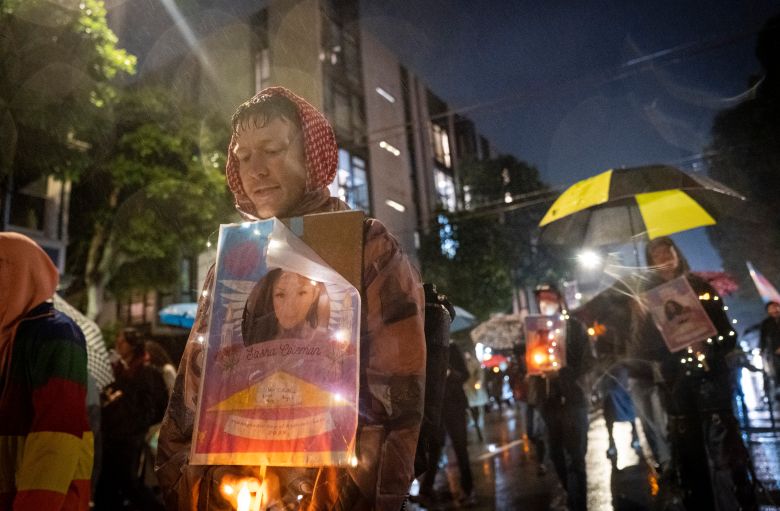
Sophie Lee was a young performer schooled in the art of ballroom who could make a space feel alive as soon as she stepped into it. SaVanna Wanzer shattered glass ceilings when she founded D.C. Trans Pride. Denise Foster was the baby of a big family whose eight siblings adored her.
Holly St. John, who lived for years in Durham and studied at Central Connecticut State University, was a budding musician who was unafraid of bumblebees and knew her way around a garden. She would have turned 22 earlier this month.
Those names and dozens more will ring out across Connecticut Friday night as hundreds of activists, organizers and LGBTQ+ advocates and allies gather across the state to observe the 27th annual Transgender Day of Remembrance (TDOR), which recognizes the lives of trans people lost to anti-trans violence, self-harm and natural causes from November 2025 to October 2026.
Since last November, 62 known trans people have died across the United States, according to a report from the Advocates for Trans Equality (A4TE). Twenty-eight of them, over half of whom were Black trans women, lost their lives in acts of anti-trans violence. The remaining 34 died from a mix of unknown and natural causes.
For years, Connecticut’s recognition of the day has been growing, thanks largely to the work of LGBTQ+ and specifically trans grassroots activists working across its towns and cities to create space for collective grief.
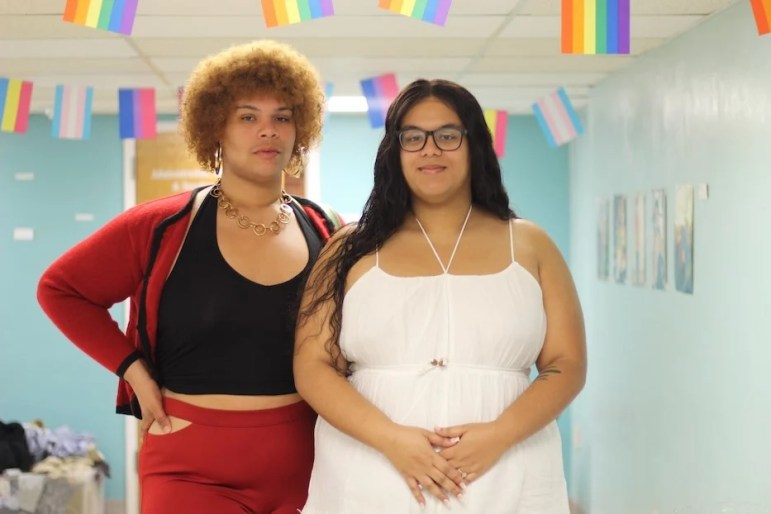
“I think TDOR is a day of deep reflection for many of us who are on the ground and do this work,” said Alyssa-Marie Cajigas Ortiz, a longtime organizer in education, LGBTQ+ rights and racial justice work who in 2023 co-founded The Children of Marsha P. Johnson. “It’s a day where we are reminded of the cost of visibility, and for those of us that organize, it is a day that allows us to recommit ourselves to the struggle of protecting our trans siblings, and specifically Black and brown trans folks.”
TDOR, which marks the culmination of Transgender Awareness Week, began in 1999 as a way to honor the late Rita Hester, a Black trans woman and Hartford native who was stabbed to death in her Boston apartment in November 1998, just days before her 35th birthday. Her mother, Kathleen Hester, pressed law enforcement to find her daughter’s killer until her own death at 81 years old (members of her family are still fighting for her, including from Connecticut). Over two decades later, her case is still unsolved.
This year, the advocacy group PeerPride has organized Friday evening vigils in New Haven, Danbury, Hartford, Cheshire, Wallingford, Waterbury and New London, each with a local organizer. In addition, there will be an an interfaith prayer service and vigil in Middletown, co-sponsored by Wesleyan University, Middletown Pride and First Church Middletown; a gathering at Trinity College organized by the school’s Queer Resource Center; and a vigil in Bridgeport from Milford Pride, the Triangle Community Center, the City of Bridgeport and Bridgeport Pride Center.
“This year, we’re really trying to ground ourselves within community, including allies of course, and be there for each other,” said PeerPride Program Director Eliot Olson, who organized this year’s vigil alongside PeerPride Founder and Trans Haven organizer Kirill Staklo. “I think a lot of people talk about burnout, and this is supposed to be a reprieve from that — not only to remember people that we’ve lost, but also to grieve and feel the weight of what is happening.”
Of the known trans people who have died in the last year, Olson noted how many victims were Black trans women, who are significantly more likely to experience gender- and race-based violence than their peers, transgender and cisgender alike, because of the multiple marginalized identities that they have. He added that the number of deaths that organizations like A4TE release is often artificially low, because trans people are frequently misgendered and deadnamed — referred to by the name they were given at birth — in police reports and obituaries.
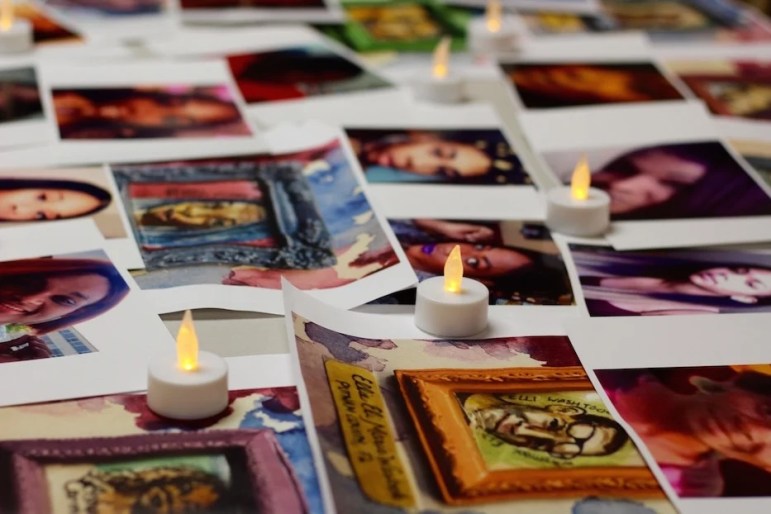
Credit: Lucy Gellman / Courtesy of the Arts Council of Greater New Haven
“It takes so much work to come out and be yourself,” said Olson, who began his own process of coming out as trans (or in his words, “my egg cracked”) at 21, and is now 34.
He remembered the pain of talking to parents in a previous job as a resource for youths and hearing them say that they were struggling to recognize their child after that child had transitioned.
“To fight so hard to be recognized, and then when someone dies, for all of that pain, sweat and tears to be erased when it was supposed to be one of the loudest parts of who you were, there’s kind of no words for that.”
It comes at a moment of escalating anti-LGBTQ+ violence, rhetoric and legislation, much of which is aimed especially at trans youth. This year, the American Civil Liberties Union (ACLU) has tracked over 500 pieces of legislation that target the LGBTQ+ community, from proposed sex-based bans on youths and high-school sports teams to censorship of public school curricula to new restrictions around gender-affirming care. On the federal level, the current administration has also released several anti-LGBTQ and anti-trans executive orders.
Connecticut has seen some of those challenges firsthand. This year, state legislators proposed bills that would have restricted gender-affirming psychiatric care at Connecticut Valley Hospital and kept trans athletes off sports teams in public schools (neither of the bills progressed). In summer 2025, both Yale New Haven Health and Connecticut Children’s Hospital both suspended their access to gender-affirming care for youths, leaving hundreds of young people and their families in limbo.
“I want to continue advocating, especially for trans youth,” said Will Love, who came out as nonbinary “as my 40th birthday gift to myself,” and seven years later has organized two TDOR gatherings in Danbury, where they were born and raised (Love is also a driving force behind Danbury’s Pride Month celebrations and will be running Friday’s vigil at St. James Episcopal Church). “It’s easy to be afraid of what you don’t understand and what you don’t know … people are very quick to fear what they don’t know, and they are quick to judge.”

For Cajigas Ortiz, who identifies as an Afro-Puerto Rican trans woman and plans to attend PeerPride’s vigil on the New Haven Green, the day is also a reminder of the legislative and political fight ahead (“I don’t want us to go out to Sunday brunch” now that the midterm elections are over, she said with a note of warning in her voice).
In her work at the Children of Marsha P. Johnson, which does both education and advocacy with a focus on Black trans women, she’s often reminded of the power of collective action and the need for mentorship, so that trans youths — particularly trans youths of color — know that they are not alone.
In its 2025 Survey on the Mental Health of LGBTQ+ Young People, the Trevor Project reported that LGBTQ+ and particularly trans youths who had access to gender-affirming care, supportive school and home environments, and accommodations like gender-neutral bathrooms were less likely to report thoughts of suicide or self-harm than peers who did not have those supports.
“The only way that we get through this very deep moment of violence that we are experiencing, not only here in this country but globally, is through community,” she said. “Especially during a time where we are being attacked so deeply through legislation, it is community and those mutual aid networks that we create that will sustain us.”
“I will not deny the fact that there are moments where it all just feels like too much, and I just want to ball up in a corner and cry,” she added. “But so many years into this work, what keeps me sane and grounded is the community that I’ve built, the network that I have, but also the optimism and the belief that a better future is possible. I think it is the hope that we are fighting for a better tomorrow for our babies.”
Trans people in crisis can contact Trans Lifeline, a peer support and crisis hotline run by and for transgender people across the United States and Canada, by texting or calling (877) 565-8860.