



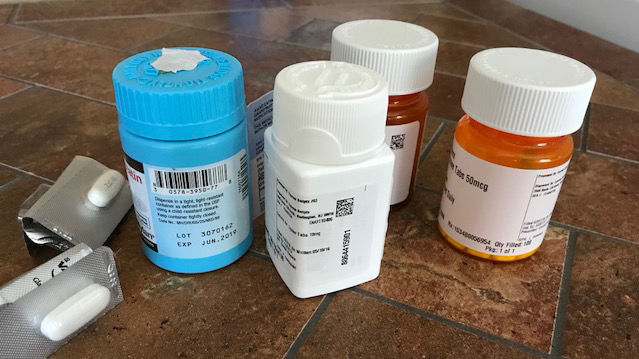
My 17-year-old patient Jorge was introduced to heroin by a classmate. Within weeks, Jorge (not his real name) had lost control: his use went from occasionally at parties to daily. He and his mother came to me, his primary care physician, where he was diagnosed with opioid use disorder and started on treatment. I prescribed Suboxone, a life-saving medication that has enabled him to achieve his goal of abstinence from heroin, to take the SATs, and to successfully finish 11th grade.
Thanks to a federally funded program called 340B, Jorge’s mother was paying $12 monthly for Suboxone. Yet months into his treatment, a pharmaceutical company put restrictions on my community health center’s usage of the 340B program. Unknowingly, Jorge’s mother showed up to the pharmacy and was charged over $400 for the same monthly supply. His mother couldn’t pay, Jorge went into opioid withdrawal, and he ended up on the emergency room with severe withdrawal symptoms, twice in three days.
When your medications are rung up at your pharmacy’s cash register, you may wonder where the prices come from. Many of us have had the experience of huge differences in prices in similar drugs, or even in the same drug from one month to the next. This stems from a drug pricing system that is fragmented and complicated, with many parties taking a cut. The result can feel like a perverse game of Wheel of Fortune, with those who are sick paying out the clandestine prizes.
The exorbitance and mystery of drug pricing in the U.S. are largely because there is no central negotiator to decide to accept the price a pharmaceutical company wants to charge. In other countries, the government serves that role. The French government, for example, sets maximum prices for new drugs and prohibits price increases after a drug’s launch.
Community health centers and their patients, however, are one of the few groups in the U.S. health system that do benefit from “government pricing” of drugs. These organizations and their patients make use of a federal program created in the 1990s to give financial support to health care organizations that serve low-income communities. The program, called 340B after the section of the federal law that authorized it, allows health centers like mine to buy drugs from manufacturers at a discount, often well below the average sales price. We can then transfer this lower cost on to uninsured patients. Like for Jorge, this can mean the difference between getting a treatment or not.
Unfortunately for health centers and their patients, Big Pharma — the pharmaceutical industry and its lobby — has been fighting back. Since 2021, drugmakers like Lilly, AstraZeneca, Novo Nordisk, Sanofi, Novartis and United Therapeutics have taken the matter to court, filing several lawsuits. Year by year and now month by month, we and our patients face more restrictions resulting in surprising jumps in drug prices. While the nature of the restrictions is complex (certain drugmakers bafflingly now restrict the program to only one pharmacy, for example), the objective is simple: drugmakers want to set their own prices even for our most vulnerable patients.
To be sure, there is reason for scrutiny of the 340B program, and there have been high-profile cases of health systems taking advantage of it. But blanket restrictions have devastating consequences for patients and the systems that care for them.
Over the last four years, legislators and administrators — all the way up to the United States Secretary of Health and Human Services, Xavier Becerra — have led bipartisan initiatives to hold drug manufacturers accountable for unlawfully refusing to provide these discounts. Yet the Big Pharma lobby is powerful, and we health centers and our patients appear to be losing the battle.
This is National Health Center Week, a time to celebrate the care that our nation’s approximately 1,400 health centers provide to over 32 million Americans. Our patients are many of our most vulnerable family members and neighbors, including one in every eight U.S. children. Health centers, their patients, and our elected officials must stand up together in our fight to preserve our access to the 340B program. Jorge’s story is like that of countless others who have faced sudden and impossible drug price hikes, due to Big Pharma’s refusal to comply with this critical program.
Benjamin J. Oldfield, MD is Vice President of Clinical Affairs of Fair Haven Community Health Care.