



Just imagine, knowing that literacy is the key to your freedom but learning to read is prohibited and you could be murdered at any moment if you were caught trying to educate yourself.
Just imagine, being transported on a boat, chained to hundreds of others. And in the midst of a storm the captain decides to throw you all overboard to save his ship and just claims you as an insurance policy loss.

Just imagine, a medical doctor going to a slave auction with the sole purpose of buying you to run experimental trials without concern for your wellbeing or potential death.
Just imagine, someone knocking on your door and kidnapping or violating your children in front of your very eyes and you do not have any rights to protect your family.
Just imagine, the urge for freedom and basic human rights coursing through your veins, pushing you to flee, only to be caught and subjected to amputation, castration, and/or bondage around your neck.
Just imagine, walking in the dead of night through reptile infested swamps, being transported in boxes, hiding in strangers’ homes, with the North Star as your only guide without the ability to read or write, but trusting in your heart that your hope and your faith will keep you alive and bring you to safety.
In 1863, the Emancipation Proclamation was signed by President Abraham Lincoln and in 1865 the 13th Amendment was ratified to abolish slavery and involuntary servitude in the United States.
Even after being emancipated, formerly enslaved individuals still faced atrocities of every kind: they were threatened, attacked in their homes, beaten, kidnapped, murdered, attacked when trying to vote, and violated in every way possible. That is why, on April 20, 1871, the Ku Klux Klan Act was enacted by President Ulysses Grant to enforce the 13th, 14th, and 15th Amendments of the Constitution. The Act “empowered the federal government to act decisively to guarantee all citizens of the United States the rights afforded by the Constitution and to provide equal protection under the law.”
With the signing of this act, it was now a federal crime “to deny any group or individual ‘any of the rights, privileges, or immunities, or protection, named in the Constitution.’” To ensure this law was being followed, President Grant deployed the military to enforce the law as well as spies throughout the country to ensure Reconstruction could move forward. This law was one of three known as the Enforcement Acts to combat against racism in the United States and allow Reconstruction to progress.
Even with the government’s focus at the time to eliminate extremist hate groups, the KKK was never and still has never been identified as a domestic terrorist organization.
However, nearly 100 years later, Black individuals still did not experience true freedom under the law, were not free to exercise their rights to vote, and did not receive equal protection under the law.
The Civil Rights Act of 1964 was signed into law by President Lyndon B. Johnson to put an end to legal segregation and prohibiting discriminatory practices, followed by the Voting Rights Act in 1965. Further expanding outlawing of discrimination in the U.S., the Civil Rights Act of 1968 prohibited discrimination in housing practices.
Many individuals think that this was a long time ago and part of past history long ago. However, this was just 61 years ago. There are many people still alive today who lived through those experiences and hateful, discriminatory practices.
And here we are today, commemorating Juneteenth as a state and federal holiday. For centuries many people have avoided the uncomfortable truth of our nation’s history and the courage that Black people in our country had to break free from the bondage of white supremacy and oppression.
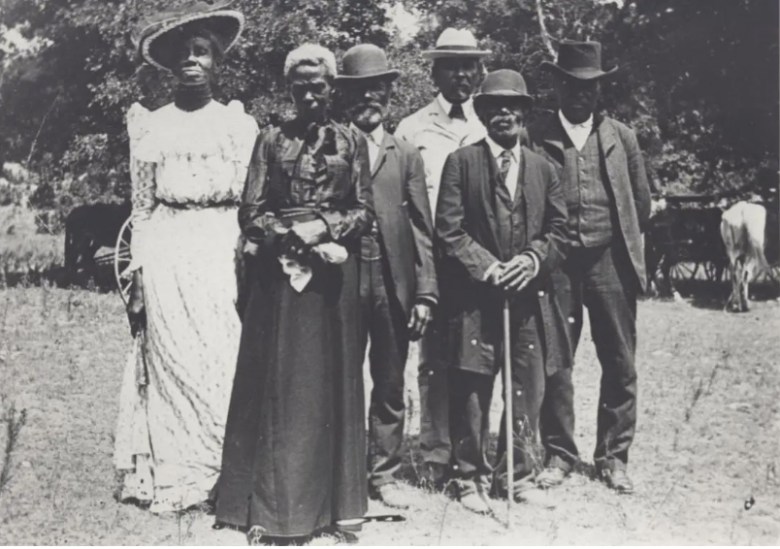
In Galveston Bay, Texas, motivated by profits, the slave owners did not tell their enslaved individuals that they were free after the Emancipation Proclamation was signed into law. They continued to keep them in the darkness of servitude until word finally broke through by Union Troops on June 19, 1865.
Just imagine, enduring numerous atrocities only to find out that slavery had been abolished two years ago, but the slave owners cared more about their profits than your human rights.
After Juneteenth became a federal holiday in 2021, Connecticut passed legislation in 2022 making June 19 a legal state holiday beginning in 2023. The measure received overwhelming bipartisan support in the state legislature. State leaders said the holiday was intended to acknowledge the history of slavery, celebrate freedom, and promote public education about the nation’s past. At least 30 states and the District of Columbia recognize Juneteenth as an official, permanent legal holiday that grants state government employees a paid day off.
Nationwide, all 50 states officially recognize Juneteenth in some capacity, whether as a paid holiday, a public day of observance, or through annual legislative proclamation, but not a paid holiday in all 50 states.
In light of our nation’s history and the enduring spirit of the Black and African American community, who fought against discrimination and the denial of their basic rights, being treated less than a human being, let us fight to celebrate — not just to celebrate having overcome slavery, Jim Crow laws, unequal protections, segregation, and discriminatory practices in every facet of life, but to celebrate Black excellence that thrived throughout the centuries of oppression by white supremacy.
Let’s celebrate the Black excellence that led to the development of dozens of different genres and styles of music that is as the bedrock of much of our music today. Celebrate the Black excellence that empowered inventions, the arts, and other creative outlets.
This Juneteenth, and every day, we must not just acknowledge all that has been overcome. We must celebrate the excellence that grew and blossomed in spite of the oppression.
Kevin L. Booker, Jr. of New London is a former member of the Connecticut Mirror’s Community Editorial Board.