

|
Getting your Trinity Audio player ready...
|
Connecticut’s “nickel-per-nip” program sends hundreds of thousands of dollars a year to towns for environmental cleanup, yet some argue the tiny liquor bottles fuel drunken driving and litter — and want legislators to allow municipalities to ban them all together.
The program adds a surcharge of five cents to any bottle of alcohol under 50 mL. It targets small bottles holding a standard shot of liquor commonly known as “nips” in the Northeast (the name surfaced in the 1770s, from the slightly more dignified European word “nipperkin,” meaning alcohol measuring less than a half-pint).
The money generated goes to back the town where the bottles were sold and is put towards litter and waste reduction initiatives.
Currently, the sale of alcohol is regulated by the state. But Tom Metzner, of “CT Towns Nixing The Nip,” wants to allow towns to ban the sale of these bottles. He believes the nickel-per-nip program is “a disaster.”
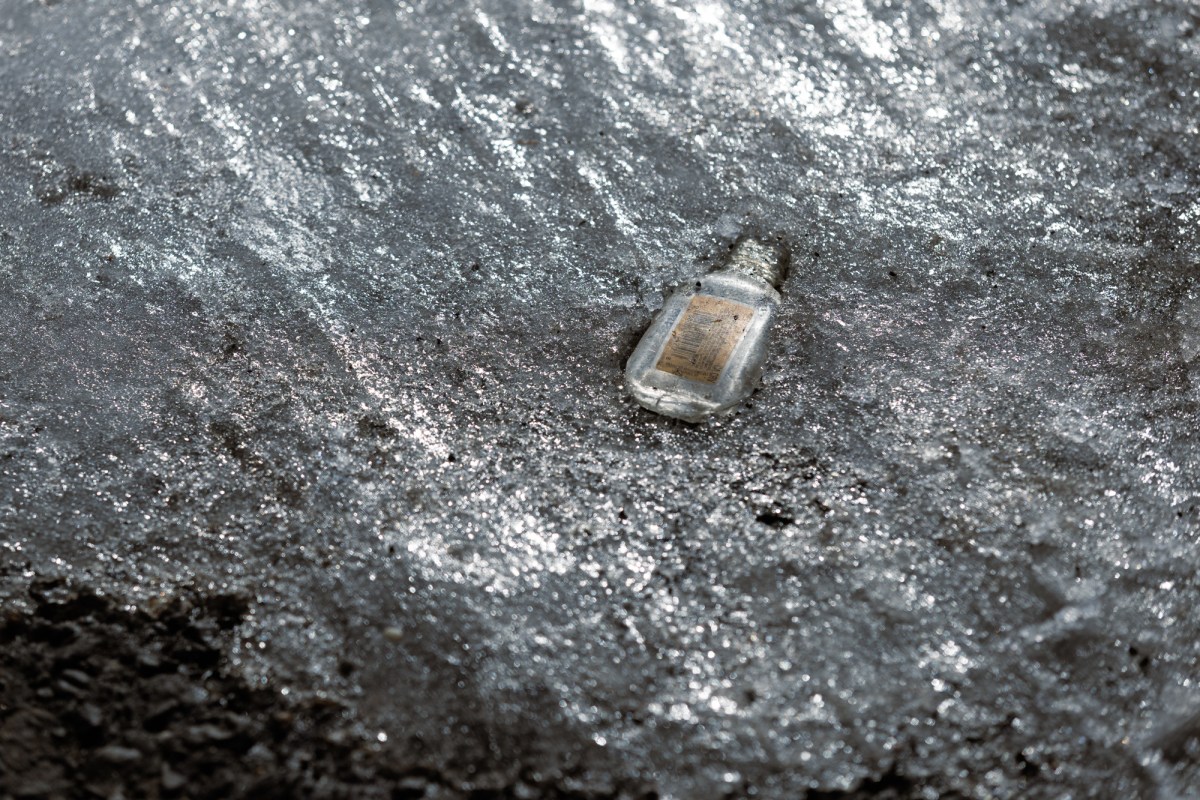
“It does nothing to address drinking and driving,” Metzner said. “It does nothing to prevent the litter.”
But supporters say some towns depend on these funds. Larry Cafero, the executive director of Wine and Spirits Wholesalers of Connecticut, supports the program. His organization manages the collection and distribution of the money.
“Before they call for a ban, their first question should be, ‘What is my municipality using these funds for?’” Cafero said.
93.8 million sold per year, on average
Five cents per bottle adds up. The program generated more than $12 million in revenue since 2022 and $4.9 million from 2024 to 2025.
On average, 93.8 million nips have been purchased each year, with that number trending upwards across the state. That comes out to an estimated average of 39 nips per person of legal drinking age per year.
While they generate less revenue than the bigger cities, Eastern Connecticut towns typically saw more nips per resident sold than towns in the western half of the state. But these towns still brought in significant revenue for their smaller populations.
“These nip funds are more operational now,” said Brian O’Connor, the director of public policy and advocacy for the Connecticut Conference of Municipalities. “Many towns count on whatever they get. It deviates some depending on the year, but it’s probably consistent.”
New Haven, where an average of 4.4 million nips are bought each year, received $242,298 from 2024 to 2025. Hartford came in second, with more than $181,000.
State law requires municipalities to use revenue for environmental efforts to reduce either the amount of solid waste generated or the impact of litter. Towns go about this differently, O’Connor said.
“The big change is personnel, recycling coordinator or other helpful things, but also education,” O’Connor said. “I believe that’s about 25% as well. And then also equipment, a lot of people will put the monies for the purchase of a street sweeper, a dumpster, some other people are using it for food waste collection.”
O’Connor said some towns also put the funds towards their municipal recycling programs, while others use it for clean up days or Earth Day events. The funds do not have to be spent on environmental efforts directly related to nip cleanup.
Waterbury, which received the fourth-most revenue out of all towns and cities in the state, used some of the revenue for litter vacuums and for street sweeper brooms. The town received $601,705 since the start of the program and has spent nearly $226,000 of it as of mid-December.
However, there is talk of expanding uses for the funds. Some towns want to use it to educate and advocate against drunken driving.
“I think a few towns have advocated for putting it toward public safety, drunk driving initiatives, those kind of things,” O’Connor said. “The litter is a problem, but a lot of times what they’re finding is that people are buying the nips and then throwing them out the [car] window.”
O’Connor said the Connecticut Conference of Municipalities supports spending the money on other nip-related issues.
“If a town wants to use it for putting it towards personnel for the recycling coordinator, great, but if they want to use it to do some checkpoints, that’s fine, too,” O’Connor said. “We do support the flexibility of allowing towns to use it for public safety reasons as well.”
Drinking and driving, along with the environmental impacts, are the main reasons advocates want to give towns the choice to ban the product.
Some say ban
Nip sales, as well as generated revenue, gradually increased throughout the state since the program’s implementation. This trend varies by town, but the numbers make it clear: Liquor stores are purchasing more nips to sell, and Connecticut residents are consuming more.
Compared to data from the program’s second six-month reporting period in 2023, sales over the latest reporting period in 2025 increased by 1.6 million nips.
“This one issue that is causing us great distress right now is the growth of nips in Connecticut,” Rep. Mary Mushinsky, D-Wallingford, said at a Jan. 28 “Nix the Nip” press conference. “We have an alcohol problem, where [nips] are easy to hide and consume and drive on the road and throw them out the window. We have a community degradation problem where a large numbers of them are not picked up because they do not have a refundable deposit.”
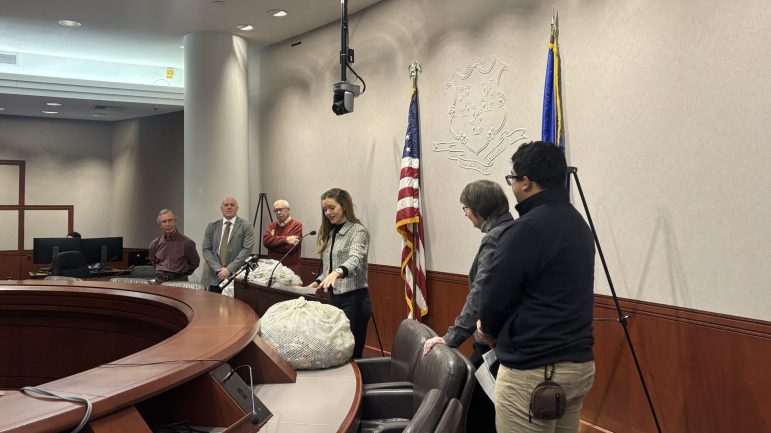
Mushinsky said the group is working on legislation either to allow towns to ban the sale of the product, or to put the bottles under the bottle bill system with a refundable deposit, incentivizing clean-up. However, no legislation has been proposed at this time.
Metzner also spoke at the press conference and said the group is “calling on the legislature to take action.”
The litter first caught Metzner’s eye when he attended an event at Glastonbury High School. He walked to the event and recalls picking up 60 nips in 15 minutes. After talking to some other people in his community, Metzner pulled together a Facebook group called Nix the Nip. Many of those in the group want to allow a ban for environmental reasons as well as safety reasons.
“The trend is troubling, and it feeds to the addictive nature of the product,” Metzner said. “The number of nips purchased is astonishing to me.”
Metzner is concerned with both the environmental and safety impacts of the product. Most liquor stores are located just off major roadways, and Metzner said he consistently finds discarded bottles on the side of the road where there’s no sidewalk.
This isn’t the first time the group attempted to pass legislation. In 2024, a bill was proposed during the legislative session, with seven Connecticut senators listed as co-sponsors. Dozens of people testified in support of the bill, which would have allowed a town’s legislative body to ban the sale of nips.
But opponents of the bill, including the Connecticut Package Stores Association, said allowing towns to ban the product could place a “significant burden” on stores in towns that elect to ban the product.
Both Groton and Glastonbury supported the 2024 bill. But it didn’t pass despite the little opposition it faced, and neither town has a current stance on the issue.
Cafero opposed the 2024 bill as well as current efforts to ban the product. He believes states, not towns, should have control over the sale of alcohol.
“We’ve never regulated alcohol on a town-by-town basis, and it’s a slippery slope that’s very dangerous,” Cafero, who used to be a state lawmaker, said. “Alcohol is a drug, it’s an intoxicant, and it should be regulated on a state basis.”
Cafero cited some of the work being done by municipalities that have been receiving this revenue for the past four years and urged those in favor of a ban to look into what their municipality uses the funds for.
Metzner argues banning nips could solve issues within a town. Cafero disagrees and said this could shift the problem from wealthy towns to poorer towns.
“If they think by doing this less nips will be purchased, that’s a joke,” Cafero said. “They’ll still be purchased, just in another town.”
Massachusetts allows the ban of nips on a town-by-town basis, but only a few places have taken advantage of this. Chelsea, a town just north of Boston, banned the sale of nips in 2018.
The ban brought down alcohol-related ER visits but increased business in neighboring towns, reports found.
Although the bill did not pass last year, Metzner is hopeful the legislature will take action this year.
“We had a bill two years ago. We had six co-sponsors. We had significant support in speaking out for this bill. We could not get it heard last year, so we’re calling on the legislature to take action,” Metzner said. “And as Rep. Mushinsky has noted, 100 million nips is serious problem.”