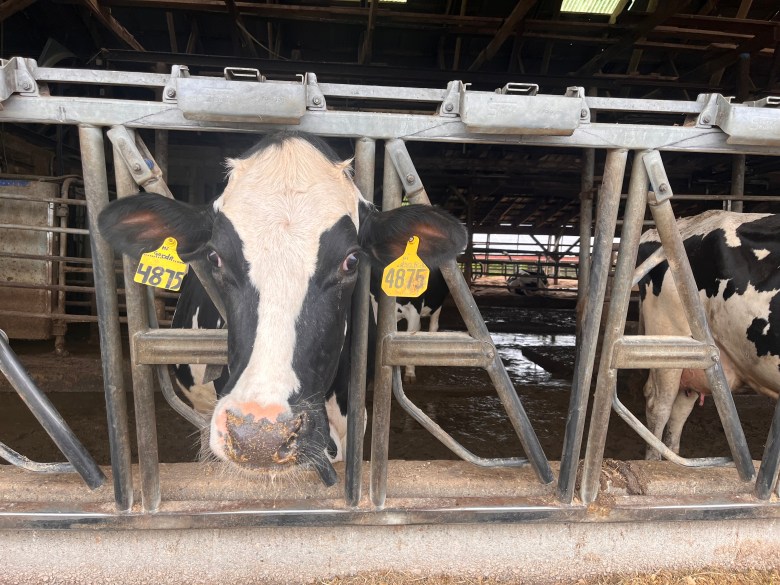
Gov. Ned Lamont announced plans to deliver $22.5 million in aid for Connecticut dairy farmers on Wednesday, saying that state support is necessary to help farmers cope with rising costs and falling commodity prices.
The money, which officials said would be spread out over two years, comes from a larger pot of $500 million that was set aside last year for the purpose of filling in funding gaps created by Congress and President Donald Trump’s cuts to federal services.
During the announcement at Mapleleaf Farm in Hebron, Lamont pitched the latest expenditure from that reserve fund as a response to broader economic upheavals that have been unleashed by the Trump administration.
“You’re doing everything right,” Lamont told a group of farmers gathered for the event. “You’ve been doing it right for many, many years … but given some of the tariffs and what’s going on with the high price of fuel and the high price of fertilizer, your costs are going up at the same time the price of milk is going down.”
Commissioner of Agriculture Bryan Hurlburt said that wholesale prices paid to dairy farmers for their products are projected to fall by up to 25% this year. Those prices are largely determined through a regional system overseen by U.S. Department of Agriculture.
At the same time, the cost of diesel fuel and fertilizer have jumped due to the ongoing war in Iran. Large portions of the global supply chain for both products must pass through the Strait of Hormuz, which has been closed as a result of the war.
“A significant number of dairy farmers expressed concern that they would not be here next year, that there’s no opportunity for them to bridge the gap until the prices could rebound,” Hurlburt said.
In order to tap into the Federal Cuts Response Fund, Lamont must send a letter to six legislative leaders, including two top Republicans, notifying them of his plans to use the money. The group of legislators then has up to 24 hours to vote to block the expenditure, or they can take no action and allow the plan to proceed.
In a show of bipartisan support for his proposal, Lamont was surrounded during his announcement by several Republican lawmakers, including House Minority Leader Vincent Candelora, R-North Branford, and state Rep. Steve Weir, R-Hebron, who lives next door to Mapleleaf Farm.
“The farmers having that extra bit to work with, I think it could be the difference between keeping the farm open versus closing,” Weir said.
Hurlburt said that the state’s Department of Agriculture will work with the dairy industry to develop a production-based formula for distributing the funds. A spokesperson for the agency said it aims to release the first batch of funds in four to six weeks.
Hurburt pointed to a recently passed a farm bill directing the department to establish a Dairy Modernization Grant Program and a working group to develop long-term recommendations for supporting the state’s dairy industry. The legislation, House Bill 148, passed both chambers unanimously and is awaiting Lamont’s signature.
The amount of money available through those grants has yet to be determined, Hurlburt said, but it will go towards helping farmers invest in new, more efficient pieces of equipment to support their operations.
Connecticut is home to 79 dairy farms employing roughly 800 people, according to Hurlburt. It is the state’s second-largest agricultural industry in terms of market value, behind greenhouses and nurseries.
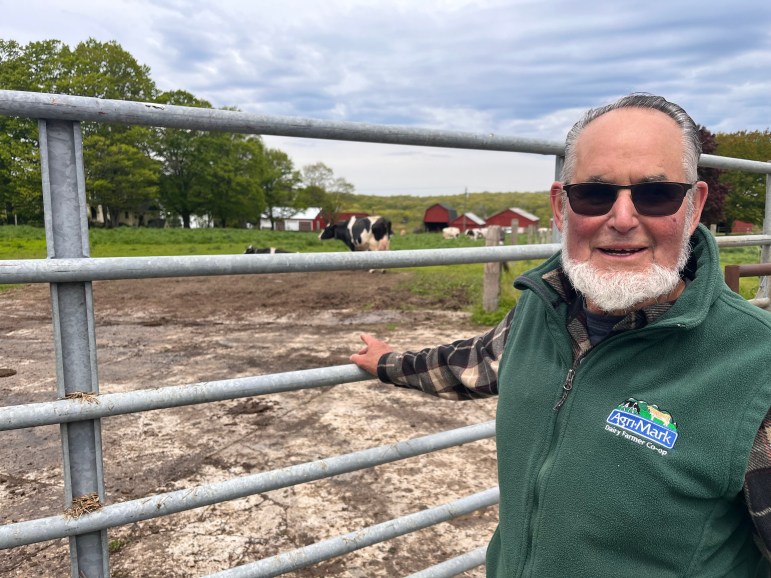
Ned Ellis, the 83-year-old co-owner of Mapleleaf Farms, said the last several years had already been difficult for his business with the price of milk “in the tank.”
On top of the spikes in the price of fertilizer and fuel, he said that tarrifs on imports have made it more expensive to repair and buy new equipment. Within the last year, he said, he watched a younger farmer go out of business because he could not afford the mounting expenses.
“Believe me, when you get a check from the state, and you’re, you know, saying ‘Where’s the money going to come from?’ And then all of a sudden, it’s there, and it just makes so much difference,” Ellis said.