


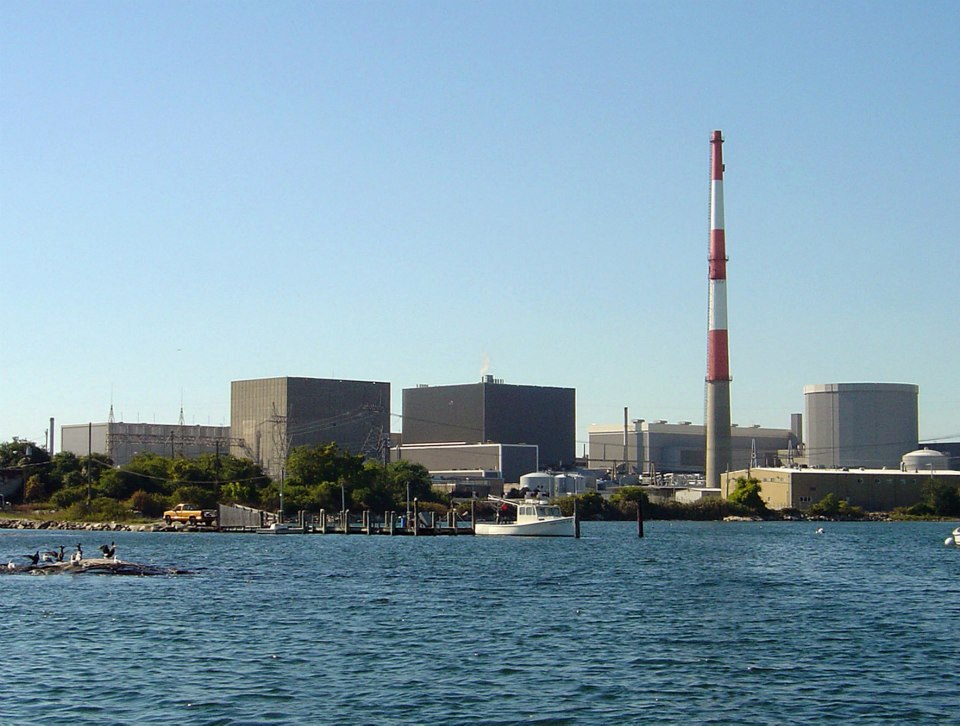

Gov. Dannel P. Malloy signed a bill Tuesday that allows the state to enhance the profitability of Dominion Energy’s Millstone nuclear power plant in Waterford, while pointedly asserting that Dominion has not convinced his administration any such help is warranted.
The new law permits, but does not require, state energy officials to change the rules for how Dominion Energy sells electricity from Millstone, whose profits fell as energy prices were depressed by competition from electricity generated by relatively cheap and plentiful natural gas.
Malloy said in a statement announcing the bill-signing that the preliminary results of an assessment of Millstone’s economic viability, which he says was hampered by Dominion’s refusal to full share its financials, is that the plant “is expected to be highly profitable through 2035.”
“As such, there is unlikely to be a basis upon which to conclude at this time that Dominion requires electric ratepayers to provide financial support outside the regional market in order for Millstone to continue operating profitably,” Malloy said, quoting a letter from the Department of Energy and Environmental Protection and the Public Utilities Regulatory Authority.
Malloy was asked a press conference if the letter was a message to Dominion to reconsider and share the financial data sought by DEEP and PURA.
“Yeah, I think that’s exactly the message,” Malloy said.
Dominion issued a statement praising the bill signing and ignoring the assertion no relief was necessary. The statement suggests that Dominion believes it still can make the case for new energy procurement rules for Millstone.

“On behalf of the 1,500 women and men who work at Millstone, I want to thank Gov. Malloy for signing this important legislation,” said Thomas F. Farrell, the company’s president and chief executive. “We are committed to working with his administration and with state energy regulators as the process laid out in the bill and the governor’s executive order continues.”
Millstone could sell up to three-quarters of its output in competition with other zero-carbon sources of electricity under the bill, a more favorable market because solar, wind and hydro power generally command higher prices.
The plant, whose electricity is sold throughout New England, generates the equivalent of 50 percent of Connecticut’s electric needs and nearly all of it is zero-carbon power, making it vital to the state’s meeting its goals for reducing greenhouse gases.
“I thank Gov. Malloy for recognizing the importance of Millstone to not only the southeast Connecticut region, but also to our entire state,” said Sen. Paul Formica, R-East Lyme, whose district includes Waterford. “This legislation is the result of bipartisan efforts including all stakeholders to protect a vital baseload energy source, build a bridge to a renewable future, and preserve thousands of jobs.”
Undisputed is that the nuclear industry is under distress, prompting the premature retirement of nuclear plants across the U.S., a loss of what environmentalists and others view as a bridge to an era when renewable energy can produce a larger share of electricity.
But industry analysts have concluded from publicly available documents that Millstone remains profitable. Promising confidentiality, the state has requested financial documents that Dominion says are proprietary.
The company has refused, saying they might be subject to the Freedom of Information Act. As a compromise, Dominion has proposed a briefing on the material, without providing copies.
AARP, one of the grass-roots groups that fought passage of the bill, expressed disappointment Malloy signed the measure, but was encouraged by his skepticism of Millstone’s need for financial relief.
“We do agree with the governor, DEEP and PURA that Millstone is expected to be highly profitable through 2035 based on publicly available data,” AARP said. “Therefore these processes must conclude that Dominion does not require electric ratepayers to provide financial support that could cost in excess of $300 million annually. AARP will work to ensure, absent disclosure by Millstone, that Connecticut ratepayers not be subjected to any special deal for the plant.”
