


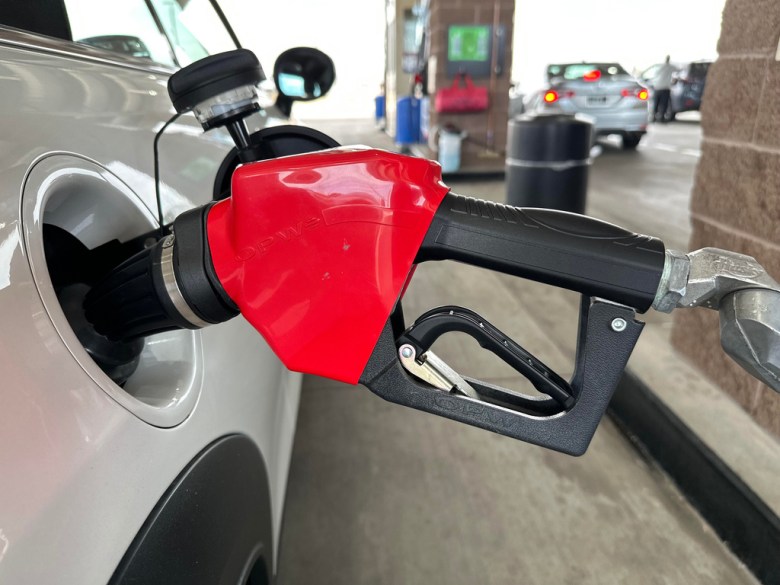
Connecticut motorists are paying some of the highest gasoline prices in the nation — at the worst possible time.
An emergency state tax cap has been mitigating pain at the pumps since late March, but the price hikes driven by the ongoing conflict with Iran have some ready to revisit Connecticut’s fuel tax system.
“If the disruption continues, prices today will look affordable, which is horrifying,” said Chris Herb, president of the Connecticut Energy Marketers’ Association.
AAA reported the average price of regular gasoline nationally at $4.55 per gallon Wednesday, up more than $1.50 since the conflict began on Feb. 28.
In Connecticut, the average price Wednesday stood at $4.65, 10 cents greater than the U.S. average and up $1.74 or 60%, according to AAA.
“The only word that comes to mind is ‘scary,’” Herb said, adding that war damage to Persian Gulf oil production facilities means price increases unprecedented in a quarter-century could linger for three to six months after the conflict eventually ends.
But that doesn’t mean nothing’s happening to combat the problem.
CT tax cap saves motorists one nickel per gallon
A special provision curbing state taxes imposed when fuel is delivered to local stations has been in effect sporadically since early March and continuously since March 31, according to marketers’ association.
Many motorists here are familiar with the state’s 25-cents-per-gallon retail gasoline tax. But few are aware Connecticut already has taxed that fuel once before: when a distributor delivers it to the local station.
The state imposes an 8.1% tax on that wholesale transaction, and a government-approved surcharge effectively boosts that rate to 8.81%.
The average wholesale price at the terminal in New Haven harbor, the single-largest fuel-importing site in Connecticut, closed at $3.57 per gallon Tuesday evening, according to the marketers’ association.
If fuel were sold to a local station at that price, that would translate into a 31.4 cents-per-gallon wholesale tax. Station owners long have acknowledged they pass all that burden onto motorists, who already pay state and federal excise levies of $0.25 and $0.184 per gallon, respectively.
But the 2012 General Assembly and then-Gov. Dannel P. Malloy created an emergency provision that stipulates whenever the wholesale price exceeds $3 per gallon, the tax is calculated based on a $3 price, not on the actual wholesale charge.
That means Connecticut’s wholesale tax cannot exceed 26.4 cents and currently is saving consumers one nickel per gallon.
Does CT’s fuel tax cap offer enough relief?
Still, Connecticut — with no tolls and an aging transportation infrastructure needing expensive repairs — long has ranked in the top third of states in fuel tax burdens.
Citing data from the U.S. Energy Information Administration, Nerdwallet.com ranked Connecticut sixth-highest among states for gasoline taxes in 2025.
Herb’s group has recommended reforming the wholesale levy from a percentage-based tax, which can rise and fall sharply, into a fixed amount per gallon.
Connecticut’s gasoline stations say the wholesale tax itself is fundamentally unfair.
Created in 1980 to raise modest revenues to help businesses clean up fuel spills, the wholesale tax evolved over decades into a major cash cow for the transportation program. The Lamont administration projects it will generate $360 million this fiscal year, $66 million more than expected and enough to support one-sixth of the state’s Special Transportation Fund.
The state hasn’t provided a fuel clean-up assistance program for more than a decade.
“Our position is the wholesale tax needs to go away,” said Michael Fox, executive director of the Gasoline & Automotive Service Dealers of America, which has about 550 members in Connecticut.
The $2.3 billion Special Transportation Fund is on pace to close this fiscal year with a modest $20 million surplus. But that’s because lawmakers transferred another $100 million in unspent funds to support next year’s program, which nonpartisan analysts expect to generate an even larger $215 million surplus, equal to 9% of the fund.
Some legislators and Gov. Ned Lamont have expressed concerns about the long-term viability of the transportation fund, which covers the yearly debt payments on billions in borrowing used to maintain and upgrade Connecticut’s highways, bridges and rail lines.
Lamont floated the idea of suspending Connecticut’s retail gasoline tax and 48.9-cents-per-gallon diesel levy for one month on March 10. Legislators opted against that, instead investing $280 million more in town aid and $300 million in affordable childcare in the $28.1 billion budget they adopted in early May.
“President Trump is responsible for the high gas prices everyone is facing right now,” Lamont’s budget spokesman, Chris Collibee, said Wednesday, who added that Trump’s reference to skyrocketing prices “as ‘peanuts’ shows how out of touch President Trump is with the suffering Americans are experiencing right now.”
