

|
Getting your Trinity Audio player ready...
|
Editor’s note: We now offer an audio version of our Sunday features. To access, click on the player above.
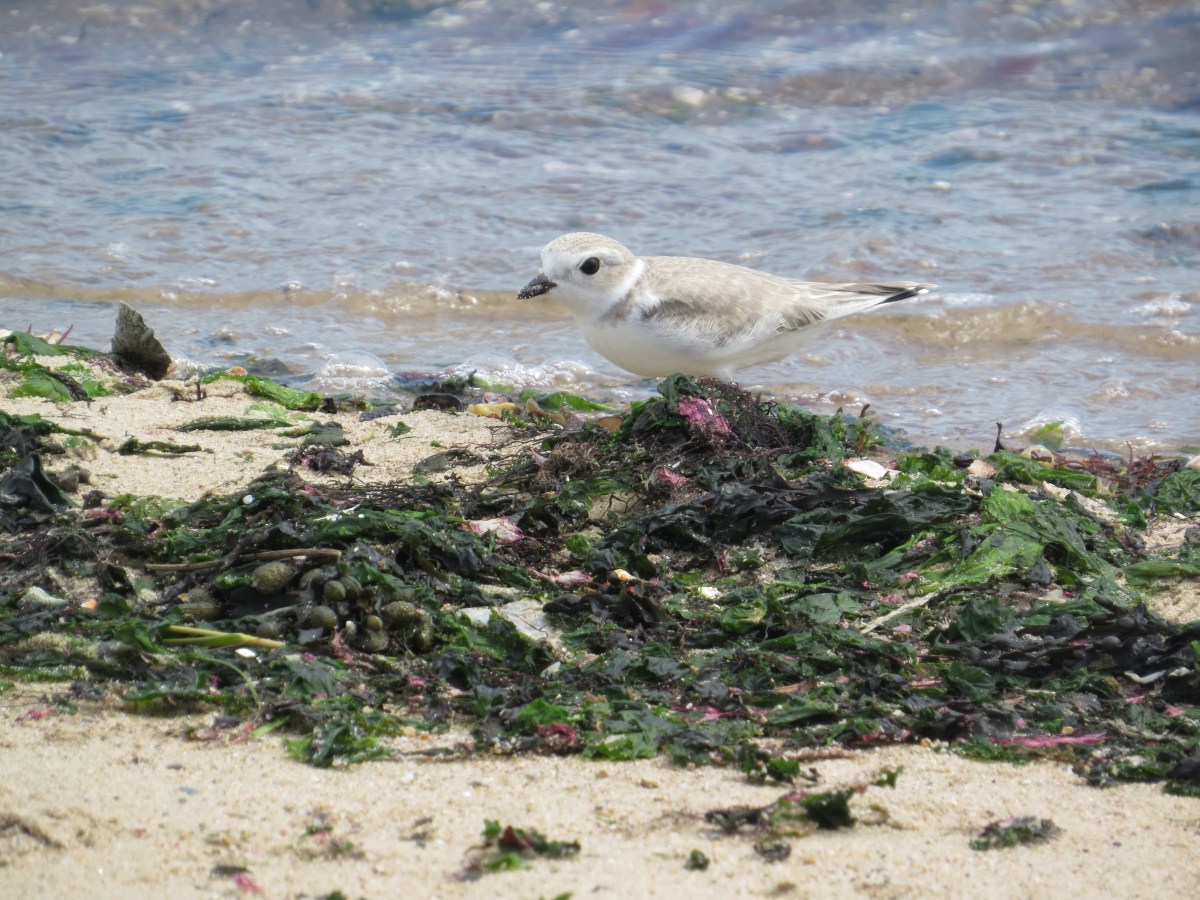
“There’s a piping plover here somewhere,” said Corrie Folsom-O’Keefe, reacting to a faint peeping on a recent foggy, cloudy, on-and-off-rainy afternoon along Sandy Point Beach in West Haven.
And then after a pause: “Yeah, right there,” she said. “Oh, these ones might have chicks. There’s a pair here that had three chicks.”
The tiny white, black and gray shore birds move fast, darting up and down the beach. “These guys are maybe 14-ish days old right now,” continued Folsom-O’Keefe, who is the director of bird conservation for Audubon Connecticut, the state office of the National Audubon Society.
Piping plovers are a federally designated endangered species, meaning they are protected under the provisions of the Endangered Species Act, ESA, enacted in 1973, which is managed jointly by the U.S. Fish and Wildlife Service, in the Interior Department, and the National Marine Fisheries Service, in the Commerce Department.
Piping plovers are also probably the best known of the approximately one dozen federally endangered or threatened animal and plant species in Connecticut.
Folsom-O’Keefe said there are just over 2,000 pairs of piping plovers along the Atlantic coast — that’s Florida to Maine. In the current nesting season, there are roughly 80 pairs in Connecticut, and about a dozen of them have been spotted nesting along Sandy Point Beach.
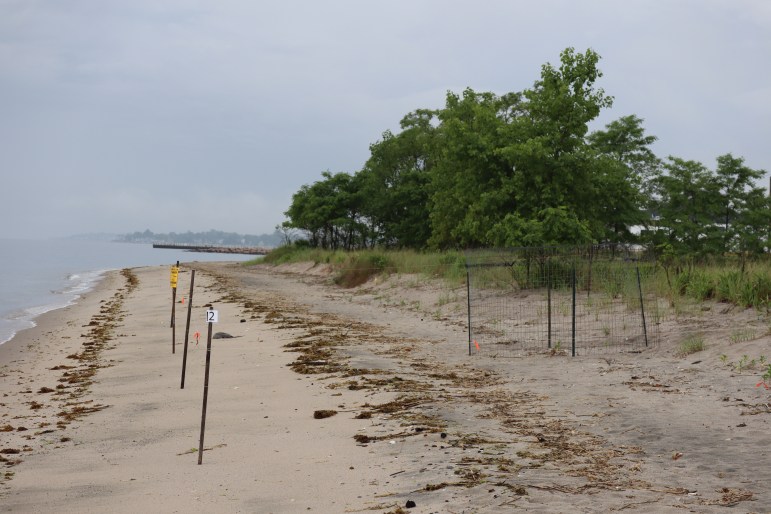
This year, as in every spring-summer breeding season, Audubon and environmental groups working with the Department of Energy and Environmental Protection have fenced the birds’ beach-level nests and erected perimeters with string to keep people from disturbing them — an act that is punishable under federal law.
But the fencing is no match for the impacts of climate change, which is causing rising sea levels and more intense storms.
The evidence is clear this day. The residue from earlier high tide lines — wrack lines, as they are called — sits just outside some of the fencing around the nest, even pushing though it in spots, jeopardizing the habitat these birds need to breed.
Folsom-O’Keefe said a number of high tides and storms destroyed some nests right before Memorial Day.
“The birds do re-nest, but then we have to re-setup 40 to 50 enclosures, which is this enormous amount of effort,” she said.
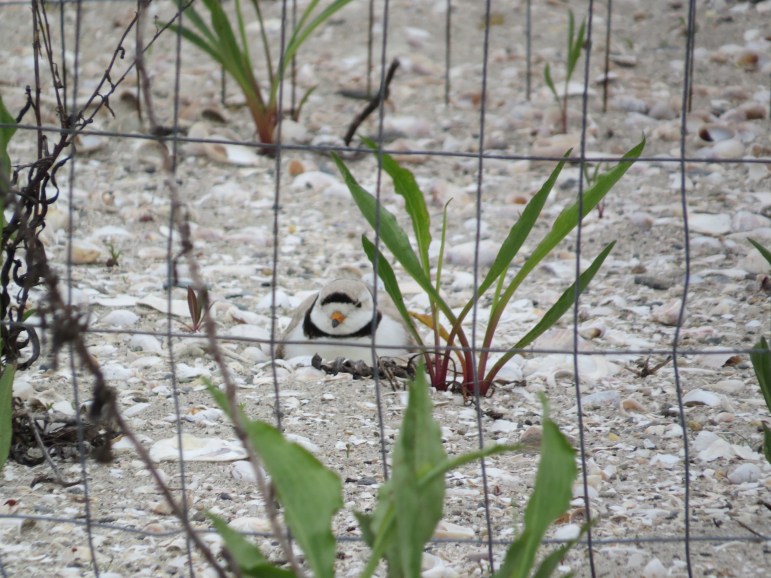
Potentially jeopardizing the birds further is a proposal by the Trump administration that in effect would mean loss or destruction of habitat would no longer constitute “harm” to wildlife under the ESA.
The law prohibits what’s called the “take” of an endangered fish or animal. The law specifically says: “The term ‘take’ means to harass, harm, pursue, hunt, shoot, wound, kill, trap, capture, or collect, or to attempt to engage in any such conduct.”
The administration summarizes the change it wants to make this way:
“The existing regulatory definition of ‘harm’ which includes habitat modification, runs contrary to the best meaning of the statutory term ‘take.’ We are undertaking this change to adhere to the single, best meaning of the ESA.”
“What the Trump administration seeks to do is to strip endangered species of habitat protections almost completely,” said Noah Greenwald, endangered species director at the national Center for Biological Diversity. “That’s quite concerning, because habitat destruction is the main cause of species extinction. You just really can’t protect and recover endangered species without protecting the places where they live.”
Indeed a recent article in The Conversation by two professors, Mariah Meek, a biology professor at Michigan State University, and Karrigan Börk, a law professor at the University of California Davis, provides the data to back that up. It cited a U.S. study from 2019 that showed that habitat loss or degradation caused far more species to be listed as endangered from 1975 to 2017 than any other factor, including outright killing. And it cited another global 2022 study that determined “habitat loss threatened more species than all other causes combined.”
The professors wrote: “Habitat protection is the single most important factor in the recovery of endangered species in the United States.”
Nearly 358,000 comments were filed during the comment period on the proposed change, which ended May 19. The Center filed comments, pointing out, as have others, that the Supreme Court has weighed in on the definition, ruling that habitat loss is valid.
DEEP also filed comments opposing the definition changes, saying it could reverse the conservation successes the state has achieved.
The letter reads in part: “Removing the protection under the ESA of critical habitat will only serve to further imperil populations. Further, removal of protection of habitat will also affect many other species that utilize said habitats, potentially leading to population declines in other species and listing under the ESA.”
It also noted: “Rescinding the current definition of ‘harm’ would also undermine habitat protections for all migratory birds and other game and non-game species that share habitats with listed species. Habitat modification is the most significant threat to nearly every migratory bird species in North America.”
Folsom-O’Keefe notes that many beachfronts along the Connecticut shore are narrow, which means limited space for birds like piping plovers with specific habitat needs. They have to nest above the high tide line. They need a sandy area with limited vegetation and a slope, but a shallow one. And they need to be fairly isolated without humans bothering them.
“Some of these species are so range-restricted that if we really want them to be able to recover, we have to protect not just the habitat where they are now but the habitat where they might be down the line,” Folsom-O’Keefe said.
If conditions push them out of their current locations, “where are they gonna expand to?” she wondered.
“I think the short answer is, ‘It’s complicated,’” said Jenny Dickson, DEEP’s Wildlife Division director, who signed the comments letter. “There’s a lot of nuance to it, so it can be really challenging to sort out.”
But she agreed that one event like a storm or flood or even a full-moon high tide can be devastating.
“That’s the challenge whenever you’re working with threatened and endangered species. There is already an incredibly delicate balance in trying to keep many of those species in existence. So one thing can dramatically change it,” she said. “But absolutely for those species that tend to be very specific in their habitat requirements, that habitat can be everything.”
The list
What most people know about nationally endangered and threatened species is most likely the big-name animals like polar bears, wolves, North Atlantic right whales, bald eagles and California condors. None of them are in Connecticut.
The federal list is in two parts — one from Fish and Wildlife and the other from Marine Fisheries. The Fish and Wildlife list contains more plants than animals.
The federal list for Connecticut is also in two parts — Fish and Wildlife and Marine Fisheries.
But Connecticut has its own endangered species list based on the state’s determination. It is enormous, because it includes “species of concern,” as well as those that are endangered or threatened, and cross-references the federally designated species. The biggest category by far on the state list is plants. There are also a lot of moths.
The list is supposed to be updated every five years, but the current one is from 2015. Due to COVID, the 2020 update was never done. A review is underway now for the 2025 update. Any changes to criteria for federal species listing will not have an impact on how Connecticut evaluates species for its own list.
The state Natural Diversity Data Base, essentially a program that does environmental review for impacts to state-listed species, will also be reviewed as required by legislation passed this session, with the goal of updating the existing process to be more efficient, transparent and predictable. A report is due in February.
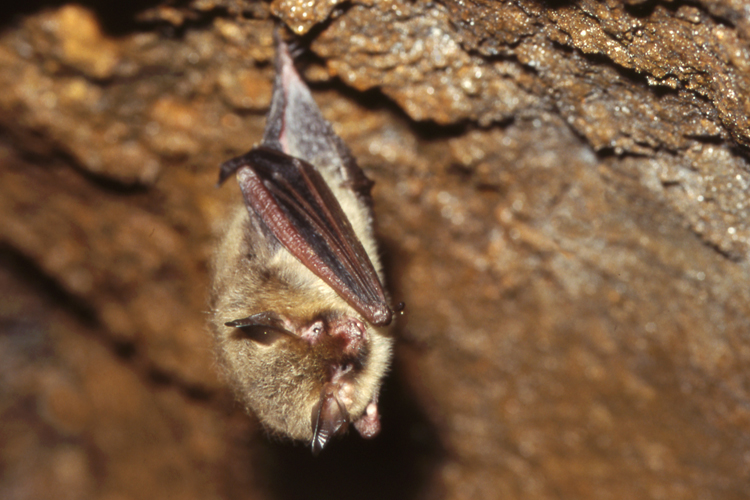
Not all the species on the federal list for Connecticut or the state’s own list are there due habitat-related stress. Most notably, bats are being decimated by a disease called white-nose syndrome. There are two on the federal list, the Indiana and northern long-eared bats, both endangered. The state lists eight.
Birds seem to get the most public attention, and habitat tends to be their key issue.
Besides piping plovers, there are two others on the federal list. Rufa red knot is a threatened species here. Roseate terns are endangered seabirds with three colonies in New England that constitute the bulk of the roseate tern population in the Western Hemisphere, according to Folsom-O’Keefe of Audubon CT. One of the colonies exists on two islands in Long Island Sound: Falkner, off Guilford, home to 30-50 birds, and Great Gull Island in New York’s portion of the Sound, with around 2,000. There are a couple more Massachusetts islands with populations.
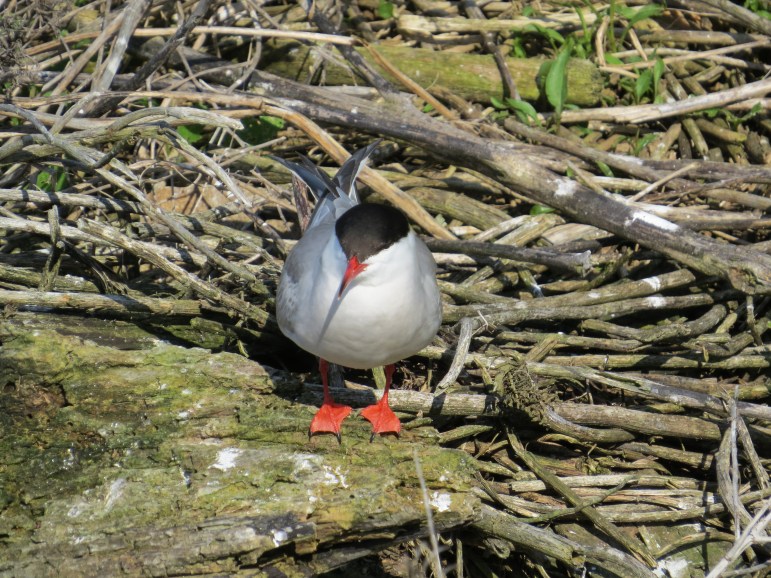
Their habitat needs are an island that’s uninhabited and unforested and high enough above sea level so it’s not going to get flooded all the time. The birds also need plenty of food — in their case, fish, most commonly one called a sand lance.
“I think that really speaks to the habitat impact,” Folsom-O’Keefe said. If something catastrophic like an oil spill were to affect one of the islands, the population could drop dramatically. “It’s important to also protect other habitat,” she said. “The recovery plan for roseate terns is actually to try to get them to establish on additional islands.”
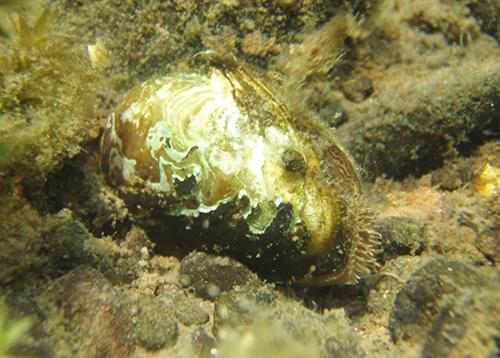
Another federally endangered species in Connecticut for which habitat plays a critical role is the dwarf wedgemussel. It’s a freshwater mussel that has faced habitat loss mostly due to the quality of some of the freshwater streams where it historically occurred, said DEEP’s Dickson.
Other endangered species include the puritan tiger beetle, which is only found along the Connecticut River and in Maryland. Its habitat is the sandier areas along the Connecticut River where it consumes other small invertebrates, acting as a control on them. The Atlantic and shortnose sturgeons are others, the former being a more-than-200-million-year-old species, feared extinct due to overfishing a century ago. In the last few years, however, Atlantic sturgeon juveniles have been found in the Connecticut River, leading to the assumption they may be spawning and perhaps living there again.
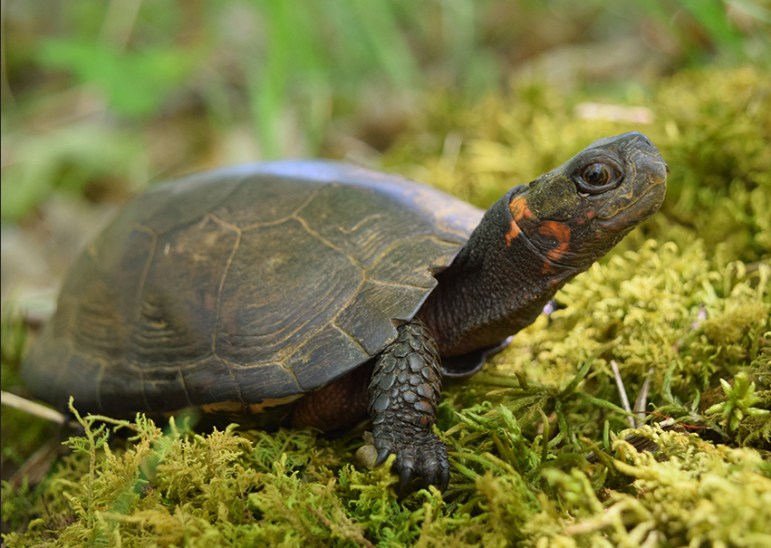
And then there are turtles: nine on the state list, six of which are listed federally. Some have aquatic habitats that may connect through multiple states. While habitat maintenance is important, they also bring up concern over what has emerged as a prime Trump administration tactic — non-enforcement of all manner of environmental laws and regulations already on the books.
“That is very concerning for us,” Dickson said. Connecticut environmental conservation police have to enforce federal law, but their powers are limited. And the state laws they can fully enforce generally are not as effective as federal laws.
“That lack of enforcement at the federal level is important, because if it’s an issue that might span state lines, that gets incredibly complicated, because we can only work within our jurisdiction. The federal special agents can work across state borders,” Dickson said.
For instance, bog turtles, which are federally listed, occur in Connecticut and New York in connected wetland habitats that are rare and very specific to that species. “If something occurs in New York that has the potential to impact the turtles in Connecticut, there’s a challenge there,” Dickson said. “We can’t address something that might happen across our borders.”
“Habitat is everything for that species.”
The politics
But wildlife, and really all life, exists in ecosystems in which changes have cascades of impacts. If warming oceans due to climate change sends certain fish into cooler waters, what happens to the birds that may feed on those fish? Or the marine mammals that may feed on them? If they follow the food source, will the habitat they need exist?
If inland wetland and aquatic habitats dry up, where do the species that live and spawn in them go, if they can even go anywhere?
“Those are some of the things that we do try to look at,” Dickson said. “What are some of the unintended consequences of other changes that are being made? If you change this thing over here, well, what does that do over there?”
The situation with the ESA also raises questions about whether the Trump administration will be proactive at any level on endangered species protection. The Center for Biological Diversity has petitioned to have a Connecticut-based bird, the saltmarsh sparrow, added to the federal list.

That bird nests in salt marshes, but sea level rise often floods the nests, preventing the species from reproducing. An Audubon CT project in Stratford has installed higher mounds for the birds to use. It seems to be having some success, but it’s unknown how it will fare long-term as global temperatures continue to rise.
According to Greenwald, the Fish and Wildlife Service had said it was going to list the sparrow, but now, “I don’t expect that the Trump administration will move forward on it without us litigating,” he said.
He said the ESA is only one among several longstanding environmental laws the administration is looking to neuter — such as the Clean Air, Clean Water and National Environmental Protection Acts — along with individual rule rollbacks including on limits to chemical and insecticide use and more permissive toxic emissions that could harm wildlife.
Such efforts may compound the impact on species that may already be struggling from conditions caused by climate change and other factors like disease.
“It’s just a wholesale attack on environmental protections across the board,” Greenwald said.
While loosening of many environmental regulations has been a goal of the Republican party for decades, many view the Trump endgame to be a glide path towards more oil and gas drilling, mining, logging and other land uses without tough or even any environmental restrictions to slow or prevent them.
Connecticut does have a bit of a backstop, though, thanks to a few state laws, such as its own Endangered Species Act and a seabird and shorebird protection program.
Folsom-O’Keefe also points to the importance of local regulations in some communities, such as no fires on the beach, no ATVs on the beach, no dogs on the beach.
“Those are all, I think, intentionally meant to protect people, but they also protect birds,” she said. “One thing we found is that a lot of the local police officers really know nothing about the birds at these sites. They don’t even realize they have federally threatened bird species here.”

So last summer, using money from its parent organization the National Audubon Society, Audubon CT piloted a program in Stratford to train police officers about the protected birds, their habitats and how violations of the local rules could affect them. For instance, if an officer sees a fire on a beach or an ATV, if it’s nesting season, the officer will know to check that as well.
This season, they’ve expanded the outreach, training and funding to West Haven.
“Towns can look at what regulations that they have in place and maybe consider adding some more, or maybe upping the fines, or just enforcing it better,” Folsom-O’Keefe said.
If the Center for Biological Diversity’s Greenwald’s hunch is correct, that may be the only protection some of the birds get.
“We don’t expect [the Trump administration] to make any changes or take the comments seriously. So I think that they’ll just plow forward with finalizing what they proposed,” he said.
Spokespeople for the Fish and Wildlife Service and Marine Fisheries both declined to comment on when a decision might come.
The Center is already laying the groundwork for a lawsuit.
“We’re preparing legal action and fully intend to challenge in court and think that we have strong arguments,” Greenwald said. “But if they were to get away with it, we will really undercut how the Endangered Species Act has been implemented and how we’ve been protecting species for the last 40-plus years.”