


On Sept. 19, Tariq Islam was starting off the weekend at a wedding in Hartford. But late in the afternoon, as the celebration picked up, text messages began to flood his phone. Islam’s work colleagues — fellow executives of the engineering firm run by Islam’s father — had a concern that could not wait.
Without warning, the federal government had announced a new national immigration policy affecting high-skilled temporary workers. In a proclamation, White House officials said they sought to “impose higher costs on companies seeking to use the H-1B program.” The changes were intended “to address the abuse of that program while still permitting companies to hire the best of the best temporary foreign workers.”
Specifically, a $100,000 fee for each new employee seeking an H-1B visa was set to take effect in less than 48 hours.
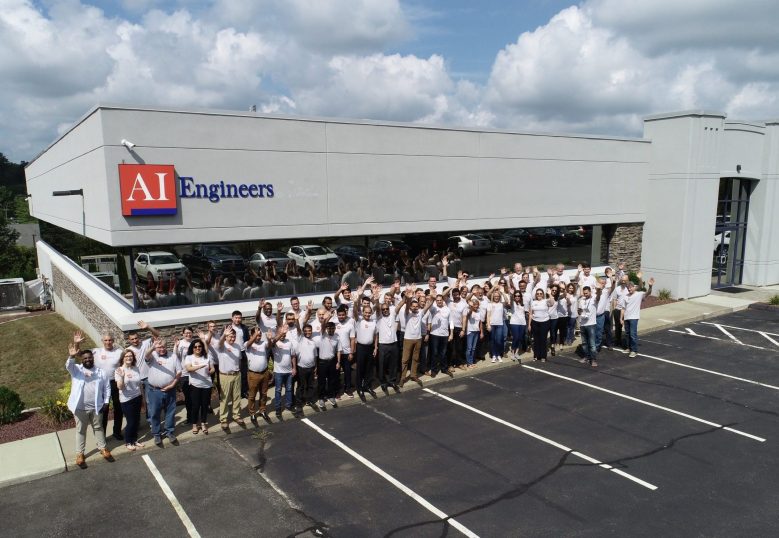
The announcement threw Islam’s weekend into chaos. “I just started seeing massive emails from a lot of panicked employees,” said Islam, who serves as chief of staff for AI Engineers Inc., a Connecticut-based engineering consultancy.
The company’s immediate concern was that employees who were traveling internationally wouldn’t be able to get back into the U.S. unless the $100,000 fee was paid. “We have several employees who are maybe visiting family in India, Nepal, China,” he said of discussions that weekend. “We needed to tell them to get a flight back to the United States, like, ASAP.”
That Saturday, the Trump administration made attempts to clarify things. The new fee, which took effect on Sept. 21, would only apply to employees who received a first-time H-1B visa in the upcoming 2026 lottery. Employers would only be required to pay the fee once, and new workers would not be able to enter the country if the $100,000 hadn’t been paid. Current H-1B visa holders, like the roughly two dozen visa holders employed by AI Engineers, would be able to reenter the U.S. with no problem.
But the proclamation still left many unanswered questions and raised concerns about what the change might mean for skilled foreign workers already in the country. Islam’s family-run business, which employs some 350 engineers that work on transportation and infrastructure projects, uses the H-1B visa to hire highly specialized design engineers, workers whose knowledge, skills, and experience are vital to the company.
The new policy, Islam said, makes that “financially unfeasible.”
The move by the Trump administration comes amid a broader crackdown on immigration. The specific focus of this restriction — the H-1B visa program — marks the administration’s biggest move yet to rein in skilled migration, a prominent contributor to the ranks of America’s tech workers, entrepreneurs, researchers and physicians.
The short- and long-term effects of the change are unclear. But economists and immigration experts say they could be widespread.
In Connecticut, the change could reshape the workforce in sectors that rely on highly skilled temporary employees, shaking up the state economy at a time when businesses are already struggling to fill open roles and grow their labor force.
“The risk to the Connecticut economy is that you lose not just these individuals, but the ecosystems that they ultimately support,” said Dustin Nord, director of the CBIA Foundation for Economic Growth and Opportunity.
Connecticut’s H-1B workforce, by the numbers
H-1B visas allow highly-skilled workers temporary employment in the U.S for up to three years, with the possibility for an additional 3-year extension. Workers fill a variety of roles, but the program has been most closely tied to America’s tech workforce, particularly computer programmers and IT workers.
To obtain an H-1B visa for an employee, privately-held companies must enter a lottery process to receive application slots. Successful companies then submit completed applications for the selected workers. Nationally, there are roughly 85,000 visas available each year: 65,000 of those are for workers in specialized fields, with an additional 20,000 visas available for workers with advanced degrees from a U.S.-based institution.
Prior to the fee changes earlier this month, H-1B applications cost between $2,000 and $5,000, with additional fees and potential costs for legal assistance pushing the total as high as $10,000 per employee for some companies.
Connecticut’s H-1B workforce is largely concentrated in the state’s largest cities, including Hartford, New Haven and Stamford. But Nord said H-1B workers can be found in positions across Connecticut, spanning the majority of the state’s towns and cities. Limited federal data makes it difficult to know exactly how many H-1B visa holders are currently in the state and how many visas are ultimately used by each company, but estimates suggest that somewhere between 5,000 and 8,000 workers could be present.
There is more data available on the number of visa applications and approvals, although it doesn’t show exactly how many visa holders actually complete the H-1B process and start work. In fiscal year 2024, Connecticut companies were approved for 453 new H-1B workers. After petitioning for a spot in April 2023, these workers were selected in the lottery process and approved for work in the U.S.
Recipients of the visas are mostly clustered around Hartford and parts of Fairfield County. The majority of visa holders’ positions were in science, engineering and technology.
In 2025, hundreds of H-1B applications have already been submitted in the state. The visa process for the year will be completed in October, when new visa recipients officially receive H-1B status.
While a range of companies employ H-1B workers in Connecticut, there are three areas in particular that would be most affected by the recent changes: entrepreneurs and startup founders, university-employed researchers and professors, and health care workers — particularly physicians.
“We already have a shortage of doctors, nurses and health care workers,” said Dana Bucin, a Hartford-based immigration attorney whose firm helps businesses with H-1B applications in a handful of states, including Connecticut, Massachusetts, New York, and New Jersey.
“After we cut the access to H-1B for these professions,” she added, “it may be at a crisis level.”
A source of doctors, researchers, and innovators
As the data shows, Yale University is one of the leading employers of H-1B workers in Connecticut. The visa holders are typically employed in university departments as tenure-track faculty, making them a vital source for academic advancements and student support. The changes could cost the university millions in fees if it were to maintain its current number of visa workers.
So far, Yale has offered little public comment on what the policy change might mean. A news release, published on Sept. 20 by Yale’s Office of International Students and Scholars, said the changes would not affect already granted visas. The notice said the school “will update our guidance as we gain more clarity about H-1B change of status or amendment petitions.”
Representatives for the university declined to offer additional comment on the potential impacts of the $100,000 visa application fee, referring only to this previous statement.
The University of Connecticut, another institution that applies for many H-1B visas, also did not offer a detailed comment when asked about the visa changes and their potential effects for university employees. Spokesperson Stephanie Reitz said in an email, “UConn is currently assessing the federal directive and its potential impacts on university programs.”
Many universities employ H-1B visa holders as faculty, researchers and doctors. It is currently unclear if higher education will receive any sort of exemption from the fee.
But the labor force effects could stretch beyond universities. The changes could also hit the state’s health care workforce, reducing the number of available physicians and nurses at a time when the state is already struggling to fill positions.
“The H-1B visa program is essential to helping hospitals recruit highly skilled physicians and other health care professionals to meet the care delivery needs of patients — including those in rural and underserved areas — as we work to grow and train the future health care workforce,” a spokesperson for the Connecticut Hospital Association wrote in an emailed statement. “At a time when the health care workforce nationwide is experiencing shortages, we stress the importance of ensuring that federal policies do not make it more difficult to attract and retain health care professionals.”
Mariam Hakim-Zargar, an orthopedic surgeon in Torrington and the president of the Connecticut State Medical Society, said the $100,000 visa fee could escalate these difficulties even further. “We definitely have a hard time recruiting and retaining doctors in our state, and this is just going to add an extra financial burden,” she said.
Hakim-Zargar added that while national organizations, like the American Medical Association, have recently called for the Trump administration to create an exemption that would protect health care employers from the visa application fees, the damage may already be done.
“Why would somebody want to come to the United States for training with all this uncertainty?” she said. In the coming months, Hakim-Zargar added, it’s possible that medical professionals utilize incentives “to go to other countries, Canada, European countries, for their training instead.”
As policy changes go into effect, concerns of a deeper economic impact
With the visa changes still so new, many employers in Connecticut haven’t yet figured out exactly what they’ll mean for their businesses. And the changes have amplified an already deep sense of uncertainty for those facing changing trade policy. Raising the visa fee for skilled workers so significantly changes the cost structure for employers across sectors.
Economists said H-1B visas have become an important facet of the nation’s immigration system, allowing the country to attract high-skilled workers that complement America’s workforce.
“It’s the main bridge between university educated, bachelors, masters, PhD workers with specialized skills around the world and the US economy,” said Michael Clemens, a professor at George Mason University and a fellow with the Peterson Institute for International Economics. “This is the bridge that they’re dropping multiple bombs on.”
If the fee drives down the number of H-1B applications significantly, there is a concern that some industries could face a short-term decline from a reduced number of available workers.
But more than that, economists worry there could be a longer term economic impact, as some companies turn to offshoring and remaining domestic employers struggle to fill positions left vacant for an extended period.
“Immigrants to a country tend to have a different distribution of skills, and because they have slightly different skills from the native born, that allows everyone to specialize more and in what they’re good at,” said Jennifer Hunt, an economist at Rutgers University. “And when people specialize more in what they’re good at, the economy is more efficient.”
The $100,000 H-1B visa fee, she said, “could shut down the H-1B program almost entirely.”
Those effects could be potentially magnified by the fact that the administration has not yet made many aspects of its policy clear. Bucin, the immigration attorney, said while the policy has already taken effect, employers aren’t clear on how to actually submit the $100,000 application fee or how the process will be managed.
“There are things wrong with the H-1B program, but when you get a sprained ankle, you don’t cut off your leg.”
Michael Clemens, George Mason University
Kris Klein Hernández, a history professor at Connecticut College, said the administration has not explained its plan to replace the loss of highly skilled migrant workers. “It’s not helpful,” he said of the recent policy change.
“If you’re going to charge to bring in outside talent, then there needs to be some sort of program for Americans to get the proper training, then to get hired into the roles that weren’t being filled with Americans in the first place,” he said. “I don’t see that in the policy.”
So far, the Trump administration has maintained that the changes are necessary to curb abuses in the visa system, arguing that the H-1B visa has been used to hire lower-skilled workers for far less than an American employee would demand — tying these workers to companies that then exploit them.
The visa program has also been criticized for lacking proper guardrails, with politicians on both sides of the aisle seeking reforms over the years. In 2024, a report from Bloomberg found that staffing companies had been able to submit multiple visa applications for the same employee, gaming the system to receive higher amounts of visa slots.
In August, the conservative Heritage Foundation argued that the current visa lottery program “disproportionately benefits large tech firms and — mostly foreign — outsourcing companies, often at the expense of smaller employers.”
Clemens said those concerns should call for additional reforms to the system rather than the $100,000 fee the administration is now using. “There are things wrong with the H-1B program, but when you get a sprained ankle, you don’t cut off your leg,” he said.
Islam, the AI Engineers executive, said that in the future his firm will likely stop pursuing new H-1B applicants. “It doesn’t make sense to pay 100K to bring them over,” he said.
As a result, Islam expects the workload for the company’s current engineers to increase. With regional competition from larger markets in New York City and Boston, and industry organizations highlighting a shortage of civil engineers in the U.S., there aren’t many workers who can immediately fill the sort of bespoke design engineering roles his firm needs, he said.
With the visa changes being so recent, the exemptions to the fee undecided, and the first affected employees not entering the lottery until next year, it will be some time until the exact effects of the H-1B changes on Connecticut — and the nation at large — are apparent. But for now, the visa change has fueled concerns about the future of the nation’s economy and one portion of the workforce that helps drive it.
“The business world functions on predictability,” said Bucin. “Volatility is not good for the economy, or for employers.”

