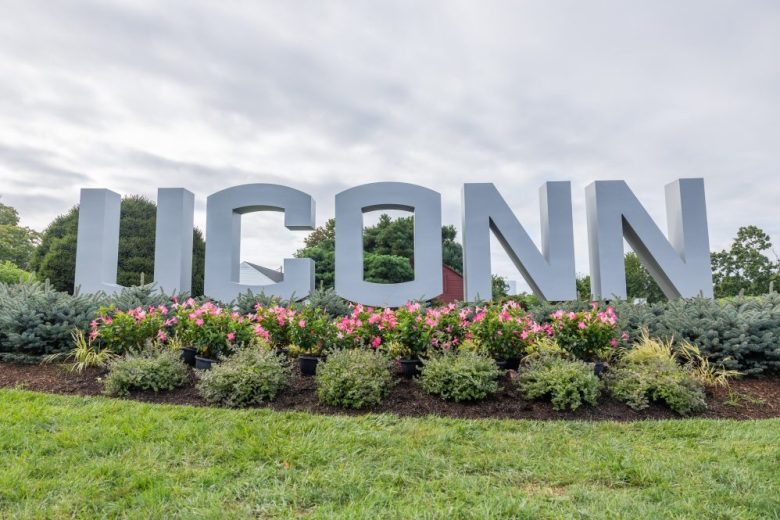
Following last year’s disclosure that a faculty member had misspent grant money and had been charged with larceny, University of Connecticut President Radenka Maric asserted, “It is critical that we always hold ourselves and our workforce to the highest standards of accountability.”
There can be no truer words for a university that is often referred to as the fourth branch of state government because of the enormous power it wields at the State Capitol. However, in the absence of public scrutiny and transparency, there can be no accountability. Surely, Maric would agree.
Openness and accountability are precisely what the state’s Freedom of Information Act (FOIA) was designed to provide when it was enacted 51 years ago.
Transparency and accountability have long been the hallmarks of government and should be of the state’s flagship university as well. UConn’s operating budget this fiscal year is roughly $3.6 billion. Given the enormity of its budget, its faculty and its enrollment, you’d think the public should have the right to know what transpires behind the walls of taxpayer-supported academe.
But those walls would become impenetrable if House Bill 5548 were to become law. Pursued by the faculty union at UConn and its equivalents at the state’s other public colleges and universities, this overarching bill would exempt from public disclosure all non-budgetary information and data related to teaching and research involving medical, artistic, scientific, legal and other scholarly issues. In other words, just about everything at UConn, its medical and law schools and at the Connecticut State College and University (CSCU) System would be hidden from public view.
There are two major reasons why this this incredibly misguided proposal is being sought. Some faculty members claim that they have been harassed and even threatened. However, there are two provisions of the FOIA that would deal with such misconduct. The FOIA already contains an exemption for records when their disclosure could reasonably lead to a safety or security risk. [See Conn. Gen. Stat. §1-210(b)(19).]
The second is Section 1-206(6) of the FOIA, otherwise known as the vexatious requester provision, which allows the Freedom of Information Commission to grant relief to an individual or agency for several reasons, among them if the person asking for documents has engaged in abusive conduct or has sought an excessive number of records.
There is no evidence – none whatsoever — that any individual at a public institution of higher learning has ever used the vexatious requester provision. Instead, the faculty unions seek the easy way out: a blanket exemption that would allow everyone in the multibillion-dollar world of public higher education to operate in secret.
If this bill had been in effect in recent years, the following are some of the stories that the public wouldn’t have known about:
- That the now-disgraced chancellor of the CSCU system was fired after he spent tens of thousands of dollars of taxpayer monies on personal luxuries such as expensive meals and pricey bottles of wine, flowers and room service, clothing, chauffeured trips and tickets to a gala and sporting events.
- That the head of the UConn police sex crimes unit was removed in 2023 for allegedly kissing and touching staff.
- That an 84-year-old UConn health professor continued to receive paychecks for months after his homicide.
- That former UConn men’s basketball coach Kevin Ollie sued the university for improperly dismissing him and ultimately reached a multimillion-dollar settlement.
- That a series of deep cuts in programs and services at the community colleges has decimated the system and caused grievous hardship for many students.
- That a UConn faculty member was charged with first-degree larceny after she allegedly used grant money for personal travel and related expenses.
- That the CSCU Board of Regents improperly met in secret to discuss a bureaucratic reorganization involving hundreds of thousands of dollars.
- That the Faculty Senate at Western Connecticut State University passed a vote of “no confidence” in the since-dismissed president.
The aforementioned is just a sampling of the public higher education stories that have been published and /or broadcast. But the point that has been made repeatedly to legislators is that none of these stories would have seen the light of day if this nefarious anti-FOI proposal had been approved.
The elephant in the room, of course, is the federal government’s attacks on academic freedom and on diversity, equity and inclusion, commonly known as DEI. But the legislature shouldn’t act out of fear. Lawsuits defending university independence and academic freedom have been successful. Moreover, draping a curtain over a huge chunk of state government and exempting public higher education from the FOIA will never be undone even when this federal administration is out of office.
This bill is, in large part, an overreaction to what is going on in Washington D.C. But it is the people’s right to know in Connecticut that will be permanently and irreparably damaged.
As UConn President Maric said, “It is critical that we always hold ourselves and our workforce to the highest standards of accountability.” If this bill were to pass, those words will be meaningless.
Michele Jacklin is the President of the CT Council on Freedom of Information.