
This story is part of CT Mirror Explains, an ongoing effort to distill our wide-ranging reporting into a "what you need to know" format and provide practical information to our readers.
As the days grow longer and sunlight more abundant, New England is experiencing a proliferation of ducks.
No, not the waterfowl (though many are also making their spring migrations). Instead, the region’s electric grid operator, ISO New England, reports that the six-state region is on pace for a record number of so-called ‘duck curve’ days driven by the performance of behind-the-meter solar systems, such as those on rooftops and commercial buildings. Front-of-the meter systems, by contrast, include large solar arrays that feed power directly onto the grid.
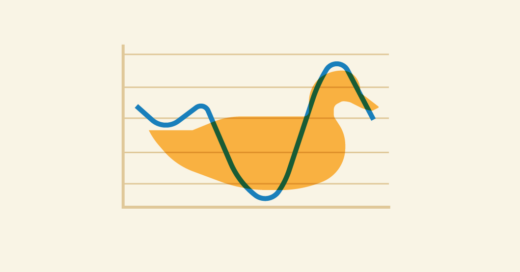
The term ‘duck curve‘ simply refers to any day when the output from those smaller systems is enough to cause a dip in demand on the electric grid during peak sunlight hours. Because the power is produced behind the customers’ meter, its output is not directly measured by the grid’s operators.
The phrase gets its name becase when demand is charted on a graph, the deep curve resembles the outline of a duck.
When do duck curve days occur?
The first duck curve day in New England occurred on April 21, 2018. Since then, the phenomenon has grown steadily, with a record 134 duck curve days reported last year, according to the ISO.
The grid recorded its 50th duck curve day of this year on Thursday, April 23, a pace that would break last year’s record.
“Early on, it was just a weekend thing,” said Mike Knowland, the ISO’s manager of forecasting and scheduling. “But now they happen kind of all the time.”
While duck curve days can happen any time of year, they tend to occur most frequently during the spring and fall when ample sunshine is combined with moderate temperatures and lower electrical demand from heating and cooling systems.
Knowland said that July typically experiences the fewest duck curve days, as the sun’s rays also cause people to crank up their power-intensive air conditioners.
An example of a typical duck-curve day occurred on Friday, April 10, 2026. At noon, the total system demand was recorded at 7,458 megawatts — a more than 43% decline from just a few hours earlier when people were waking up and making breakfast around 7 a.m.
But when factoring in the grid operator’s estimate of behind-the-meter solar, noontime demand had actually risen slightly to 13,876 megawatts. Nearly half of all electricity being used across the six-state region was produced by tens of thousands of small, distributed solar systems.
Across New England, there is an estimated 8,500 megawatts of behind-the-meter power generation, according to Knowland. Almost all of that is solar.
Over the next few years, New England is also expected to transition to a winter-peaking system, driven by the increasing electricity use from heat pumps and EV chargers. While solar panels can perform well in the cold, their output is often reduced in the winter by overcast days and snow cover, reducing the likelihood of producing a duck curve.
How do they impact costs?
The most obvious benefit of reducing electricity demand is that less power needs to be generated by larger power plants, lowering supply costs for everyone.
In addition, because homes and businesses with rooftop solar are spread throughout the electric grid, they can reduce the amount of electricity that needs to be transported over local and long-distance power lines. That, in turn, alleviates the need to fix or upgrade overloaded utility infrastructure, which further reduces costs.
However, it can be difficult to predict exactly when the conditions will be right to produce a duck curve. At the ISO headquarters in Holyoke, Mass., staff have to be prepared to call upon traditional power plant operators to throttle down or fire up their generators as needed in order to meet demand.
Dan Dolan, president of the New England Power Generators Association, said that process can be taxing, particularly on some of the region’s older gas and oil-fired power plants.
“Like so many other big, complicated heavy-industry machines, they tend not to like to be turned on and off a lot, or have to start up and heat up really quickly,” Dolan said.
“And so what we see is these increasing duck curve days are actually putting more strain and operational wear and tear on some of those conventional facilities,” he added. “It does then lead to other consequences on the need for increased maintenance and the potential that they will then break and need to be replaced.”
Since encountering their first duck curve nearly a decade ago, Knowland said ISO staff — including an in-house meteorologist — have grown adept at using many models to forecast demand in the days, hours and minutes ahead. That predictability, he and others said, is vital to keeping the grid operating seamlessly.
“I think they have gotten very smart, very fast on a lot of this,” Dolan said. “The ISO deserves a lot of credit. There is, of course, constant improvements that can be done.”
In order to make the grid even more efficient, experts say the growth of rooftop solar should be paired with more battery storage in order to smooth out the duck curve. Larger grid-scale batteries can also be dispatched immediately at times of peak demand, reducing the need to call upon fossil fuel power plants.
“The thing that would really help us at this moment is just to have more short-term [battery] power to help us navigate these peaks,” said Bernie Pelletier, vice president of People’s Action for Clean Energy.
Earlier this year, the Public Utilities Regulatory Authority issued a report on the state’s solar programs which urged lawmakers to create additional incentives for the development of behind-the-meter energy storage. The report said that adding more storage would help save money for both owners of solar panels, as well as utility customers more broadly through better grid stability.