


A bill that introduces criminal charges for redeeming out-of-state bottles in an attempt to tackle redemption fraud gained final passage in the House Wednesday night and is headed for Gov. Ned Lamont’s desk.
Anyone who redeems more than 40,000 out-of-state bottles in a year will face up to five years in prison.
After the passage of an emergency certification bill in February, redemption centers, distributors and manufacturers convened to discuss additional solutions, said Sen. Rick Lopes, D-New Britain, co-chair of the Environment Committee.
“We would only do [additional measures] if there was consensus … [and that] narrowed the bill down considerably,” Lopes said during Senate discussion of SB 457 on Tuesday night.
The bill makes it a Class B misdemeanor for redeeming more than 5,000 out-of-state bottles, and the sentences grow more severe as the number grows. Previously, fraudulent redemption was punishable only by a fine until the third offense.
Earlier attempts to reform the bottle redemption system through creating a stewardship program, adding Connecticut-specific labels and reducing the redemption rate to 5¢, fell flat.
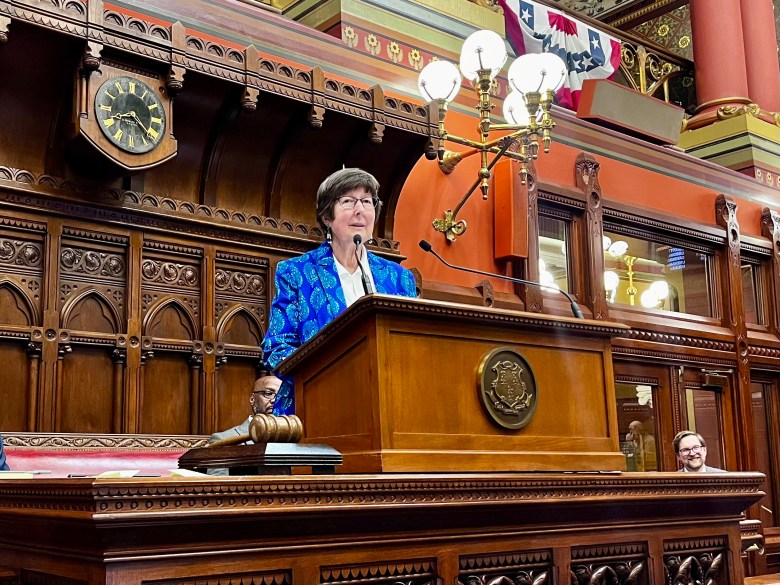
Rep. Mary Mushinsky, D-Wallingford, who first ran for her seat in 1980, oversaw the debate in the House late Wednesday night at the invitation of House Speaker Matt Ritter, D-Hartford. Mushinsky announced her retirement earlier in the session.
Ritter noted that the first public comment Mushinsky made in the House was on an early version of the bottle bill.
The attempts to fine-tune the bill continued Wednesday night.
“I think the easiest way to do it is just get rid of the bottle deposit we have on the bottles or bring it back down to 5¢ to solve the problem,” Rep. Gale Mastrofrancesco, R-Wolcott, said on Wednesday night.
The Finance Committee also introduced SB 516, which would reduce the deposit to 5¢ if the rate of bottles redeemed surpassed 100%. It was not called in either chamber.
“I do, unfortunately, have to say that this isn’t the last time we’re gonna be revisiting this bottle bill,” Lopes told the Senate on Tuesday. “This is just the latest iteration of a fix we need to make.”
