This story has been updated.
Connecticut’s two major electric utilities, Eversource and United Illuminating, announced plans on Friday to lower electric supply rates starting July 1.
In a statement, Eversource said that it had filed notice with regulators to drop its standard service rate from 12.64 cents to 11.58 cents per kilowatt hour. That represented a roughly 4% decrease off the total bill and monthly savings of around $7 for a typical customer using 700 kWh of electricity each month.
United Illuminating said it expected its standard service rate to drop from 13.69 cents to 11.99 cents per kWh. That calculates to a monthly savings of about $12 for the average customer, or a decrease of 5.67%.
The changes will require review and approval by the Public Utilities Regulatory Authority before taking effect.
Standard service rates are adjusted twice a year, in July and January. Historically, rates are higher in the winter, when the supply of natural gas used to fuel power plants becomes constrained due to heating needs.
However, electricity use from air conditioning systems increases during the summer. For many customers, that means higher usage and higher bills, even if their rates are lower.
“Lower supply rates will provide meaningful savings for many households, and this decrease will help customers manage their monthly bills,” UI Chief Executive Frank Reynolds said in a statement. “It is important to note that electricity usage often climbs during the summer months, primarily due to home cooling. In order to feel the full benefit of these savings beginning in July, we encourage customers to be mindful of their usage and participate in smart energy-saving habits.”
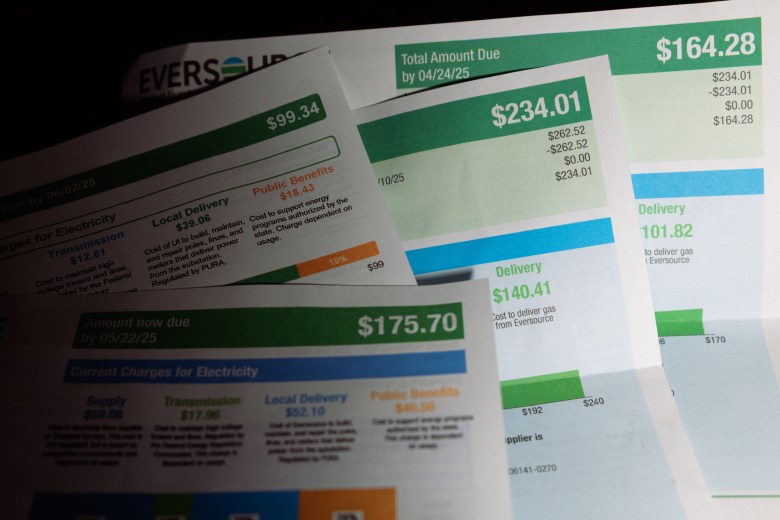
Most Connecticut electric bills are broken up into four categories: supply, transmission, distribution and public benefits charges.
Supply charges reflect what the utilities pay to purchase electricity on behalf of their customers. Under Connecticut’s competitive electricty market, utilities are generally prohibited from owning their own power plants and must pass along those purchasing costs to customers without any markup.
In April, PURA approved rate adjustments that virtually eliminated the cost of the public benefits charge at least through September. Officials said those changes were largely the result of savings from the state’s long-term agreements to purchase electricity from two nuclear power plants: Waterford’s Millstone Nuclear Power Station and Seabrook Station in New Hampshire.
The ongoing war in Iran and an especially cold winter both contributed to volatile spikes in fossil fuel prices in recent months, resulting in higher supply costs.
Claire Coleman, the head of the state’s Office of Consumer Counsel, said customers were shielded from some of those spikes due to the way utilities spread out their purchasing over the entire year. Many of the contracts to buy power for this summer’s supply were made before the Iran War began in February.
“That is a concern … especially with winter rates ahead,” Coleman said. “But right now, we are relieved to see a reduction.”
The combined impact from the changes to supply rates and public benefits charges should result in overall electricity rates falling by around 18% in just a few months, Coleman added. Those changes did not alter either of the two areas where utilities earn the bulk of their profits: through the maintenance and development of the transmission and local distribution systems.
Correction:
Electricity supply rates are adjusted twice a year, in July and January. An earlier version of this story misreported that they are adjusted in July and December.