


Hartford-based Democratic Sen. Douglas McCrory is facing a three-way primary next month that could have a major impact on K-12 education in Connecticut.
McCrory is the Senate co-chair of the Education Committee, making him a leading voice on which education bills are taken up and passed along to the full General Assembly.
His two Democratic challengers are also deeply involved in education: Rep. Maryam Khan of Windsor led the passage of significant special education reforms last year and also sits on the Education Committee, while Ayana Taylor serves as the president of the Windsor Board of Education.
McCrory, a veteran legislator who is the subject of an ongoing federal criminal investigation, lost the Democratic nomination to Khan in the spring, but voters will have the final say on who advances to the general election. Early voting begins Aug. 3, and primary Election Day is Aug. 11.
CT Mirror spoke with all three candidates about how they would approach some of the most pressing issues in K-12 education in Connecticut. All three candidates agreed that the state needs to do more to support under-resourced schools and ensure every child has access to a quality education, but they differed, sometimes sharply, in how they propose to get there.
Here’s what they had to say.
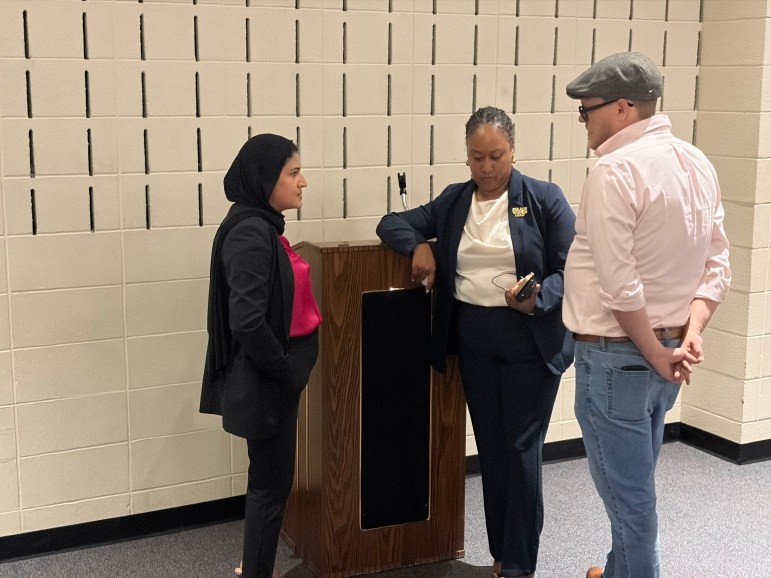
Doug McCrory
McCrory said his top education priority is “making sure all our children have access to a quality education, regardless of where they live … and providing them choices. Public school choices.”
That includes addressing how Connecticut funds its schools, which just about everyone agrees needs to change. Public schools in Connecticut rely heavily on local property wealth to cover rising costs, meaning those in under-resourced areas often struggle to provide critical services and staff up classrooms.
McCrory said he wants to “level the playing field” by putting state resources into the places that need more support. That includes fixing the Education Cost Sharing grant, Connecticut’s main state funding system and the focus of a state commission studying school financing. Critics argue the formula drastically underestimates how much money schools need from the state, forcing some districts to repeatedly make deep cuts to stay solvent.
But McCrory said he doesn’t think pumping more dollars into ECS will fix the problem on its own. He said the state also needs to “have a harder look” at outcomes.
If low-income students remain concentrated in specific districts, McCrory said, “there’s no data that says, ‘Just pour and pour money in it, and you’re gonna get better outcomes.’”
The real solution, McCrory said, is to give kids from under-resourced communities the opportunity to study with kids from more affluent communities.
“The research shows that, you place them in environments where they’re around other children who are not in poor communities, they’ll do better,” McCrory said.
This is where the longstanding issue of segregation comes into play. A recent study found Connecticut is one of the most economically and racially segregated states in the U.S. The authors of the study argued this high segregation is highly detrimental to students. McCrory concurred.
“We have segregated outcomes when it comes to our children in this state of Connecticut,” he said.

McCrory’s own Senate district has been the staging ground for one of Connecticut’s biggest segregation fights: Sheff v. O’Neill. The Sheff plaintiffs argued Hartford students lacked educational opportunities because they were effectively segregated from their wealthier suburban peers. The state Supreme Court agreed, leading to the creation of a school choice program to voluntarily integrate students from Hartford (predominantly Black and Latino) and the surrounding towns (predominantly white).
However, while Sheff arguably created new opportunities for many students, critics have argued it hasn’t resolved the underlying inequities at play and has siphoned dollars from Hartford Public Schools. Today, the district faces a multimillion-dollar deficit.
“I think the concept behind Sheff was a good concept. The unfortunate thing is, it was voluntary,” McCrory said. He added that demographic changes in the state have made the underlying concept “a little more problematic.”
“I think we have to move on from Sheff and come up with alternative solutions to … integrate our schools,” McCrory said. “We have to go Sheff level 2 and have a conversation about what’s really working and what our parents really need.”
The root of Connecticut’s segregation, McCrory said, is housing. Building affordable housing in more affluent communities would in theory reduce segregation and give more lower-income families access to quality schools; however, McCrory said he’s skeptical the state can actually build enough, at least in the near future.
Ultimately, McCrory came back to where he started: putting more resources into struggling schools — but doing it in a creative or innovative way.
His ideas included boosting salaries for teachers who work in under-resourced districts; creating more opportunities for field trips and other activities outside the typical school day; encouraging districts to offer Saturday school programs run by community members; and expanding access to charter and magnet schools.
McCrory was the only candidate to offer full-throated support for Connecticut’s school choice programming. Municipal or neighborhood schools lose a portion of their state funding whenever a student enrolls in a choice program (like a charter or magnet school), which critics say puts undue strain on local districts. But McCrory pushed back on that.
“That’s not true, because we have different funding mechanisms for charter schools, magnet schools and our traditional public schools,” McCrory said.
Here’s a rough example: Say Hartford gets $11,000 per student from the state. A student enrolls in a magnet school, and $4,500 follows them. That means Hartford still receives $6,500 — “for a child they’re not even educating,” McCrory said.
“No one loses,” he added.
Special education is another issue expected to see heightened attention during next year’s legislative session. On that topic, McCrory said his first concern is the rapid rise in the number of students being tagged with disabilities in Connecticut. The number of special education students has grown despite an overall decline in student enrollment in the last 20 years, and he wants to know why.
“And my concern is, why are there such a disproportionate number of young men of color labeled special ed?” McCrory said.
As the number of children receiving special education services has increased, the ability of schools to provide those services has come under increasing strain. Some schools struggle to afford the necessary paraeducators and teachers, even though federal law requires them to meet each student’s needs.
Asked what he thinks the solution to that might be, McCrory suggested collaboration between school districts could help.
“If these communities can come together and work in collaboration, they can build capacity,” he said. For example, multiple smaller districts could pool resources to share a speech pathologist.
In January, a report to the State Department of Education found problems in how schools are held accountable for the special education services they provide. In theory, parents can file complaints against schools they feel are not handling their children appropriately, but those options are often ineffective or hard to access. Some schools end up shifting the burden back onto parents: For example, it’s not unheard of for schools to call a parent multiple times a week to have a disruptive child picked up early.
When asked about this practice, McCrory described it as “unacceptable” and basically a form of harassment.
“That child may need a one-to-one para, you know, and this district might not want to pay for it, right? So it comes down to a finance, a funding thing,” McCrory said.
He said schools need to follow students’ IEPs and the state needs to provide resources so districts can hire the appropriate staff. To that end, he voiced support for the SEED grant, which funds in-district special education services and which Khan helped pass into law last year. However, McCrory said, he wished the SEED grant included funding for inter-district programming. Right now, the money only goes toward individual districts.
Literacy is another top-of-mind issue for many in Connecticut. The state passed major literacy reform in 2023, and some schools have reported improved reading scores in the years following. But McCrory said he’s nowhere near satisfied as a large proportion of the state’s students remain far behind.
Reducing the number of students per classroom, especially in earlier grades, would help, McCrory said. He also wants the state to look into how colleges and universities are preparing teachers themselves.
“A lot of people that’s coming out of our schools of education are not properly prepared to teach literacy, and we have to change the way we do that,” McCrory said.
McCrory leaned into his record to argue why he deserves another round representing the 2nd Senate district. He has the most legislative experience of the three candidates, having been elected state representative in 2004 and state senator in 2017.
“I know what can get passed, and I know what won’t get passed,” McCrory said.
And he touted his decades of experience in education — he has worked as both a teacher and administrator and is now employed by the Capitol Region Education Council, or CREC, which provides public school choice options to students in the greater Hartford area.
Among the legislative achievements he’s most proud of are increasing the diversity of Connecticut’s teachers, which also improves outcomes for students; instituting a requirement that schools teach financial literacy; adding Black and Latino studies as a required subject; and the creation of a $10,000-a-year scholarship for aspiring educators.
But there is a shadow hanging over McCrory this election: an FBI investigation into how the senator directed the Blue Hills Civic Association to send state taxpayer money to various other organizations, some run by close associates. A CT Mirror investigation found McCrory held sway over the nonprofit until its abrupt and shocking collapse in April 2025.
Despite the ongoing federal investigation, however, neither of McCrory’s opponents opted to mention the scandal when discussing why they were running against him. McCrory himself said it hasn’t come up when he’s out knocking on doors, either. And he pointed to the passage this year of a bill to regulate earmarks, which he said he supported “100%.” The bill was widely seen as a response to the investigation.
“I just want to be clear: Douglas McCrory doesn’t write checks,” McCrory said.
Maryam Khan
Khan said she thinks the top priority for education in Connecticut right now has to be special education.
“It’s the No. 1 issue that has come up as being the biggest cost driver, the largest shortage area,” Khan said.
And, she added, “I know we’ve identified reading as a big concern, so I would say both of those.”
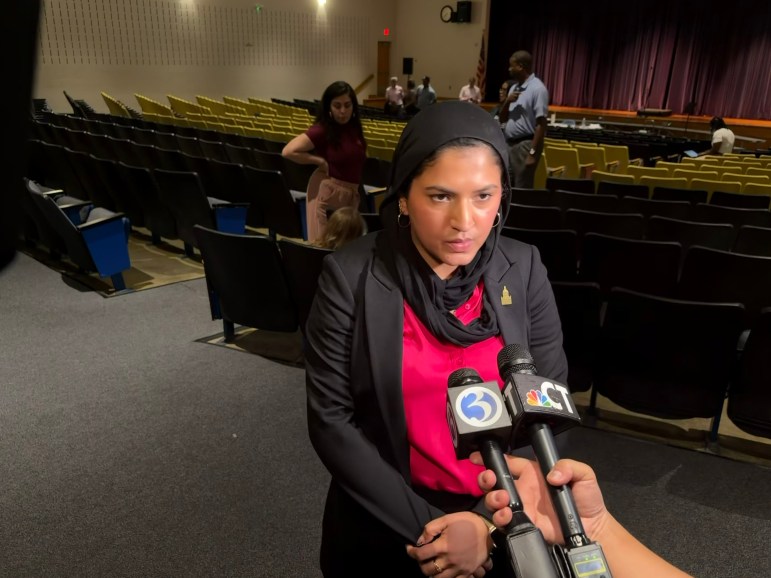
Special education costs are an issue Khan already knows well. In 2025 — her third year as a legislator — she helped lead the passage of HB 5001, a bill focused on easing special education costs for districts. The bill created the SEED grant, which funds schools’ in-house special education services, and capped the rates providers can charge schools for outplaced students. That latter change is something Khan expects will come under pressure during next year’s legislative session.
“There is going to be a push by the private special ed providers to try to remove it,” Khan said. “It’s something that we really have to grip onto.”
At least one prominent Connecticut special education advocate has criticized the rate setting portion of the bill, but Khan maintained it was an important provision.
“The state has to have a system in which they set rates so that districts are protected, because public education relies on tax dollars, and if you don’t have the money, they will have to cut something,” Khan said.
Outplacement costs tend to be very high, but until the passage of 2025’s HB 5001, those were the only special education costs for which the state would reimburse public schools. Khan said that led districts to favor outplacement over in-house services, a trend she’d like to change.
Funding more special education resources for districts themselves, she said, would not just save money on outplacements but also “use the money more appropriately” given that kids learn better closer to home.
Asked about school compliance — and the parents getting frequent calls from schools to pick up their children early — Khan suggested the issue is part of something broader.
“This is behavioral issues that are going up with students,” Khan said. “Students are having more behavioral needs, and districts are not able to provide what students need, and so then they’re calling parents for this.”
Part of the solution, Khan said, is to reconsider “what education needs to look like in 2026.”
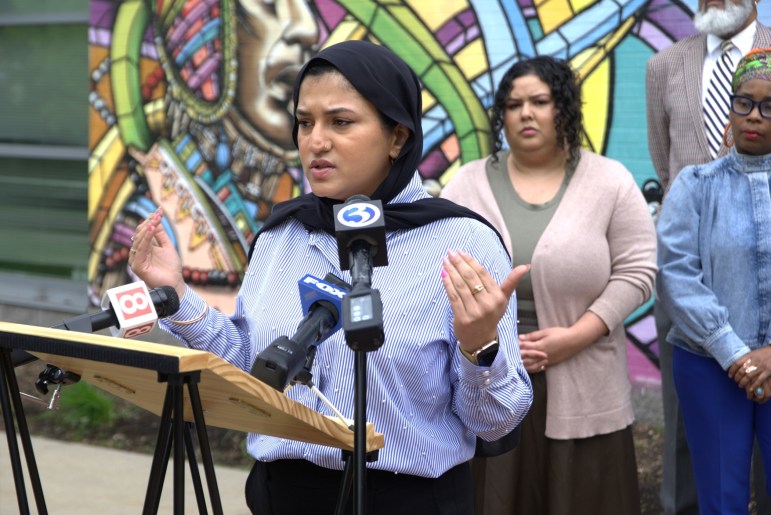
“Children are not required in their daily life to have as much physical activity as they would have maybe like 30, 40 years ago, when they were still helping out at home more,” Khan said. “So you have children that have a lot of physical energy and no way to release it.”
Revamping classrooms to include less sitting and listening to lectures would help with that, Khan said. The state can help incentivize that process, she said, through initiatives like a competitive grant for a pilot program.
For the students with more acute behavioral needs, Khan said, the state needs to ensure schools can hire enough social workers.
“You’ll see a lot of schools with like 600 students and one social worker,” Khan said.
“If you have more resources in terms of social workers that are able to work with students on behavioral issues, on emotional issues, on just emotional regulation, then those students can actually stay in school,” Khan said.
To that end, she’d like to see the SEED grant — the other part of HB 5001 — increase. Fully funded, the grant would provide around $180 million, but legislators have only funded a fraction of that.
Speaking of school funding more generally, Khan said she thinks Connecticut has to start “incentivizing regionalizing to some degree.”
“That doesn’t necessarily mean regionalizing schools but regionalizing services,” she explained. Like McCrory, she said she supported encouraging districts to partner for shared services. Some districts do so already, Khan said, but she’d like to see the state incentivize it more.
Khan said she had hoped to bring forward legislation allowing districts to pool their SEED money in the most recent legislative session — thereby resolving the very issue McCrory brought up with the SEED grant — but it wasn’t taken up by the Education Committee.
In a sharp divergence from McCrory, Khan said she feels the Education Committee’s focus on expanding school choice is one of the main reasons the state has yet to address the problems in its funding system.
“I don’t believe [expanding school choice] is going to solve the problem. I think it creates more inequities within our current system, but I feel like a lot of the conversations at the state level in the legislature revolve around school choice,” Khan said.
She pushed back on McCrory’s assertion that municipal schools don’t really lose money when students enroll in choice programs.
If “10 children leave Hartford Public Schools, they’re leaving from 10 different schools. You’re not going to be able to cut a teacher. You’re not going to be able to cut any resources. You’re not saving any money,” Khan said. But the district still has to pay tuition for all 10 of those students.
Ultimately, Khan said, “the state creates these choice programs, and I think the state needs to then fund them.”
That’s not her only concern with choice programs, either. Khan also criticized what she sees as a lack of oversight. Municipal schools have boards of education that serve under the town’s elected government, which is ultimately accountable to local voters. Those same local governments, however, have little to no authority over choice schools. The state makes the decision on which new schools are approved.
“The town’s can’t do anything … They [choice schools] self-govern,” Khan said.
She said the leadership on the Education Committee — which includes McCrory — takes a view of school choice that is out of step with most parents.
“I have never once heard a parent say to me, ‘I would like more choice opportunities for my child,’” Khan said. “Every single time, it’s, ‘Why is it that my child has to go out of the city? Why does my child have to get on a bus at five a.m. … so that they can get good reading education?”
That, she said, is what motivated her to challenge McCrory for his Senate seat.
“Unfortunately, it feels like, as an educator, that we are in the minority party on that committee because of the constant push to just privatize education or create more school choice opportunities,” Khan said.
“Privatizing education” tends to evoke conversations around private school vouchers, which Connecticut does not have. However, Khan said, privatization here happens in other ways. For example: a reading program or assessment developed by a private company that the Education Committee ends up mandating schools to adopt.
“No district has said, ‘Hey, … we need help teaching reading because we don’t know what to teach,” Khan said. And yet, she said, that new program becomes a required reading intervention.
As an example, she pointed to 2023’s Right to Read legislation, which mandated schools adopt specific science of reading-aligned curricula. Khan said she agrees with the push to align reading instruction with the science of reading, but she expressed skepticism that mandating schools drop their existing curricula to buy specific state-sanctioned programs had worked out.
“We’ve now implemented [Right to Read] for about four years, so by that logic, we should have different reading scores now, and we have not seen a shift,” Khan said. “But [those new programs] cost Connecticut schools millions of dollars to purchase on their own. The state did not help them.”
As a result, Khan said, some districts ended up cutting teaching positions to finance the new curricula.
She added, “If you’re making districts buy private programs based on private lobbyists that have come to lobby your legislature, that is still privatization.”
(Some districts, such as New Haven, have reported improved reading scores in lower grades after Right to Read, but the number of students reading below grade level remains high.)
Khan said Right to Read’s “blanket” approach didn’t work well in a state where literacy rates vary drastically from one district to another.
“So, if certain districts have lower rates of reading scores, and we know that they also have, let’s just say, an absence of early childhood [education] in that district, then the answer is not ‘make them buy new curriculum.’ The answer is how can we increase early literacy in this district,” Khan said.
When asked about segregation, Khan turned toward her own experience growing up as an immigrant in New York. Most of her classmates were also immigrants from low-income families, but because the school was well-resourced and boasted strong supports for multilingual learners, Khan said, she and her siblings all learned to read on time — even though their parents couldn’t help. Her father was a laborer; today, all four of his children own their own homes.
Khan’s takeaway: “Even with the economic and racial segregation, you can still have good outcomes.”
The problem in Connecticut, she said, is that the outcomes aren’t good. And that, she suggested, is about resources.
She pointed to Sheff as an example.
“What the state did to address [Sheff] is to try to solve the segregation issue, but [it] never solved the resources issue,” Khan said. “So now Hartford Public Schools has less ability to actually make an impact than it did when that case was even brought.”
Ayana Taylor
Taylor said her top education priority is funding, an issue she said is top of mind for her as both a member of the Windsor Board of Education and a mother of a child with autism whose services she had to fight for. She highlighted the cost of special education, the rising costs for schools in general and the problems with the ECS formula as all being “top of mind.”
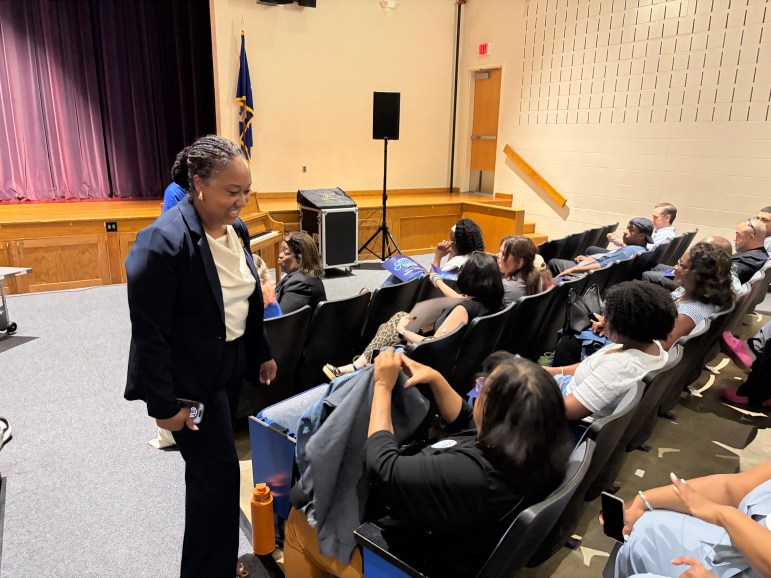
But, she said, “you have to crawl before we walk.”
“It’s not a quick snap of the finger to say, ‘OK, how do we fund all this?’ Because everything’s going to come back to taxpayers,” she said.
She aligned with McCrory and Khan on schools sharing resources, especially for special education needs like speech pathologists.
“It saves taxpayers money, expands opportunities for students,” she said.
She also said she likes the idea of schools sharing programming. As an example, she pointed to her cousin, a Windsor student who attended an agricultural program at Glastonbury and ultimately became a veterinarian. That agricultural program wasn’t something Windsor itself could offer, but because the districts collaborated, students from both benefited.
A state senator, Taylor said, could “be advocating for dollars for a data dive, or to have consultation to see what something like that could look like.”
At the same time, Taylor expressed some criticism of Connecticut’s choice programs, though she said repeatedly that she supports families having options.
“Being smart about investing in our community schools. … You know, another elephant that’s in the room, the choice programs and students going all over the place,” Taylor said.
She later said, “I am seeing oftentimes more schools than we have kids to go to them. That’s what I’m seeing.”
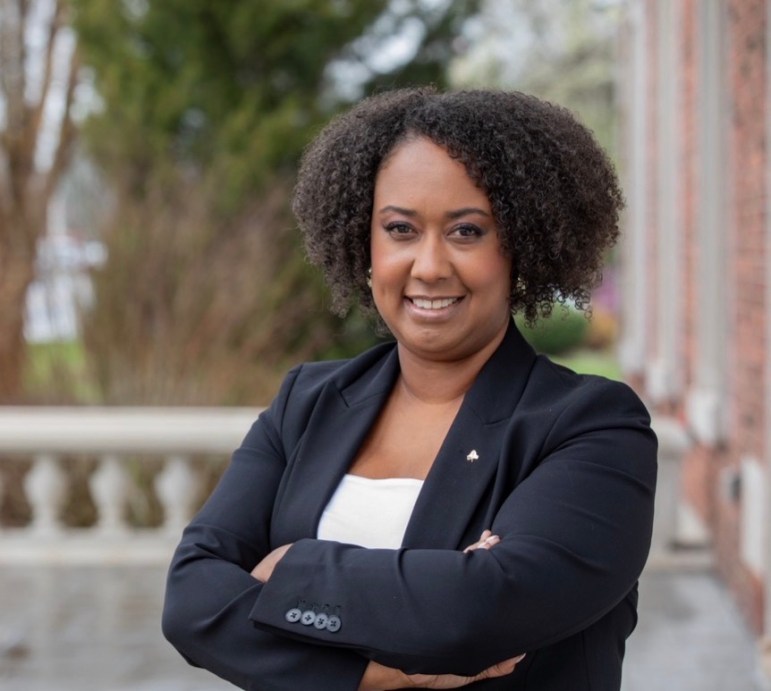
Taylor also asserted that neighborhood schools do, in fact, lose money to choice programs. She pointed to Hartford as an example.
“What Hartford found is that as students were leaving … and going to CREC or magnet or charter, money follows the child. And so what [that] leaves behind is half-empty schools and classrooms, and we still have to pay the overhead as taxpayers,” Taylor said.
And she noted that it costs money to bus kids to choice schools, which may be farther away than their neighborhood school.
“When you’re thinking about going back to investing properly in our neighborhood schools … there’s a cost savings there,” Taylor said.
Taylor also criticized how the state calculates the cost to districts to educate students. Right now, the ECS formula gives every student the same starting “cost,” then runs that number through a complex array of weights to arrive at a final funding amount. Taylor suggested the process is missing the mark.
“The cost to educate my daughter … and my son are two different numbers,” she said.
“I think we really need to be specific about the data, and really have a partnership and be in collaboration with our towns and cities to ask what they need … so that the state isn’t just” making things up, Taylor said.
Bringing a new degree of collaboration to the state legislature was a major part of how Taylor described her candidacy.
“It’s a lot of silo work in education, if you can imagine. And what happens when you continue to work in silos for so long, you don’t realize that, ‘Oh, we’re actually all fighting for the same things,’” Taylor said.
She said she’s beginning to see that kind of collaborative energy emerge between school boards, including the one she leads, and she’d like to bring it to the statehouse.
“Being part of conversations and being in coalition prior to session time,” Taylor said. “As soon as the school year starts, those are the times for your town halls. … Not waiting until session when you’re overwhelmed by everything coming at you.”
This is the second time Taylor has primaried McCrory. She said her decision to run for the state Senate grew out of her experiences as a helper and leader in the community — the kind of person people reach out to when they need an answer to just about any kind of question.
“People are asking for change. I am reliable. People call me … I respond, I’m accessible, and so I just became a person, an advocate, for the people,” Taylor said.
When it comes to segregation, Taylor said, her top priority is ensuring the quality of a child’s education doesn’t depend on where they live. Like McCrory, she expressed concerns that marginalized students avoid the teaching profession.
“The disparities of the amount of teachers that are coming into the profession are … the diversity is still lacking,” Taylor said.
When asked about Sheff, Taylor turned back to neighborhood schools.
“If our community schools, if all schools were equitably funded … there would be no Sheff vs. O’Neill,” she said.
Taylor did say she thinks “the choice should be there for parents” to send their kids to a Sheff school instead of a neighborhood district. But she reiterated that she wants more emphasis put onto bringing the latter “up to snuff.”
“We, first things first, need to find out, why aren’t we equitably funding all of our schools?” she reiterated.
Taylor said it’s no surprise that many students opted to leave Hartford Public Schools when new choice programs came about.
“If your child’s neighborhood school is leaking … it would make sense that parents would want to go to the shiny new school,” Taylor said. “I think that we lose something by kiddos not going to school with the neighborhood friends, the lack of community built.”
When it comes to special education, Taylor said, one of her big concerns is that many parents won’t even discuss their children’s needs out of shame.
“There’s a systemic barrier there with certain communities culturally,” Taylor said. “So kiddos are going so long without being diagnosed … for fear of diagnoses.”
This, Taylor said, leads people ultimately into “going along to get along.” Sometimes, she said, that looks like parents being told everything is fine when it might not be. She herself struggled to get services for her son because he knew two words too many to be accepted into a birth-to-three program.
“If you’re not a person like Ayana Taylor … [with] a speech and language pathologist in my family, to push back, things go unchecked,” Taylor said.
She said the process of getting services is also just confusing for many parents.
“I’m hearing that a lot from parents saying, ‘I did not know what I didn’t know.’ They were speaking to me in acronyms,” Taylor said.
She said she wants the state to do more to promote unconscious bias training and “making sure we are meeting families and parents where they’re at.” That’s also something she feels would help address the problem of schools repeatedly calling parents to pick their kids up early.
“When a child is melting down … the first thing should be making sure that we get to the root of the problem, and then practicing restorative practices to make sure that the child feels comfortable coming back into the setting,” Taylor said.
She also said the state should do more to track where such cases are occurring and thereby hold districts more accountable.
As for literacy, Taylor said universal pre-K is a top priority. Kids who start school at kindergarten often lack important soft skills and may already be behind in developing reading skills.
“I’m always thinking ahead, that if we get out in front of it we won’t be so far behind moving forward,” Taylor said.
She also expressed support for improving Tier 2 and Tier 3 supports — that is, additional support services available to students beyond general instruction — and reducing class sizes.
“Our educators are doing their very best, but that’s classroom sizes. It’s more supports. It’s more preventative and early interventions for any disabilities and things of that nature,” Taylor said.
