


Four Connecticut Republicans, despite the long odds in November’s general election, are fighting to win the GOP nominations Tuesday in two Western Connecticut Congressional Districts that are solidly blue.
As in GOP primaries of the past, the candidates don’t have major differences on policies but are clashing over their approaches to the campaign. And some offered criticisms of both parties in addressing voters’ concerns around issues like affordability.
The Republican primaries are in the 4th Congressional District, which covers the southwestern corner of the state, and the sprawling 5th Congressional District, mostly in Northwestern Connecticut, considered the most competitive in the state.
Even for the winners of the primaries, the prospects of a victory in November look bleaker than in previous years. Democrats hold all five congressional seats in Connecticut. Republicans haven’t won the 4th District since 2006 or the 5th District since 2004. President Donald Trump lost both districts in his past three races but by a much smaller margin in the 5th District.
Trump remains a power broker in GOP primaries, but he hasn’t been involved in Connecticut since the 2022 Senate primary for Leora Levy.
Two of the candidates scored endorsements in their primaries at the nominating convention in May, but the state Republican Party doesn’t provide support until there’s a nominee.
The primary winners will spend money on get-out-the-vote efforts to boost early and absentee voting that “helps the entire ticket,” Ben Proto, the state GOP chairman, said.
Proto said the candidates have “very different styles of campaigning.”
“I think in both districts you have very different types of candidates that have a very unique background to talk about. I don’t think there’s any one candidate who is more conservative or less conservative,” he said, adding that the four running in primaries are all supportive of Trump’s agenda.
He expects lower turnout for a midsummer primary with people on vacation and school starting back up in a few weeks, especially without a Republican primary in the governor’s race.
4th Congressional District: Michael Goldstein vs. Dan Miressi
The two-way GOP primary to take on Democratic U.S. Rep. Jim Himes features familiar faces.
It’s the third time Michael Goldstein, a doctor and attorney, has run for the congressional seat in the southwestern corner of the state. He lost the Republican primary in 2022 but became the GOP nominee in 2024, eventually losing to Himes. In this year’s primary, Goldstein is the party-endorsed candidate and faces Dan Miressi.
Miressi is a former professional hockey player who coaches youth hockey. He’s run for elected office before, including an unsuccessful race to unseat state Senate Majority Leader Bob Duff, D-Norwalk, in 2022.
Miressi ran for Himes’ seat in 2024 but fell short during the nominating convention and didn’t make it onto the primary ballot. This time, he qualified for the Aug. 11 primary, but Goldstein secured the endorsement.
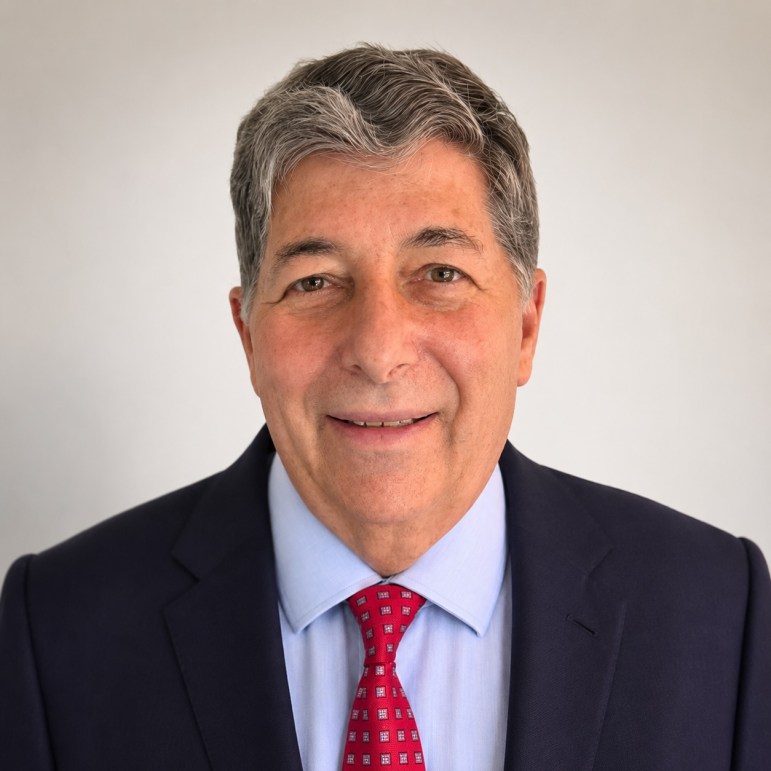
Goldstein decided to run again, despite the growing political divisions in the country.
“It’s become such a divisive time and our country has become so polarized that I felt compelled to actually stand up and advocate for things that I believe are important,” said Goldstein, who also pointed to the rise in antisemitism. “It was not an easy decision to do, knowing that the odds are well against anybody running against a longtime incumbent as a Republican in a predominantly Democratic state.”
He cited concerns over Democratic policy proposals like “Medicare for All,” arguing that health care needs more competition and choice. And as he has in past campaigns, he raised concerns about high energy prices amid debate over a natural gas pipeline that could serve the state and frustration over I-95 becoming a “parking lot.”
Miressi started to get more involved in politics in 2022 when he challenged Duff. Miressi said he’s been on the “Trump train” long before he ran for office, going back to 2010. Similar to Democrats running in Connecticut’s 1st Congressional District, he wants to see “a new type of leadership” for Republicans.
He supports the tax breaks in Trump’s “big beautiful bill” but cautioned that Republicans need to be more mindful of pork-barrel spending that further drives up the deficit. He argued they should be “bolder” on tax policy, with flat taxes and an elimination of payroll taxes. He believes Connecticut should invest in chip manufacturing and that the government shouldn’t be involved in student loans and should “zero out interest rates.”

He also offered a blunt assessment of his own party, saying they need to do more outreach to younger constituents who are struggling to afford housing and other necessities in Connecticut. He believes both parties aren’t doing enough to address issues around affordability, including members of the state’s congressional delegation.
“Why I got into this whole mess to begin with was the Republican Party, especially in Fairfield County, overall in Connecticut, is either nonexistent, incompetent or apathetic,” Miressi said, arguing his party is more focused on people over 50 who are already homeowners and not on young voters who are struggling to buy a home, pay off student loan debt and afford groceries. “I love [Ronald] Reagan as much as the next person, but we’re stuck in 1986.”
“My generation, people under 40, really everyone now, we don’t have time anymore to stand on the sidelines,” he said. “We have to be cognizant of the fact that there’s more to Connecticut, there’s more to people’s lives than the coastline.”
Miressi said he wants Republicans in Fairfield County to look beyond Greenwich and “representing the country club” and that a new generation should be at the table.
Goldstein pushed back on Miressi’s characterization of the local and state GOP and the implication he can’t address issues because of an age difference. He has his own ideas on higher education, seeking an expansion of trade schools that could provide “AI-proof” jobs and a proposal that universities should disclose to applicants “what happened to students who graduated with the degree” and a salary range.
Goldstein said he has a “different skill set” than his opponent, noting his work leading medical societies and other organizations as well as balancing budgets in businesses.
Himes is seeking his 10th term to Congress. If he wins reelection and Democrats take back the House majority, he’d serve as the chairman of the House Intelligence Committee. Himes’ campaign declined to comment on the GOP primary for his seat.
The congressman has a major cash advantage over both of the Republican candidates, with $2.5 million in the bank. Goldstein has raised a total of about $46,000 since the start of the year, spent about $5,7000 and has $41,000 left to spend. Miressi brought in a total of about $10,700, spent a similar amount and his cash on hand is -$1,400.
5th Congressional District: Chris Shea vs. Jonathan De Barros
The 5th District remains the most competitive seat in the state, and the Republican primary has become particularly heated in recent weeks.
U.S. Rep. Jahana Hayes faced Republican George Logan in her last two reelection races, but she will have a new opponent this year. Chris Shea and Jonathan De Barros are seeking the Republican nomination and both are running a different campaign than Logan, who kept Trump at arm’s length in his campaigns in 2022 and 2024.
Shea won the endorsement at the party’s nominating convention in the spring, but De Barros still comfortably qualified for the party even after some vote switching. Both are first-time candidates.
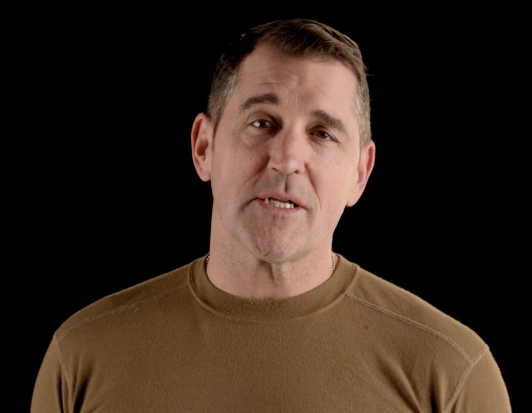
Shea is a North Haven firefighter and retired Navy SEAL. He founded the nonprofit Hero to Hero, which encourages military veterans to consider a second career as first responders. He believes he can be more competitive than previous years because he’s from the 5th District and he doesn’t expect issues like abortion and reproductive rights to be as potent of an issue against Republicans.
He said his career in service and at the Pentagon prepared him for the job because he worked a lot with Congress and “got a chance to see how things work — or not.”
“I’m not running to be Trump,” Shea said, adding that he’s much more interested in the president’s policies, such as the tax breaks that passed Congress last summer over his rhetoric. He argued that the western part of the state “deserves different representation than Jahana Hayes.”
De Barros has described his campaign as untraditional. He’s talked a lot about redemption and second chances based on his past. He fatally shot a man in 1996 and was convicted of murder, but it was overturned on appeal. The court ruled that the original judge had erred in barring evidence relevant to De Barros’ claim that he shot the victims in self-defense. He was granted an “absolute pardon” in 2022. He’s been out of prison for over a decade, working as a mentor for at-risk youth.
“I decided to run in the 5th Congressional District after I just saw the failed policies that Jahana Hayes was voting for in Congress, how those policy decisions were affecting that community we both were born and raised in,” said De Barros, who pointed to Democrats’ opposition to Republicans’ major tax bill that also had incentives for more investment in economically distressed communities known as “opportunity zones” as well as the party’s bill related to immigration and the border.
He said Republicans were dismissive of him when he first broached the idea of running, arguing it’s part of a larger problem with the Republican Party. De Barros has aligned himself closely with Trump, calling himself a “MAGA patriot.”
“For the most part, Democrats and Republicans have been ignoring the urban communities, taking that vote for granted. Republicans don’t make an attempt,” he said. “I’m not a blind Republican. I’m not going to blindly support someone because I’m supposed to, because they belong to my party.”

That has put him at odds with members of his own party, frequently calling out state lawmakers and leaders and dubbing some of them RINOs (Republicans In Name Only). “If I see something in my own party I don’t agree with, I point it out,” he said. One example he gave was a small group of Republican state senators who supported the creation of a state emergency relief fund in response to federal cutbacks.
On social media, he doesn’t mince words. But when asked if he regrets anything he’s posted, he’s a bit more reflective, but he said he stands behind the substance.
“Maybe the way I’ve said it, I probably could have said it differently in a way it didn’t sound as harsh,” De Barros said, while adding that he believes he’s “standing up for the truth. I don’t apologize for that at all.” He noted that he and Republican state Sen. Rob Sampson of Wolcott “buried our hatchet.”
That has led to a lot of finger pointing between the candidates in the final days.
Shea argues his opponent’s campaign tactics serve as a distraction and “become a spectacle of personal attacks, grudges and internal warfare that serves only one side — the Democrats.” To Shea, that includes “insulting” comments as well as posting a video of a flyer from Shea’s campaign that was lit on fire. De Barros said it was a video sent to him by supporters who were upset about the content and were exercising their First Amendment rights.
“It’s very juvenile. This isn’t a clown show,” Shea said, adding that the party needs to come together instead of “lashing out at everyone around you.”
“Our resumes should be closely examined,” he said later, adding that while De Barros received a pardon from the state Board of Pardons and Paroles, “I have a record of service, he has a record of serving.”
De Barros, who said he’s called for debates for months, has pushed back on Shea’s characterization, arguing that he and his allies are depicting him unfairly. He recently filed a defamation suit against a few convention delegates who supported his opponent, alleging they called him a murderer. Shea is not a defendant in the lawsuit.
“It’s being weaponized against me by my opponent. That was a low blow,” said De Barros, who said he’s focused on policy priorities like providing financial literacy training in urban communities to get people “off of government subsidies.”
But once they get past Tuesday’s primary, Shea said, he hopes that the party can ultimately come together to “build a big tent.”
Hayes is staying out of the fray while the Republican candidates battle it out for the nomination. But she said she’s aware of the posts on social media that she gets tagged in and the criticism that comes with it.
“These things have been tried before, and they haven’t worked,” Hayes said. “It feels like a recycled version of the campaign that was run the last two cycles.”
Hayes’ 2024 race against Logan was not as close as the one in 2022. This cycle, election analysts who rate competitive races moved Connecticut’s 5th District closer to Democrats. And historically, the party in power faces headwinds in a midterm election.
Hayes has so far raised less money than she did this time two years ago, but she has a significant amount in her campaign account: nearly $1.1 million. Shea has raised about $311,000 since the start of the year and spent $166,000, with about $145,000 in the bank. De Barros has brought in a total of nearly $25,000, spent about $17,500 and has about $7,000 in his campaign account.
But Hayes, who touted the federal funding she’s secured for Waterbury and other parts of the district as well as her office’s constituent services, said that doesn’t change her outlook or approach to running for a fifth term.
“The thing about having a competitive district is that you never take it for granted. I’m always preparing for attacks,” Hayes said. “I’m just ready to run a really strong campaign.”
The Connecticut Mirror/Connecticut Public Radio federal policy reporter position is made possible, in part, by funding from the Robert and Margaret Patricelli Family Foundation.
