





When Connecticut teens seek help in the midst of the most serious mental health emergencies, many find refuge at Solnit South in Middletown.
The state psychiatric facility for Connecticut youths — a co-ed hospital for the most acute cases and a psychiatric residential treatment facility that provides longer-term care to teenage girls — is often a last resort in times of crisis and moments of desperation when families, therapists and friends can’t keep kids between the ages of 13 and 17 safe.
But over the past few months, lawmakers and the general public have learned of severe worker shortages at Solnit due to workforce injuries, deteriorating facilities in need of extensive repair, and restricted therapeutic resources for patients. The problems were years in the making, but since they’ve come to light, key lawmakers have asserted that they were unaware of the extent of Solnit’s downward spiral.
“Bad things happen when you don’t have a constant window into care,” said Sarah Eagan, executive director of the Center for Children’s Advocacy. “The state of Solnit does not happen overnight. This is years in the making.”
Meanwhile, state officials have refused to share budget drafts that could show if and how DCF sought more support for Solnit, and members of a key oversight committee have complained about a lack of transparency even as new management says it’s investigating failures and finding solutions.
Some elected officials say they’re ready to address the problems at Solnit. But advocates and staff argue that in order to successfully turn the page, questions about how the facility was allowed to deteriorate must be answered.
The money crunch
The revelation of just how badly Solnit needed investment comes at a time when the state has funneled resources into other solutions to fill gaps in children’s behavioral health. Since the COVID-19 pandemic, lawmakers have expanded resources within schools, established a committee to transform behavioral health for Connecticut children and spent more than $23 million to establish urgent crisis centers.
Yet, in that time, Solnit’s staff dwindled and the campus fell into disrepair. Youths who needed long-term care, like those recovering from suicide attempts, would find it more difficult to find room at Solnit, where the bed count was reduced to 24, about half of its licensed capacity. The scarcity of beds has in turn strained the mental health system for youths in the state. The reduction in beds is mainly due to staffing issues, which have been exacerbated due to workforce injuries.
So, why did Solnit’s decline leave some lawmakers surprised, including those who serve as watchdogs for DCF?
“This is a classic case of a crisis happening, where all of a sudden the lens shifts and we start looking at something that wasn’t being discussed or talked about in any way,” said Sen. Ceci Maher, D-Wilton.
Maher, an important legislative advocate for the very children Solnit serves as co-chair of both the Committee on Children and the Transforming Children’s Behavioral Health Committee, said she was in the dark about Solnit’s problems until workers held a press conference in July.
Yet, just months prior, Maher and fellow lawmakers had voted to allow the state’s flagship university health system, UConn Health, to take over Solnit from DCF so that UConn could retain a special tax status.
But even as they voted to approve the change, many lawmakers said they were not made aware of just how dire the situation had become.
After taking over, UConn Health contracted a private firm, Barrins & Associates, to investigate conditions at the facility.
The firm found that DCF had no plan to improve staffing levels despite 66 of its approximately 300 workers being out on workers compensation claims as of July. Patients also had virtually no recreational opportunities left due to the deterioration of the facility and its grounds: its grass was unmowed for long periods, the pool was covered in green algae and the gates to its tennis and basketball courts were so entangled in vines that they couldn’t be used.
Gov. Ned Lamont and legislative leaders have said fixing conditions and staffing at Solnit will be a priority in the 2027 legislative session.
But what that will look like is still an open question. UConn’s takeover means the state-owned and operated hospital system will decide what changes will be made, but DCF still staffs the facility. And officials disagree on whose responsibility it was to keep things on track in the first place and whether it was up to the agency or the executive branch to sound the alarm to lawmakers.
Eagan, the former state watchdog for children, said that while there is an opportunity for UConn to bring administrative expertise to the table, she’s also concerned because the hospital doesn’t have experience delivering children’s behavioral health. What’s more, “I have not even seen a commitment to transparency and accountability for conditions now, much less an analysis of how we got here and how we keep it from happening again,” she said. “What I hear instead is, ‘Why do you keep asking so many questions? Just let us be so we can do our job.’”

Flags were raised
In July, Solnit workers gathered in the rain to voice concerns about injuries and excessive mandated overtime that often kept them at work for as much as 16 hours in a row with little notice. At the rally, two former patients, ReAnn and Amanda, described the importance of the care provided at Solnit, a place they credit with saving their lives when they were patients there in 2015 and 2016.
ReAnn and Amanda now work in the psychiatric field and asked that only their first names be used out of privacy concerns with their own patients. ReAnn said Solnit was central to her survival.
“After my last suicide attempt, I truly didn’t believe I’d live past the age of 16,” she said. “But Solnit South changed the course of my life. The care I received there gave me the tools to become a functional, responsible and empathetic adult.”
Amanda told CT Mirror about the swimming lessons she and others took at Solnit three times a week in the Olympic-size pool on campus. She remembers the teacher piping in music through a speaker, kids laughing and playing Marco Polo then cheering each other on during swimming tests.
During those afternoons at the pool, “it didn’t feel like we were kids in crisis in this campus that’s pushed off in the corner like, ‘OK, these are the messed up kids,’” she remembered. “It just felt like, ‘Wow, we’re all friends. We’re having fun. We’re being therapeutic, and we’re having a pool party, and we’re using our skills without even realizing it.”
Those activities provided structure that filled their days and left little time for acting out, they said.
Now the swimming lessons are gone. So too are therapeutic hikes, trips off campus to the Dollar General and access to tennis courts. Even walking around the campus has often been impossible in recent months due to unmowed grass.
Amanda said she worries about the patients of today.
“I’m gonna be brutally honest,” Amanda said. “If it was how it is today, I wouldn’t have made it through the program alive.”
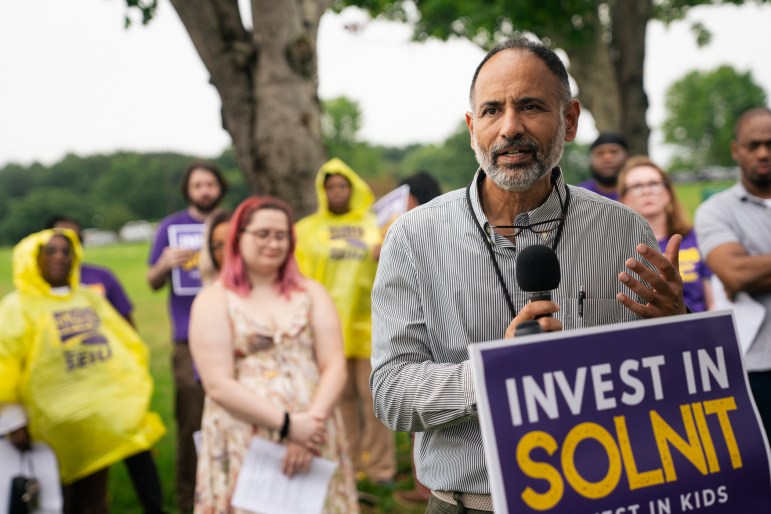
Dr. Akashdeep Aujla, the principal psychiatrist at Solnit South who has worked there for 25 years, said he’s proud of the work he’s doing at Solnit, but there is a steep hill to climb to return to the institution Solnit once was.
“For many years, especially the first 15 years of my practice here, I held that standard: that if my child needed it, I would have preferred that they come” to Solnit, Aujla said. “If you ask today, I would say no.”
Who is at fault?
UConn’s takeover has raised questions about just what needs fixing at Solnit South — and, importantly, how and why the decline was allowed to go on for so long. As of 2022, CT Insider reported, severe staffing issues affected the number of patients the facility could treat, then as few as 20.
Maher joined the legislature shortly after, in 2023. Despite her role leading two committees that safeguard the mental health of children and her approval of UConn’s takeover of Solnit, Maher said she was caught off guard by the conditions workers described in that summer press conference, which took place after the UConn takeover vote. By then, UConn had hired the private firm to investigate conditions, which included staff interviews about needed improvements.
Though Caryl Ryan, chief operating officer at UConn John Dempsey Hospital, said conditions were “a little worse” than anticipated, she said the Lamont administration was aware of the seriousness of problems at Solnit.
“They really wanted someone to come in to help, to support and turn it around,” Ryan said. “I think they clearly knew the need and how much it was going to take to turn around.”
Sen. Matt Lesser, who represents Middletown, where Solnit is located, said he was also concerned. Over the years, Lesser said, he and his colleagues have tried to encourage DCF officials to advocate for more funding for Solnit but found the agency unwilling to ask lawmakers for what they needed.
Lesser, a Democrat, has co-chaired the Human Services subcommittee on Appropriations, which reviews DCF’s budget requests, for three years. In that time, DCF has “not ever come before us and said, ‘Hey, we want more money for Solnit,” Lesser said. “I have been trying to give money to Solnit because of these issues, and we’ve sort of asked them to ask us, to tell us what they need … I think part of it is just the structure of the legislature: Agencies have to get approval from OPM [the Office of Policy and Management] to ask for more funding. They can’t just go out and say what they need.”
This year, two bond allocations were approved for Solnit upgrades — the first of $6.9 million in May is being used to pay for improvements to dorms and to replace doors and windows. The ultimate use of a second allocation of $5 million approved in September is still being determined, according to OPM.
A CT Mirror request for budget drafts, which could shed light on what funding DCF has sought for Solnit, was denied. Unlike previous administrations, the Lamont administration has not been willing to share these requests. The administration is currently appealing a decision from the state Freedom of Information Commission that ordered them to release budget draft documents that are the subject of a lawsuit brought by CT Insider.
Asked about whether DCF had asked for more support for Solnit from OPM over the past five years, OPM spokesperson Chris Collibee said the governor’s proposed budget provides recommendations based on agencies’ proposals but “the General Assembly ultimately decides on funding decisions, not the executive branch.”
But former DCF commissioner Jodi Hill-Lilly told CT Mirror that asking for help directly from lawmakers isn’t how executive branch departments tend to operate.
“I don’t reach out to legislators to solve our problems,” Hill-Lilly said. “I don’t know of anybody in the commissioner’s seat that will go, ‘I’m going to go to the legislature to fix this problem.’ You go to your OPM. You go to your leadership. You go to the people within.”
Sen. Cathy Osten, co-chair of the legislature’s Appropriations Committee, echoed that, saying it’s not fair to suggest that DCF should be going to lawmakers directly to ask for funding for Solnit “when the process is, they go to OPM and OPM says, ‘This is what we are going to ask for.’”
But Children’s Committee ranking member Sen. Jason Perillo, R-Shelton, argued DCF should make the ask, especially when lawmakers express a willingness to engage.
Perillo said in 2025 he requested information from the agency after a man who was allegedly imprisoned in his home for two decades emerged from a Waterbury residence. He said he asked for a report on staffing needs at DCF, a written plan to fix the problem and the amount of money the agency would need. To date, he hasn’t received the information.
“I’ve said from the start, if DCF needs more people to keep kids safe, then they need to come to us and give us a plan and dollar amount,” he said. “And there’s willingness among the legislature to deliver on that, but to date, I haven’t seen a number, and I haven’t seen an ask.” Perillo said lawmakers simply weren’t told about deteriorating conditions at Solnit.
Christina Ghio, the state’s child advocate, said discussions about DCF’s needs should include legislators, not just the governor’s budget office. Eagan, the state’s previous child advocate, said it could feel like officials were deliberately withholding information.
Just this month, questions about the lack of transparency arose again.
During a DCF advisory council meeting on Nov. 2, Josh Michtom, child welfare project director and lead attorney at the Center for Children’s Advocacy, asked DCF and UConn why reports about conditions at Solnit were not being provided to members of the very council that monitors the agency.
The 19-member council, as well as the state’s Office of the Child Advocate, have long been the two main bodies that oversee the state Department of Children and Families. A third oversight body, a 32-member Child Welfare Policy and Oversight Committee, was created by lawmakers in 2026 who say that there’s insufficient visibility into the struggling agency.
When Ryan said she and her counterpart at DCF would “look at that” possibility of sharing reports on Solnit’s conditions, Michtom shot back, “With respect, what’s to look at? This is the advisory and the federal consenting oversight body. It’s a federally required body for DCF, and we’re talking about public documents. The only question is, is it the policy to make every member of this body find those documents on their own?”
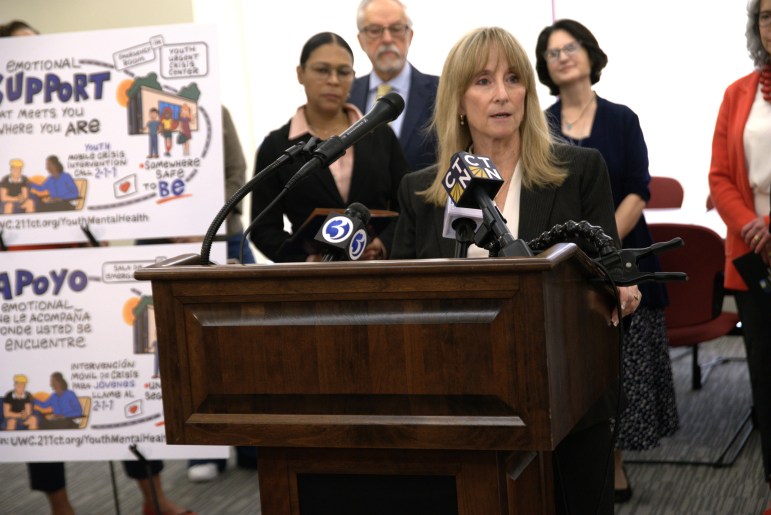
DCF Commissioner Susan Hamilton, who recently announced she will retire in February, said she expects the department to participate in budget conversations with legislative partners when the governor’s budget is reviewed by the General Assembly next year.
Vannessa Dorantes, who led DCF from 2019 to 2024, said she met with lawmakers on multiple occasions at Solnit South in 2019 and after the COVID-19 pandemic restrictions ended. She said to portray her administration as noncommunicative about the facility’s conditions is “an unfair characterization.”
Her successor, Hill-Lilly, who served for less than two years as DCF head, said she had lawmakers tour the campus and was always open to answer questions or provide information.

‘Serious collateral damage’
Rep. Patrick Biggins, D-East Hartford, visited Solnit this summer after the workers’ press conference. He said he was struck by how overgrown the grounds were.
“It’s a little thing, but if you can’t take care of the little things, what are the big things I can’t see?” he said. “It wasn’t a surprise visit, and the grass was 9 inches long. Vines were growing up on the building.”
What was going on inside the building was much worse than overgrown grass, according to inspection reports, emergency response records, audits and interviews with employees who describe a facility in turmoil.
In late June, 19% of direct care positions were vacant and about 87% of the working staff were eligible for intermittent leave under the Family and Medical Leave Act. The number of children the facility accepts was also far below capacity, despite a dire need for more mental health care for kids statewide. The bed count had been cut nearly in half.
Solnit South has been the subject of repeated immediate jeopardy orders, the most serious ruling from Medicaid requiring immediate action. In 2025, the hospital was cited following an incident in which a patient spit at a worker. The worker then pushed the child’s face into a window, laid down on top of them and covered the child’s nose and mouth with their hand. The incident wasn’t reported, and the child later tried to harm themselves using a light bulb. In March, parents weren’t notified about an incident of patient-on-patient sexual abuse, and in May, a child forced a key into one of their body cavities, as reported by CT Insider.
After UConn took over, the outside firm hired to monitor the facility noted that “staffing is at critical levels, with over 100 shifts needing to be filled on the weekend.” Because large percentages of staff have consistently been out on medical leave or worker’s compensation, other workers are “mandated” or made to stay on site for double or triple shifts with little to no warning, the firm found.
Police and fire department records show that local emergency responses are frequent for issues such as assaults, overdoses, reported gas leaks and at least one patient who ran away in the February snow.
Things weren’t always this way, said Rachel Correll, a rehabilitative therapy supervisor who has worked at Solnit for more than 35 years. Correll said she remembers a time when there was a “gigantic maintenance staff.”
“When we wanted something, they would just do it,” she said. When requests come in now, they are told there isn’t enough staff, “and that’s always been the reasoning for an exceptionally long period of time — for 10 years.”

Correll and her coworker Darnell Ford, a lead child services worker at Solnit, have watched things change.
Staff that once found leadership responsive to their requests for hiring or facilities help say that is no longer the case.
“We still are, for all intents and purposes, in the trenches trying to fight through this, saying, ‘Hey, we once had this, we now don’t,’ and that doesn’t diminish the need for the children that we serve,” Ford said.
And post-COVID, the cases coming into Solnit were more acute, at a time when resources began to dwindle, he said.
“These children, these families, wind up being serious collateral damage,” he said. “They don’t come to us because, ‘Oops, something happened.’ It’s because their life is upside down. They come to us because everything out and around them has absolutely failed them at some point, and we are the ones who are supposed to have the base to hold them stable.”
Mickson Laplante, lead child service worker at Solnit, said that kids run away from the facility, which is a sign of the “restlessness, cabin fever that grows.”
‘A constant window into care’
This isn’t the first time Solnit South drew scrutiny. The campus came under investigation in 2018 after 16-year-old Destiny Goulet, then eight months pregnant, hanged herself a day before she was scheduled to be discharged.
Reports at the time showed the state had failed to keep kids at Solnit safe. There were a total of eight suicide attempts in the nine months leading up to Goulet’s death.
Eagan, who was then the state’s child advocate, investigated the death and the facility. In her report, Eagan found that Goulet persistently refused to engage in treatment and expressed “anger, hopelessness and frustration in the weeks before her death,” but was nevertheless approved for discharge.
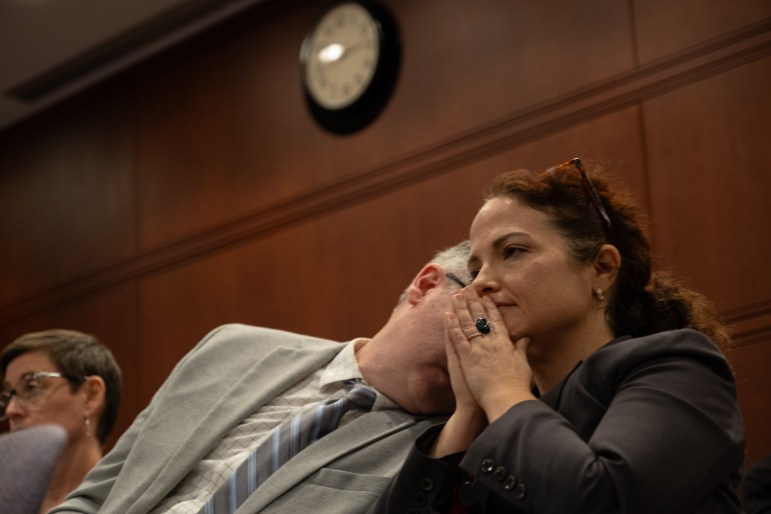
In the aftermath of the suicide, new state regulations added licensure requirements and the Department of Public Health started monitoring Solnit more closely. But despite the child advocate’s insistence on transparency, little followed after DPH’s monitoring ended, Eagan said.
Eagan, along with figures like Maher and Ghio, has been among the voices advocating for expanded mental health support for Connecticut children in recent years.
Ghio, the current child advocate, said her office is conducting its own investigation into conditions at Solnit now. She said she wants to know, “Who was following up on issues identified, or recommendations made” after Solnit was investigated by DPH.
Since the onset of the COVID-19 pandemic, children in Connecticut have been on long wait lists for intensive care and struggle to find that care within their communities. At Solnit, the lack of adequate staff has further affected the care they offer.
“Staffing constraints have really put a lid on things like recreation, time with the staff, consistency of the same staff, so that whole relational model has taken a back seat to people trying to conform or push us to become yet another community hospital,” Aujla, Solnit’s principal psychiatrist, said. “We’re really not designed like that. Kids here don’t stay for days or two weeks. Kids stay here for months.”
Between mandated overtime for staff and the lack of recreation for patients, there is a sense of being trapped at the facility, employees said. Treatment quality suffers when staffers are overworked and exhausted.
“At some point, I think it’s realistic to acknowledge that you’re physically there but you don’t have the energy to maintain yourself or especially give to the child who really needs a lot of it,” Aujla said.
Lawmakers pledge to respond
The extent of problems at Solnit have come to light at a time when lawmakers are trying to make improvements throughout the state’s child welfare system.
Rep. Corey Paris, D-Stamford, became co-chair of the Committee on Children this year and spent much of the 2026 legislative session crafting and passing a bill that made reforms at the agency.
But while staffing and foster care — two issues connected to Solnit’s dysfunction — were addressed, Solnit was not part of the legislation.
“They [DCF] admittedly shared that they struggle to recruit and retain staff across the agency, and not just Solnit,” Paris said. “People have to remember that Solnit did not break overnight. This is years of understaffing, too few places for kids to step down to, and oversight that didn’t keep pace all compounded with one another. And fixing it means that we have to address all three and not just the hospital itself.”
Lamont said he couldn’t speak to how conditions at Solnit had deteriorated so drastically before the UConn takeover.
“I can tell you that we’ve added additional nurses because there was too much, you know, stress and overtime there. I can tell you we’ve got more security people there making the upgrades,” he said.
House Speaker Matthew Ritter, D-Hartford, agreed with Lamont that Solnit would be a priority in 2027. He said lawmakers would have to be “very intentional this session to try to solve the problem.”
“You forget, it’s not just the workers, it’s the patients, their families and the things they have to deal with. There’s a lot of trust that families are putting into the state to care for their loved ones, and we’ve got to take that very seriously,” he said. “I think you’ll see a response this session, for sure.”
According to Hamilton, hiring at Solnit has been aggressive since the UConn takeover. Fourteen new registered nurse positions and 23 new child service worker positions were added. Nine registered “travel” nurses, who are temporary workers, have provided immediate support in the interim, along with 20 temporary social workers.
Hamilton said that offers of employment have also been extended to fill four head nurse positions and five licensed practical nurse positions. Two security guards have also been hired under a contract with a private provider.
While UConn initially reduced the bed count to 24 to create a better patient-staff ratio, they are on track to bring that up to 35 beds by the beginning of 2027, according to information shared at the DCF State Advisory Board meeting.
Hamilton also said the agency is working to reduce the amount of overtime worked by staff, shifting to voluntary overtime.
“Solnit employees perform a difficult job and we recognize the toll it can take on these individuals and families,” she wrote in emailed responses to CT Mirror’s questions. “We’re seeing these changes pay off in improving safety metrics, as workers compensation injuries are down approximately 30% since July 2026.”
Ryan said UConn’s engagement with Solnit has transformed from a pragmatic business decision to something else.
“I would say very clearly that it has now become a mission to really enhance the safety and quality of the adolescents and their mental health needs,” she said.
CT Mirror reporter Keith Phaneuf contributed to this story.