


The Supreme Court decision upholding the Patient Protection and Affordable Care Act super-charges an important wedge issue in the campaigns for two open U.S. Senate and House seats in Connecticut.
Campaigns rushed to put their spin on a long-awaited ruling that is a political victory for Democrats, yet may ultimately serve to energize Republican opponents of the law.
The political question was how the court’s endorsement of President Obama’s complex, signature health law will play over the summer and into the fall, not its impact on the battle for the day’s news cycle.
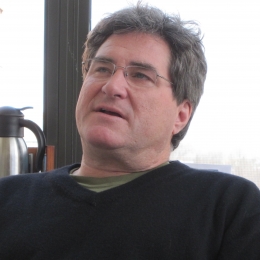
Chris Healy
“There’s something for both sides. There always is,” said Chris Healy, a former GOP state chairman advising Lisa Wilson-Foley, a health-care executive seeking the state’s open 5th District seat. “This thing is going to be chewed over for weeks.”
The ruling that an ebullient Obama praised as a victory for “people all over this country” sharply separates Democrats and Republicans, beginning at the top of the tickets with Obama and Mitt Romney and reaching to congressional races.
Gov. Dannel P. Malloy, a Democrat, said the national press would have been writing “the obituary of the presidency” had the court struck down the law.
“It’s a pretty good day, and I think it will energize our own base,” Malloy said.
All five Democrats seeking the open U.S. Senate and 5th Congressional District seats in Connecticut support the law and praised the ruling, while all six Republicans are oppose the law and denounced the court decision.
“The Supreme Court got it right. This morning there is a collective sigh of relief coming from thousands of Connecticut residents who lives are and will be changed by this bill,” U.S. Rep. Chris Murphy, D-5th District, a candidate for Senate, told reporters in a conference call.
Susan Bysiewicz, his competition for the Democratic nomination, issued a statement saying, “The Affordable Care Act is the single largest step forward for health care in a generation.”
The two Republican candidates, Linda McMahon and Chris Shays, criticized the ruling and were quick to take a shot at Murphy over his support of the law.
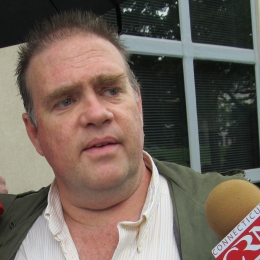
Tom Swan
“Our choice this November is all the clearer. The majority of Americans oppose the President’s health care plan because it raises taxes on small businesses, cuts Medicare by $500 billion and increases costs,” McMahon said.
She released a new campaign video attacking Murphy.
“Obamacare is the single greatest infringement on our individual liberties and personal freedoms that we have seen in my generation,” Shays said. “This was a power grab of the U.S. health care system by Chris Murphy, a Democratic Congress and the Obama Administration.”
Murphy said his position on the law is unchanged, as is his willingness to defend it.
“I ran to pass a bill like this,” said Murphy, was elected to the House in 2006. “How I talk about health care has never changed. I am going to continue to sell the benefits of this bill. I’ve always counseled Democrats to speak proudly of their support for universal health care.”
In the 5th District race, Wilson-Foley hoped her status as a health executive would allow her to capitalize, while universal health care has been a signature issue of House Speaker Christopher G. Donovan for years.
“For somebody like Chris, it opens up the landscape for him to be able to talk about both the act itself and how as a member of Congress he would improve it, including opening up Medicare to everyone,” said Tom Swan, the manager of Donovan’s campaign.
His Democratic rivals, Elizabeth Esty and Dan Roberti, issued strong statements of support for the law, while the four-candidate Republican field of Wilson-Foley, Andrew Roraback, Justin Bernier and Mark Greenberg were equally passionate in their opposition.
Swan, a supporter of the law as the executive director of the Connecticut Citizen Action Group, said the court decision gives Democrats a second opportunity to sell popular aspects of an unpopular law.
A majority of Americans consistently have told pollsters they are opposed to the law since its passage in 2010, but surveys also show support for individual elements, including strong consumer protections for Americans with pre-existing conditions and a provision allowing children to stay on their parents’ policies until age 26.
“I believe our side has been too much on the defensive,” Swan said.
Now, he said, pressure will build on opponents to offer more than criticism, especially hard-right critics such as Tea Party activists.
“They are already being portrayed as angry, bitter little people and they don’t have alternative solutions to offer,” Swan said. “They are going to get smaller and smaller, like the Wicked Witch of the West. They are melting.”
Richard Foley, a former GOP state chairman, said he reads the polls as statement that Americans do not like the Affordable Care Act as the answer to health-care problems — not satisfaction with the status quo.
“It wasn’t this or nothing. It was this or the next option,” Foley said. “Republicans have to have a positive answer.”
Chris LaCivita, a national campaign consultant advising McMahon, said Democrats clearly are the immediate beneficiaries of a conservative court upholding Obama’s most daring public policy.
“I think short term the ruling will energize Democrats, today at least,” he said. “Today will be their day in the sun. But it still doesn’t change the fact that a majority of Americans like what they already have.”
Polls have consistently shown that overall attitudes to the law are poor, while individual elements are popular.
In The New York Times/CBS News poll conducted in March, only about 20 percent of Americans said the health care law would help them personally, while 30 percent saw it causing them harm. Most of the rest saw no impact on them. About 3 in 10 said it would mostly hurt them, and about 4 in 10 said it wouldn’t have much of an effect on them. These opinions have barely changed from when the bill was being debated in March 2010.
LaCivita, however, buttressed one of Swan’s arguments that elements of the law are popular. He took pains to note that McMahon, while opposing the law, favored the consumer protections for pre-existing conditions and extending parental coverage to children up to age 26.
