



Deep in Judge Thomas Moukawsher’s decision in the Connecticut Coalition for Justice in Educational Funding v. Rell is troubling language regarding funding for students with severe disabilities. Judge Moukawsher is correct that identifying students with disabilities remains imprecise and subjective. And yes, school funding issues are negatively and disparately impacting students with disabilities. However, the language Judge Moukawsher uses in his ruling regarding determining educational benefits for students with the most severe disabilities is disturbing at best.
Schools/Child Welfare
Posted inCT Viewpoints
The expectations gap dividing Connecticut’s schools
he gap dividing Connecticut’s schools is much more than wealth. I would argue that it is also a gap of expectations. A major problem driving what Judge Thomas Moukawsher so aptly called the Connecticut’s “ irrational” education and financing systems is the lack of expectations for all of its students. A student can still get a high school diploma and not be able to read and write. This is because all that a Connecticut student has to do is to pass the requisite number of courses prescribed by the district and the state. However, as has been made clear over time, passing a course does not require meeting any specific literacy standard.

Posted inCT Viewpoints
Hillary’s choice for Education Secretary could be ‘anti-public’
A recent survey of educators across the nation reveals that, when elected, Hillary Clinton may follow in the footsteps of President Obama concerning her choice of Secretary of Education in the Department of Education in Washington, D.C. Obama’s choices of Arne Duncan followed by John King were the most anti-public education appointments in the history of the Democratic party. Now it appears, based on the recent survey, that Clinton may continue the anti-public education tradition during her administration with yet another education secretary who will espouse the downward spiral of public education that has occurred for the past eight years.
Posted inCT Viewpoints
Moukawsher got the problem right, and the solution wrong

Judge Thomas Moukawsher has performed a remarkable service by shining a bright light on the profoundly unfair, counterproductive, and irrational way Connecticut funds public education. While the odds against a court-overseen remedy of the type contained in his Sept. 7 order are long indeed, the children of Connecticut should hope that the governor, the State Department of Education, and the legislature seize the opportunity to make radical change.
Posted inCT Viewpoints
Why Connecticut should think twice about asking to ‘end Sheff’
In the wake of the recent CCJEF v. Rell trial court decision on school finance, we should take a moment to consider the continuing benefits of the Connecticut Supreme Court’s 1996 Sheff v. O’Neill decision for low income children in our state, and the importance of keeping this crucial legal mandate in place. The City of Buffalo’s experience with court-ordered integration 30 years ago is a reminder of how these independent constitutional rulings can maintain political will for reforms on behalf of low-income children that would otherwise get lost in the political process.

Posted inCT Viewpoints
On SBAC test results: ‘We are asking the wrong questions’
The recent release of the latest Connecticut SBAC scores indicates that nearly half of the state’s elementary and middle school students tested last year were not at grade level in reading or math. In this series of questions, we asked Madison School Superintendent Thomas Scarice, an outspoken critic of the SBAC test, for his reaction to the news.
Posted inCT Viewpoints
Of Connecticut’s teacher shamers and Zip Code apartheid
With the decision from the Connecticut Coalition for Justice in Education Funding (CCJEF) v. Rell case, we are taking a giant leap forward in Connecticut, but taking an equally giant step backwards as a nation. We’re starting to win the battle of funding equity, but we are still losing to the teacher shamers — which is more a national issue than solely a Connecticut issue. It’s important to remember that teachers are the lifeblood of a school and we’ve been misunderstood for years.
Posted inCT Viewpoints
‘Connecticut needs a school finance system that makes sense’
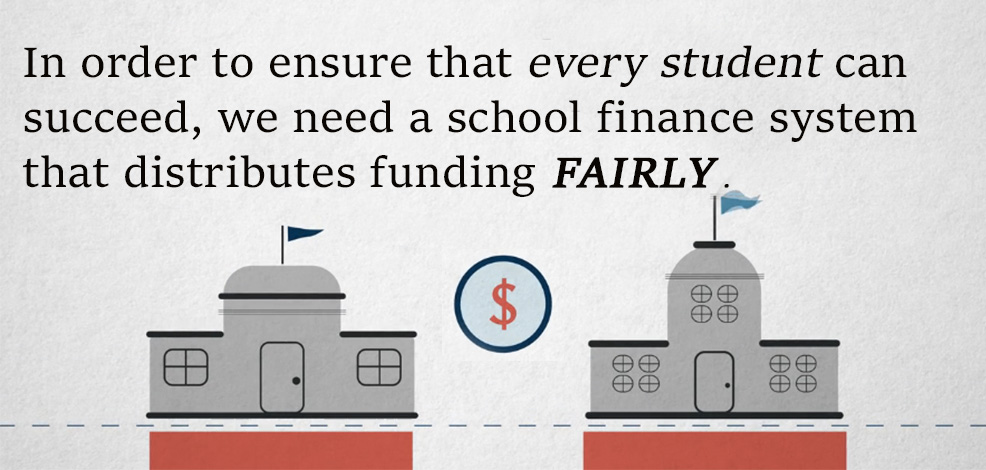
In his decision on Wednesday in Connecticut Coalition for Justice in Education Funding (CCJEF) v. Rell, Connecticut Superior Court Judge Thomas Moukawsher made a lengthy, wide-ranging ruling on education and equity in our state. At the heart of Judge Moukawsher’s historic ruling is the affirmation of what educators, parents, students, and community leaders have been saying for nearly four decades—Connecticut’s school finance system is irrational, inequitable, and illogical. We can now add unconstitutional to that list.

Posted inCT Viewpoints
State board of ed must scrutinize charters more independently
The Connecticut State Board of Education will meet on tomorrow morning, Sept. 7, to kick off the new school year. One of the issues held over from the previous board meeting is contract approvals of two charter (school) management organizations [CMOs]. Given two months to review the evidence presented by state Department of Education officials tasked with recommending approval, the CSBE must determine whether there is sufficient evidence to ensure honesty and transparency in this use of public resources. However, with mounting evidence of questionable practices, corruption, and theft involving many charter schools and their charter management organizations across the country, it is the responsibility of state education officials charged with protecting students, parents, teachers, and taxpayers to ensure that similar questionable (and often illegal) practices are not taking place in our state.

Posted inCT Viewpoints
Connecticut needs a new way to identify low-income students
Connecticut’s low-income students need and deserve an equitable school finance system that recognizes, and takes into account, the variety of challenges they may face that can impact their educational success. However, in order to distribute education resources fairly, Connecticut must transition to a new method of accurately identifying low-income students.

Posted inCT Viewpoints
Gov. Malloy’s story resonates with this Connecticut mother
Putting aside politics altogether, I was moved by Gov. Dannel Malloy’s speech at the Democratic Convention this past week. His brief, but powerful recitation of his early years as a child with learning disabilities, who was labeled as the term was used at that time as “mentally retarded,” lodged a lump in my throat and reduced me to a puddle of tears. His mother’s dedication and persistence to find ways to help him learn and his own resilient spirit to work hard and strive to master skills that came so easily to his peers is more than inspiring to me; it’s a lifeline of hope and a reminder that we are not alone in this unpredictable life.

Posted inCT Viewpoints
Frivolous spending or best training for Hartford educators?
Despite news reports and editorials criticizing Hartford’s spending of $61,000 on a teacher training conference in Miami, The Magnet Schools of America organization and its offerings have played a great role in the success stories of magnet schools serving Greater Hartford since the 1997 Sheff vs. O’Neill court ruling.
Posted inCT Viewpoints
Cost of SBAC testing in Connecticut is unconscionable, unnecessary
Education activists have been speaking out and pushing back against the misguided Common Core State Standards and the flawed Smarter Balanced Assessment Consortium (SBAC) statewide test protocol for several years now, as they have become more aware of the billionaire-driven, media-complicit, and politically-entrenched “corporate education reform” agenda.
Posted inCT Viewpoints
It is time to demand more for Connecticut children
For working parents, finding and affording quality child care can be a source of significant stress and serious economic burden. Research shows that the birth of a child is one of the leading triggers of poverty in this country. The cost of child care alone, especially child care for very young children, can be prohibitive. A year of infant care can easily cost more than a year of tuition at a state college. That is why Care 4 Kids, Connecticut’s child care subsidy program, is so important. It subsidizes the cost of child care on a sliding scale, making it possible for low-income parents to pay for the care that allows them to work.

Posted inCT Viewpoints
Time for adult responsibility at Connecticut Juvenile Training School
At the Connecticut Juvenile Training School (CJTS), workers compensation claims are soaring, mostly because staff is frequently injured putting youth in physical restraints. The Department of Children and Families and union officials told The Connecticut Mirror that restraints are necessary because youth at the facility are so difficult. They point to recent policies that removed many young people from CJTS, leaving only the most challenging youth at the facility. This reaction is disturbing on several levels and underlines the need to work toward closing CJTS.