



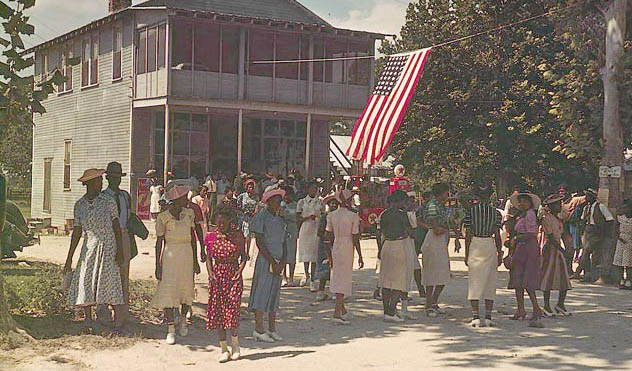
When I was a child, I always wondered if the Fourth of July celebration, or Independence Day, was for people of color; for people like me. This annual holiday commemorates the signing of the Declaration of Independence in the United States on July 4, 1776, in which the writers declared that the United States of America was a sovereign nation, free from British rule.
Still, as an adult, I would wonder if this holiday applied to me. Often, I read and reflect on Frederick Douglass’ speech on July 5, 1852, which asked the question “What to the slave is the fourth of July?”
Douglass shares in his speech:
“I am not included within the pale of glorious anniversary! Your high independence only reveals the immeasurable distance between us. The blessings in which you, this day, rejoice, are not enjoyed in common. The rich inheritance of justice, liberty, prosperity and independence, bequeathed by your fathers, is shared by you, not by me. The sunlight that brought light and healing to you, has brought stripes and death to me. This Fourth of July is yours, not mine. You may rejoice, I must mourn.”
Some of the questions and thoughts Douglass raised are still on the minds of people of color today. Similarly, he points out the hypocrisy at play in the United States from which it was founded, and how people have been treated and viewed throughout the history of the formation of our nation.
In 1776, when the writers of the Declaration of Independence asserted that the 13 colonies of the United States were independent and free from the rule of the British, they were simultaneously claiming control over the indigenous people who were in the land before them and those whom they enslaved and brought to the United States against their will. We know that the statement in the Declaration of Independence that “all men are created equal” did not truly mean all men.
When the Constitutional Convention was drafting the United States Constitution in 1787, the issue of who should be counted as a citizen of the country arose, specifically how people who are enslaved should be counted. Several delegates, including Roger Sherman of Connecticut and Elbridge Gerry of Massachusetts, did not want people who were enslaved to be counted at all. Gerry criticized the idea that they would be counted in a census because they were merely property, like cattle or horses, and should not be represented in government.
The southern colonies pushed for those enslaved to be counted as full persons in order to gain more political influence on the national level.
Through what is known as the “Three-Fifths Compromise,” the delegates compromised that enslaved individuals would be counted as three-fifths of a person in the census. This compromise was motivated by a desire for greater power and leverage in the national government, not to recognize enslaved individuals as people. Hence why Frederick Douglass asked the question in 1852, “What to the slave is the fourth of July?”
Fast forward to July 4, 2026, we are celebrating 250 years of our great nation. Is Independence Day a day of celebration for people who have been historically disenfranchised? Does our country now exemplify true independence and freedom to all who call it home?
The founding fathers did not have certain individuals in mind when they declared their independence. In spite of not having equal access or resources, people who have been historically disenfranchised have had an irreplaceable impact on the building of our country. They have built our nation’s infrastructure, shaped the economy, served in our military, invented countless innovations used worldwide, and so much more.
Even though the founding fathers did not believe all people were truly deserving of being counted as people in our country, they included provisions in the U.S. Constitution to allow amendments. The 13th, 14th, and 15th Amendments to the U.S. Constitution made sweeping changes to move our country toward a more equitable society. One of the beautiful things about our country is the freedom to challenge the laws and how they are applied.
One such challenge was the recent case addressing the 14th Amendment and the case for birthright citizenship. In a 6-3 ruling, the U.S. Supreme Court ruled that the 14th Amendment of the U.S. Constitution guarantees that all children born in the U.S. have citizenship, ruling President Trump’s executive order to not allow automatic citizenship to children born on U.S. soil as unconstitutional.
Even though our forefathers denied rights to a very large percentage of the population, they created opportunities in the Constitution to amend it, and we are allowed to challenge and question the law. What I love about this country is that we have the freedom to challenge the system, unlike in some other countries where they do not have the freedom to speak up or push back against unfair laws or oppression.
Furthermore, we have freedoms in the United States that many other countries do not. The First Amendment in the U.S. Constitution established our rights to freedom of speech, freedom of the press, freedom of religion, the right to peaceably assemble, and the right to petition the government.
Reflecting on the last 250 years of perseverance and progress, I have begun to view Independence Day differently. Even though people of color and other historically disenfranchised groups were not included in the Declaration of Independence, I challenge us to view celebrating Independence Day not as celebrating the moment in our history, but as celebrating how far we have come as a nation in the last 250 years.
Similarly, when a couple celebrates their 50th wedding anniversary, they do not just relive the day they were married, celebrating who they were 50 years ago. They celebrate who they have become, the ups and downs they have been through together, and the life that they have created over the last 50 years. Even on a birthday, an individual does not relive the day of their birth; they celebrate the accomplishments and life they have experienced throughout their time on this planet.
Celebrating Independence Day does not have to honor the moment 250 years ago when 56 wealthy white men signed a document declaring freedom from the British. Independence Day can be a day to celebrate the transformation our nation has undergone and the expansion of freedoms that have occurred over the last 250 years.
As the great Frederick Douglass once said, “Without struggle, there is no progress.” We still have a long way to go in our nation, but let’s continue persevering through the struggle to ensure real progress is made for everyone.
Let the last 250 years of history inform the next 250 years.
Kevin L. Booker, Jr. of New London is a former member of the Connecticut Mirror’s Community Editorial Board.