

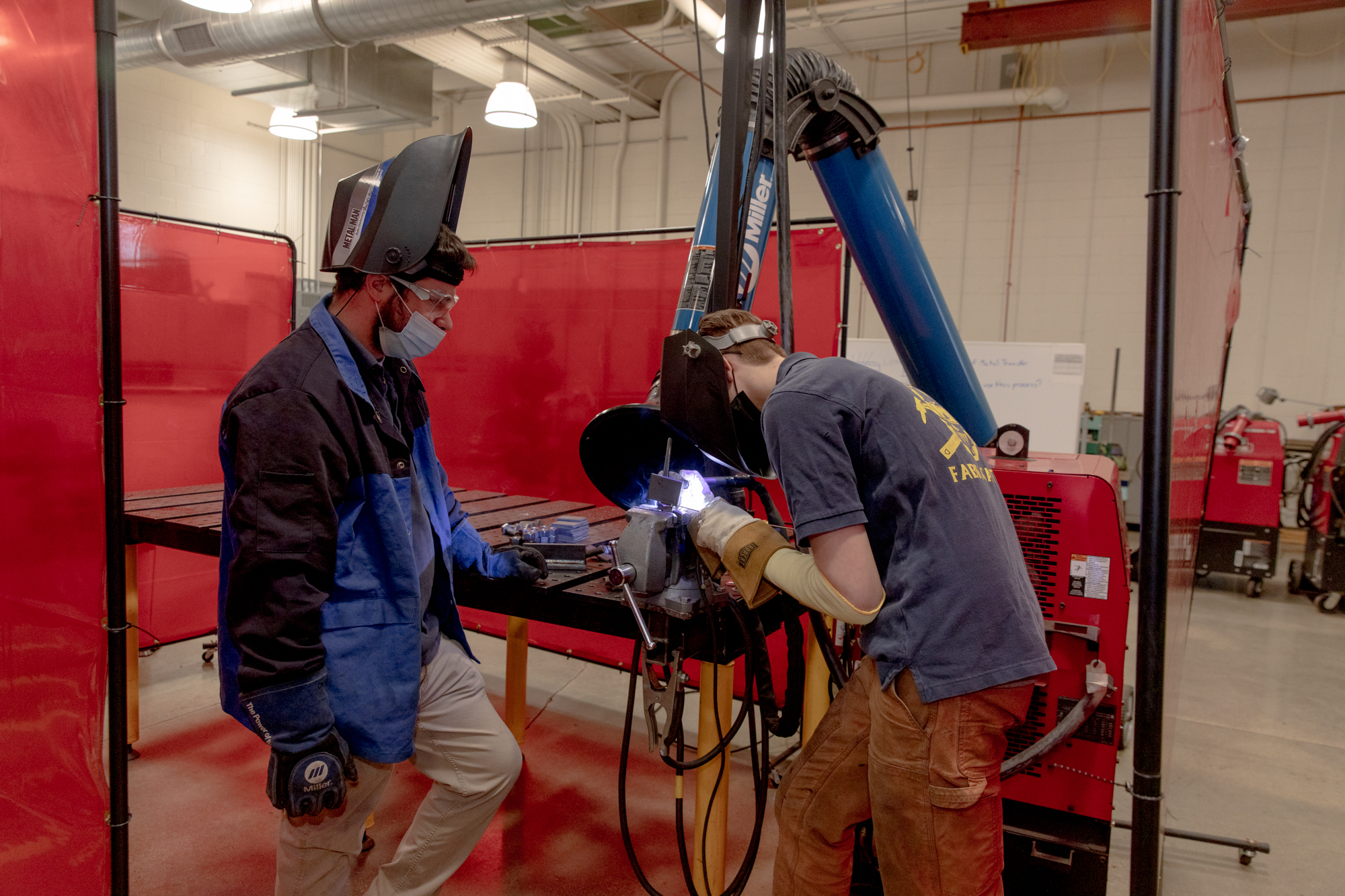
Imagine being a high school student in Connecticut entering junior or senior year. You are unsure of what the future looks like and college doesn’t feel like the best fit. Between classes, extracurriculars and other obligations, you have your hands full. What happens after graduation, whether it is an apprenticeship, entry-level work or a deferred college degree, is an open question.
This is the experience of some students in the state and it is being further complicated by the rapid adoption of artificial intelligence, rising college costs and limited exposure to jobs before graduation.
But a coalition of state leaders, educational representatives, advocates and business leaders hope that this experience changes in the coming years through the work of the Connecticut Career Pathways Commission. The body is tasked with developing a plan for work-based learning and career exposure in the state that will better prepare students of all ages for in-demand careers, creating pathway opportunities beginning in kindergarten through adulthood.
The commission was first discussed publicly in the spring, when Gov. Ned Lamont issued an executive order establishing the creation of group, charging it with crafting a plan to help prepare students not only for the jobs of today, but also for the “jobs of the future.”
“We must have a system where students and job seekers can see the full arc of opportunity, a system where employers help shape the programs that prepare their future workforce, and a system where everyone — from classrooms to campuses to companies — is aligned around shared goals and shared outcomes,” Lamont said in a statement released earlier this year.
The commission, a 40-member body made up of representatives from workforce boards, higher education, labor, business, the legislature, student bodies and more, must create a five-year strategic plan that offers recommendations for a system that can help students across the state, creating clear and effective opportunities for students of all ages to access the information, skills and experience related to career pathways.
The commission — led by former U.S. Education Secretary and previous state education official Miguel Cardona — must complete a draft report by the end of the year, with a final report due to the governor and the legislature by February 2027.
It must also make drafts of its proposals available to the public and collect feedback, incorporating public suggestions into future drafts of the report. It released its first draft of proposed recommendations for the creation and structure of the pathways system earlier in October, with public comments being accepted online until Saturday, Oct. 17. On that day, the commission will also hold its final virtual comment sessions at 10 a.m.
The current comment period is the first opportunity for the broader public to interact with the work of the commission, which has been meeting since May. Additional comment periods will be opened in future, as the body continues its work and prepares to submit its draft report later this year.
In interviews with The Connecticut Mirror, commission members said the comment period is a key chance for them to show the progress they’ve made in recent months, and for the public to weigh in on the further direction of the work.
The goal
On paper, Connecticut has a vast network of resources and opportunities available to students looking to find a career path. By one count, there are more than 90 career pipeline-related programs, all of which are spread across more than a dozen state agencies — from the Department of Labor to the Department of Economic and Community Development.
But these programs are disconnected and spread out across the state, creating a situation where students in one part of Connecticut may have access to opportunities that are walled off from students living elsewhere.
“A lot of what’s going on across the state is pockets of opportunity based off of leadership interests, and that means it’s also ebbs and flows budget-wise based on the district’s priorities,” said Kate Dias, president of the Connecticut Education Association teacher union and a member of the commission. “It’s not necessarily the systemic commitment that we are really looking for.”
Closing that gap and ensuring that students across the state not only have access and exposure to different career pathways, but can also develop clear skills that directly track with what local businesses and employers are looking for, is the central focus of the commission.
“What the commission is really trying to do is ensure that opportunities are available to everyone and that they’re not based on where you live and what institutions you go to,” said commission member Kelli-Marie Vallieres, who serves as the state’s chief workforce officer and leader of the Office of Workforce Strategy.
The Office of Workforce Strategy is also joining with the Governor’s Workforce Council to help coordinate with the Career Pathways Commission on the development and implementation of the career pathways plan.
The aim is for the commission’s work to build off already existing state programs, while also creating new opportunities for student engagement and learning. The pathways are also intended to closely connect with industry needs, giving students of all ages the ability to connect with career opportunities repeatedly over time.
The focus on career pathways arrives at a key time for the state. There are more than 86,000 job openings in Connecticut, with employers reporting that they are having difficulty filling open roles. The Connecticut Business and Industry Association’s annual business survey, released in September, found that some 72% of respondents reported having difficulty finding and retaining workers, with skill gaps being a notable part of the problem.
“We heard from businesses over and over, and we continue to hear, that they’re just not seeing the type of pipeline that they need in order to meet the 86,000 job offerings that we currently have in Connecticut,” said Chris DiPentima, president and CEO of CBIA and a member of the commission. “The students coming out of high school are not well enough prepared either from a technical point of view or just durable human skills.”
But rather than view that gap as an impediment, members of the commission say that it presents an opportunity: a chance for educators, industry and government to come together and create a better system, one that is more closely aligned with not only employer needs, but student interests.
That’s especially relevant amid a national resurgence in interest in skilled trades, an interest that has grown in recent years as college costs rise, and artificial intelligence threatens the type of work often done by entry-level administrative and white collar workers. According to a 2026 survey funded by a high school trades group and conducted by NORC at the University of Chicago, 1 in 6 students reported trying to enroll in trades courses but being turned down due to a lack of space.
And that limited availability could further reduce the workers available for industries that are projected to be among the fastest growing in the state. Data from the Connecticut Department of Labor suggests that the state expects to experience a notable increase in employment between 2022 and 2032, with a significant portion of that growth expected to be in jobs that do not require a bachelor’s degree. That includes industries like hospitality, health care, transportation and manufacturing.
These roles could account for more than 55% of job growth by 2034, with a CBIA Foundation report released earlier this year arguing that the state must create a better pathways system that will help students connect and prepare not only for these fields, but for jobs that could exist in the future.
“We have to have a transformational change, or we will continue to not see businesses stay in Connecticut and the economic growth and will miss the prosperity that this state can absolutely realize,” DiPentima said.
Unpacking recommendations
There are many ways to create a career pathways system, however.
The goal is to create a framework that “maintains the ability to stay current,” said Vallieres. “We’re building the processes and the systems to make sure that we are updating these credentials and these pathways on a timely basis, so that we’re keeping pace with what industry demands are.”
In its first set of draft recommendations, the commission is focusing on how it will structure that deeper work. The recommendations released this month focus on two broader objectives: creating a pathways system that is accessible to all learners in the state and building out the system that will support the work.
The recommendations offered in the report have been broken down into four “pillars.”
In the first pillar, the focus is on giving students a strong foundation, with the draft suggesting things like a statewide system for career readiness that includes clear skill building opportunities, career advising and job exploration opportunities.
The second pillar calls for better preparing learners with industry-aligned skills and credentials, recommending that the state not only create clear dual credit and credential systems for students, but also improve the training pipeline for instructors, include community colleges in pathways work, and create clear sequences of studies that can be adapted to different groups of learners depending on age and skill level.
The third and fourth pillars focus on work-based learning opportunities and the establishment of a clear unified system capable of managing the entire career pathways network, respectively.
The draft document so far suggests that the task before the commission is a large one, requiring not only the creation of the career pathways system itself, but also of the evaluation, data collection, and broader management structures that will support what is ultimately created.
A complicated process
With just a few months to go before the final report is due, commission members say that public input is incredibly important to the process, adding that the career pathways system that is created in the coming years will only be as effective as the engagement and participation that students and other stakeholders have with it.
Dias of the CEA notes that teachers in particular will play a significant role, adding that with so many responsibilities already on their plates, the career pathways discussion will require a fundamental rethinking of the state’s education system to ensure that teachers can handle the new responsibilities expected of them.
“At the end of the day, we’re talking about programmatic shifts that are going to involve transportation, bringing in different experts, creating regional resource networks for both industry and as well as school districts to create the network that is necessary to provide every student in Connecticut some sort of work-based experience,” she said.
“You can’t keep adding to our system without subtracting,” she added. “There just aren’t enough hours in a day.”
But if the state can successfully pull the transformation off, it is a shift that Dias says will be worthwhile. “Our goals are ambitious, our ideas are not small, but I believe that if we do this well, the impact can be really important in terms of changing the outcomes for students,” she said.
For Shannon Marimón, executive director of ReadyCT, a CBIA affiliate that focuses on providing career pathways support to students across the state, the commission has a tremendous opportunity before it.
“We need to have the education system speaking to our employer community so that it can really align with where the workforce is currently and where it’s headed, because we want to make sure we’re setting young people up for the opportunities to be prepared and successful,” she said.
But the actual implementation of the final recommendations will be out of the commission’s hands and will instead be up to the governor and the Legislature. The commission has not yet publicly released its specific policy recommendations or put a clear number on the amount of funding that will be needed to turn the career pathways plan to life.
As the work continues, members of the commission are hopeful that their report will have an impact, saying that the state needs to make a change to give students a real shot at success.
“We’re really working hard to set up something that we think is transformative,” Dias said. “I think that was always the goal: what can we do that supports the economic growth and development of the state of Connecticut that increases opportunities for our students?”
