


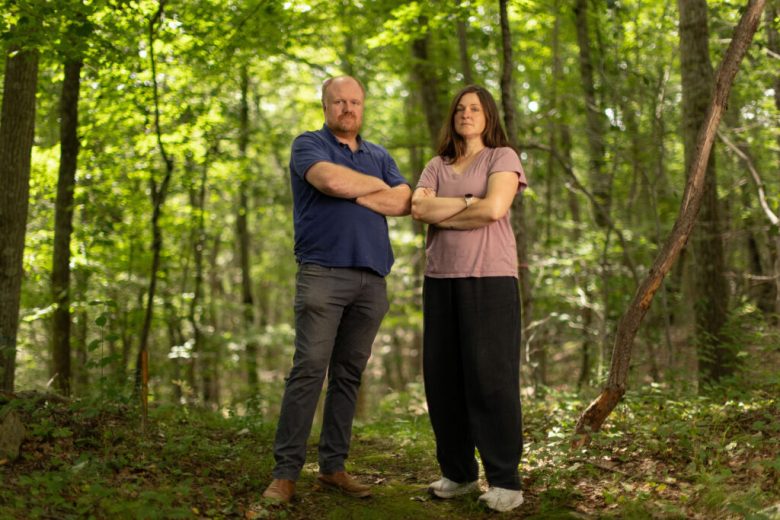
A Roxbury couple who had threatened legal action over the town’s refusal to let them open their property to hikers and dog walkers will reopen their land later this week after town officials did not promptly respond to their requests for a clear explanation of how they were violating local zoning ordinances.
Charles and Eli Copley had previously opened part of their 50-acre property for some recreational activity, listing the property online for dog walkers and hikers interested in using their trails for a small hourly fee. The couple said having walkers on the property helps with forest management, as more walking activity would help maintain the trails and reduce invasive vegetation.
But the town disagreed, arguing in 2025 that the couple was operating a home business, and that their specific use constituted a “dog park” in violation of local zoning rules.
[RELATED: A Roxbury couple welcomed hikers, for a fee. The town said, ‘No.’]
When pressed by the couple, the town did not provide additional information, and also did not offer a path for relief. That eventually led the Copleys to secure representation from the Institute for Justice, a libertarian public interest law firm.
Local zoning officials never responded to an August letter submitted to town on the couple’s behalf. When the couple tried to appeal the only response they did receive — a letter from Roxbury First Selectman Patrick Roy that defended the prohibition — the town’s Zoning Board of Appeals argued the letter didn’t constitute a zoning decision and therefore could not be appealed.
Because the town’s zoning commission still hasn’t explained its stance, the couple’s legal representation said they’ll resume allowing people to use their trails, arguing they have a constitutional right to determine how to use their property.
“Absent a receipt of a zoning determination expressing that the Copleys’ proposed use was impermissible, the Copleys would resume allowing low impact, private hiking and dog walking on their property,” the Copley’s lawyers wrote in a Nov. 10 letter. “The Town’s position is that, to date, no zoning officials have responded to the Copleys’ letter.”
The property will be relisted online this Friday, Nov. 13.
In a statement Tuesday, the Institute for Justice said the couple had gone through the necessary steps to resolve the matter with the town.
“For more than a year, the Copleys have been reaching out to local officials to get a clear answer on whether they can resume having hikers on their trails, but the town has refused to give a clear answer, so the Copleys will reopen their trails,” said attorney John Korevec. “What the Copleys want to do with their property is perfectly legitimate and any ban on allowing them to have hikers on their trails would be unconstitutional. If the town takes any action against the Copleys, we’re prepared to resume legal action.”
A call to the Institute for Justice was not immediately returned in time for publication. Representatives for the town were not immediately available to offer comment.
Officials argued against the Copleys, but never explained why
The saga over the walking trails dates back more than a year. After buying the Roxbury property in 2022 with plans to live in an old cottage on the land, the Copleys discovered that it needed significant work, especially when it came to the surrounding trails.
A forester helped them learn how walking in particular would help, as it would help establish a clear trail system and limit invasive vegetation from growing around the site. In 2024, the couple listed the property on Sniffspot, an online platform that lets one “rent” out a property to dog owners. The couple also charged an hourly $10 fee, an amount that they said was largely to keep people from failing to show up for their reservations.
Months after the listing went up, the town countered that the Copleys could not use their property in this way. But Roxbury officials never explained why, eventually prompting the couple to lawyer up.
According to their lawyers, the town still has not responded beyond its argument that Roy’s defense of the prohibition did not constitute an official zoning decision. The only argument it ever gave was that the property was a home business and “dog park.” The couple’s lawyers said because the business occurs outside the home it cannot be counted as a home business, adding that there is no clear prohibition that should stop the couple from making the property available for walkers.
The couple’s lawyers also argued that even if the town produced a clear argument for the ban, it would not stand up in court.
“The town has been unable to explain how allowing people to walk outside on private property could possibly be problematic, and that’s because there is no reason,” Korevec said earlier this year. “The Copleys have done this before without incident, and to our knowledge, there’s been no complaints. ”
“Zoning codes are supposed to prevent genuine nuisances, not punish peaceful people who are doing nothing wrong,” he added. “That’s zoning abuse.”
In the Tuesday statement, Charles Copley said he hopes the matter is finally resolved.
“We’re looking forward to welcoming hikers back on our trails and we expect that the town will allow us to resume this harmless activity without any issues,” he said. “We’ve tried to be cooperative throughout this process, but it remains unclear what else we should do in order to get our trails re-opened.”
