


Having attended nine hours of testimony at the State Legislature’s Education Committee public hearings in Hartford on Wednesday, Feb. 24, the divide between the “haves” and the “have-nots” in Connecticut has become even more apparent.
Schools/Child Welfare
Posted inCT Viewpoints
Connecticut needs to support quality child care, better pay for child-care workers
In response to “Child care funding: A choice between the struggling and destitute,” I agree that our state shouldn’t be leaving its most vulnerable out in the cold. When the allocation of our tax dollars becomes so focused on numbers, we lose a critical understanding of what’s at stake: the well-being, health and future success of our children.

Posted inCT Viewpoints
CT Senate bill 175 stifles parents’ right to dissent on standardized testing
There is no rational explanation to support SB 175, a newly-proposed bill with the innocuous title “An Act Concerning Recommendations of the Department of Education”. There is no excuse for elected officials to take away a citizen’s right to peacefully protest and dissent. Vote NO on SB 175!

Posted inCT Viewpoints
Connecticut needs a rational, fair, school funding system
Three weeks ago, in his sixth State of the State Address, Gov. Dannel Malloy laid out his five “budget principles” and called for a “more predictable, more sustainable, and more transparent” Connecticut budget that “prioritizes funding for core services.” Rightfully, one of the core services Malloy listed was public education. However, for Connecticut to prioritize education and achieve the governor’s budgetary goals, the state must fundamentally change the way it funds its public schools.

Posted inCT Viewpoints
CT uses ‘blunt tools’ for evaluating teachers, gets predictable result
Connecticut’s Performance Evaluation Advisory Council (PEAC) met last week to discuss a response to data that show teacher evaluation systems have identified very few people to dismiss, and assign high ratings to most teachers — a pattern which has been reported in many states across the country over the last five years. This shouldn’t be a surprise, because many states are using similar tools for teacher evaluation: a state-specific version of Danielson’s Framework for Teaching (here dubbed the Common Core of Teaching, CCT), or other generic teaching rubric applied to teachers regardless of grade or subject area. When we use the same, blunt tools, we can expect the same, nonspecific results.

Posted inCT Viewpoints
Connecticut charter schools not really getting a funding increase
Let’s set the record straight. Public charter school students do not receive a funding increase in Gov. Dannel Malloy’s proposed budget. They will still receive the same state per-pupil grant that they have received for several years. Put simply: all public schools are flat-funded across the board. A recent story by the CT Mirror suggested otherwise, and we want to ensure the facts are front and center.

Posted inCT Viewpoints
The SAT: Should Connecticut students opt out, or not?
Last year, hundreds of 11th-grade students across Connecticut refused to take the mandated SBAC test. Knowing that they had no control over independent-minded 11th-graders, the governor and State Department of Education sought a waiver from Washington, D.C., for permission to offer what they hoped would be a more palatable test: the SAT. It is a test […]
Posted inCT Viewpoints
Recognize or repurpose CT Juvenile Training School, don’t close it
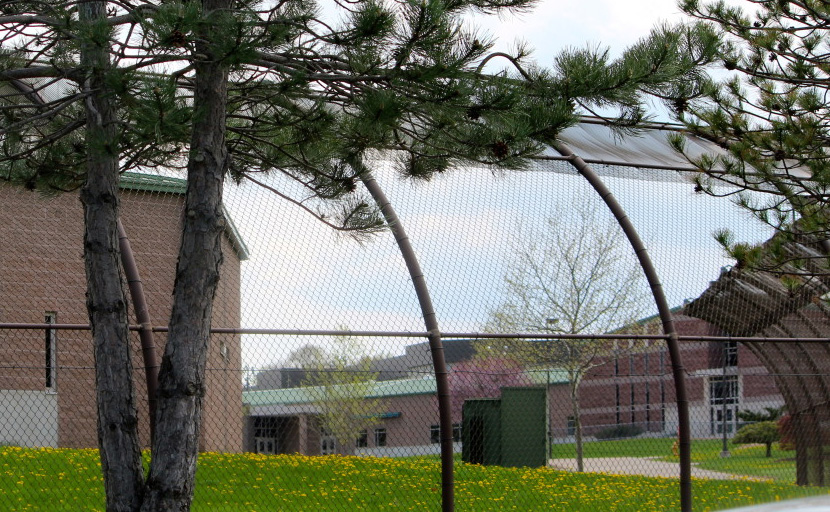
Putting children’s needs first means using the Connecticut Juvenile Training School and the Walter G. Cady School as part of the toolbox. It appears that some, including those in positions of advocacy and legislation, would carelessly ignore the programs that are in place while trying to create a new and unfunded system.
Posted inCT Viewpoints
Individualized treatment for Connecticut children is the goal
For too long the debate over the care of children and young adults in Connecticut with behavioral health needs, developmental disabilities or those in the juvenile justice system has been centered on the wrong issue. Important time, money, and other resources have been spent debating the future of specific programs, rather than focusing on how best to provide care and treatment that will meet individual needs.
Posted inCT Viewpoints
Connecticut making progress on road to regionalism
Connecticut is known as the land of steady habits. Who would have thought that “regionalism” would be a popular buzzword as we begin the 2016-2017 legislative session, set to start on Feb. 3? The time to discuss the idea that school districts and municipalities can and should work together to find efficiencies as a way to reduce costs and offer more quality services has finally arrived. This session, be on the lookout for the introduction of multiple bills that would both remove barriers for inter-town collaboration and incentivize towns and schools to work together.
Posted inCT Viewpoints
It’s time to address inequity in Connecticut’s schools

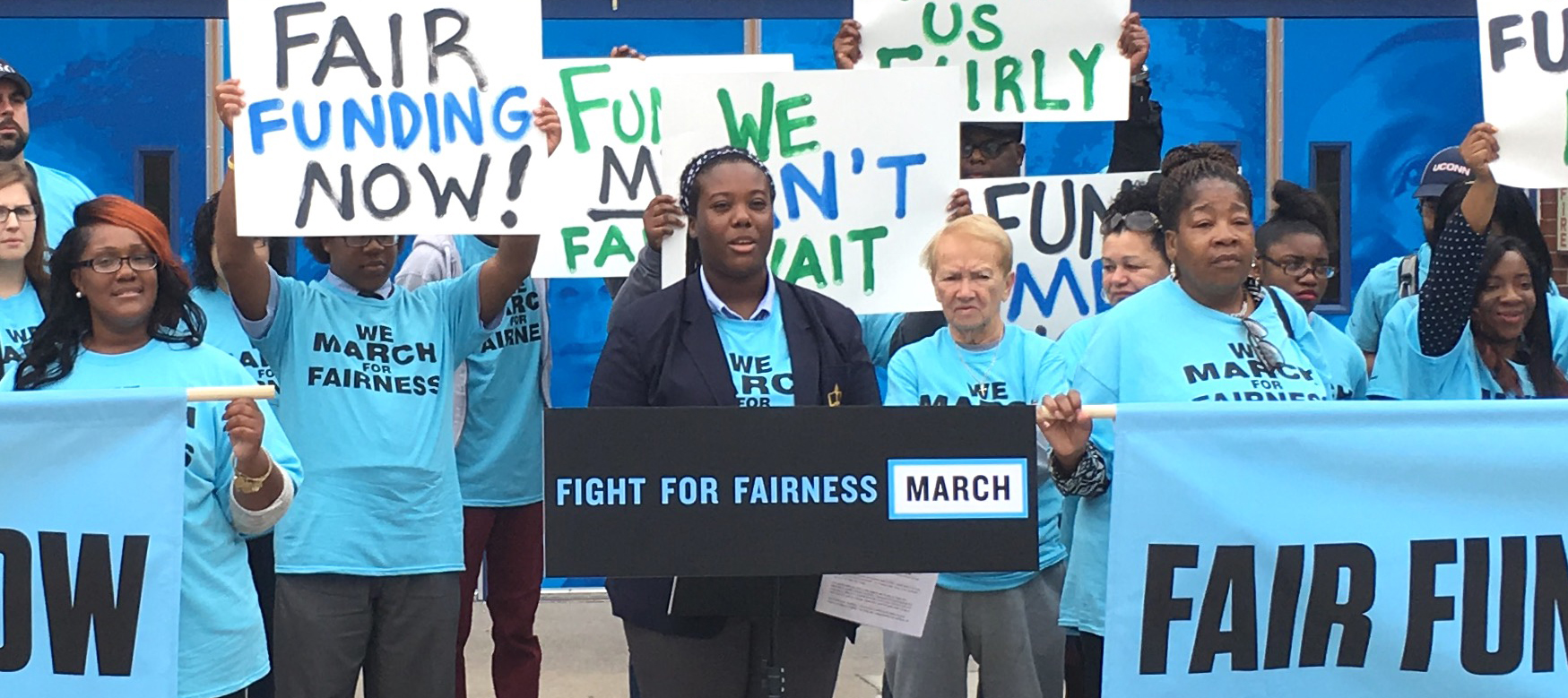
As Connecticut emerges from this latest budget negotiation, it’s time for us to address a long-standing inequity in our public schools. Thanks to Connecticut’s outdated and unequal system of funding public education, thousands of our highest-need kids are being valued less by the state, given less money simply because of the type of public school they attend. Charter school students are given just 74 cents on the dollar compared to their peers in traditional public schools.
Posted inCT Viewpoints
Connecticut’s charter schools stronger than ever
2015 was a landmark year for public charter schools in Connecticut. A record 9,000 children are now enrolled in charters and two new schools opened in Bridgeport and Stamford, bringing the state’s total to 24. And a new study shows that accountability measures recently signed into law make Connecticut’s charter law stronger than ever. Moving forward, we must pay close attention to how public charter school students are treated compared to their peers. State leaders should read NACSA’s study on national charter laws and look to other states on how to bring approval process up to par. And they should also applaud themselves for the accountability measures passed this June.
Posted inCT Viewpoints
Post NCLB: Connecticut must reject the Common Core
With the end of No Child Left Behind, states will have the flexibility to continue with the controversial Common Core State Standards or not. This is Connecticut’s opportunity to put a good education in place for our students by rejecting the Common Core. The whole approach of the Common Core contradicts the philosophically and academically-sound Connecticut State Standards approach.
Posted inCT Viewpoints
Connecticut must continue push toward education equity
In recent years, Connecticut’s leaders have taken some much-needed steps towards ensuring every child gets a high-quality public education. As Congress takes up the latest iteration of the Elementary and Secondary Education Act (ESEA), a bipartisan bill named the “Every Student Succeeds Act” that would repeal some provisions in ‘No Child Left Behind,’ we urge the state to continue progress on the policies that can push Connecticut closer to education equity.

Posted inCT Viewpoints
Will Connecticut follow Massachusetts on Common Core?
Massachusetts, one of the leading states on education reform in the nation, in a monumental decision has abandoned Common Core testing. The Massachusetts Commissioner of Education, Michael Chester, in a stunning reversal, has walked away from the very test he helped to create. Now it remains to be seen if other states in the nation, including Connecticut, will follow Massachusetts, a state that is considered to be “the gold standard” in successful education reform.