

Recent reports concerning the Department of Children and Families, along with Commissioner Joette Katz’s long history of failure, misplaced priorities and lack of transparency and accountability, leave me with no confidence in her willingness or ability to openly and seriously confront critical issues within her agency. That’s why I felt compelled to call for her resignation.
Schools/Child Welfare
Posted inCT Viewpoints
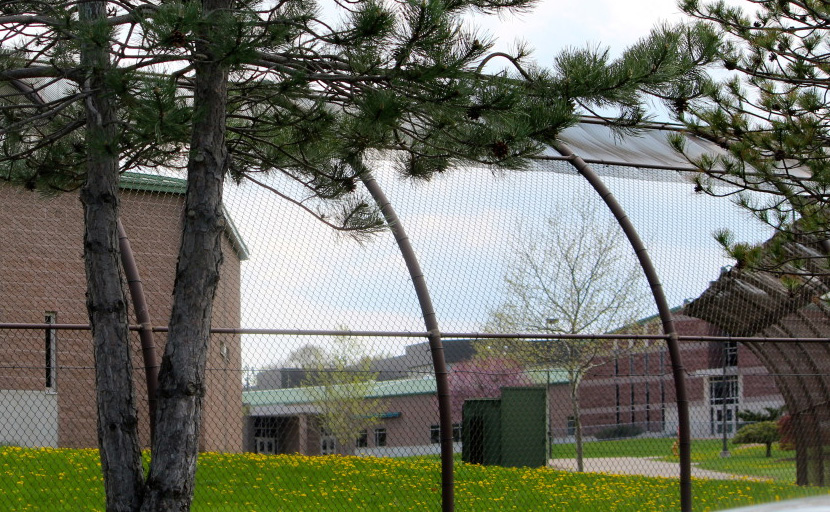
CJTS is no place for traumatized kids
The Office of the Child Advocate’s report on the Connecticut Juvenile Training School reveals conditions requiring decisive action to keep youth safe. It is encouraging that the Department of Children and Families recently released its own report on CJTS acknowledging problems with the facility. Both reports leave me convinced that many of the youth at CJTS simply do not belong there.
Posted inCT Viewpoints
Court reform must follow death of little Aaden Moreno
Though we want to think it is so, the recent death of 7-month-old Aaden Moreno at the hands of his father was not a rare event, but an all-too-common outcome of a child custody case. The child’s mother had sought a protective order based on the father’s history of abuse and threats against the mother and child. There is now a substantial body of scientific research that would make family court judges’ jobs easier, but our children will not be protected until we rely on domestic violence experts instead of general practitioners and integrate this important research into the standard court practices. The Safe Child Act is an evidence-based approach requiring that the health and safety of children must be the first priority in all custody and visitation decisions.
Posted inCT Viewpoints
Gov. Malloy’s wise veto of the education commissioner bill
If you aim to limit the amount of innovation that can happen in the public education arena, one surefire method would be to keep it an insider’s game. On Monday the legislature is required to convene a veto session to consider whether to override any of Gov. Dannel Malloy’s vetoes. At this time, it is […]

Posted inCT Viewpoints
Lawmakers should override Malloy veto of ed commissioner qualifications
The Connecticut legislature was right to enact legislation which would require an education commissioner to have a minimum of five years of classroom experience and three years of school administration. In fact, the vast majority of states require some level of experience or background in order to be qualified to lead the appropriate state agency. The legislature should stand firm when it convenes on Monday for its veto session to ensure that Connecticut joins these ranks.

Posted inCT Viewpoints
CT Family Court reform might save some other baby’s life
We will never know with certainty what could have been done to prevent the killing of 7-month-old Aaden Moreno by his father earlier this month. But maybe, if we focus on making needed reforms to the Family Court system, we will be able to prevent such tragedies from occurring in the future.
Posted inCT Viewpoints
Giving young offenders a second chance means system-wide reform
Early in my time as superintendent in New London, staff at one of our schools found a young teen nearly unconscious from a substance overdose, an empty bottle next to him. He had tried to commit suicide. Technically he should have been suspended and then expelled for a series of violations of district policies. But […]

Posted inCT Viewpoints
Here’s a heads up on concussions, Connecticut
Youth sports in Connecticut got a little safer after the last legislative session thanks to the legislature’s vote on an important concussion education bill. The new legislation requires Connecticut youth athletic operators to annually make available a concussion information sheet to each youth athlete (ages 7-19) and parent/guardian. This will affect all youth who engage in sports outside of school.
Posted inCT Viewpoints
History education in Connecticut in abysmal shape
For the past 30 years progressive education policies emanating from Hartford have ultimately dictated what is taught in local schools. Apparently, to distance themselves from the damage incurred from these scorched earth policies, some local residents want to believe that Connecticut is a “locally controlled state” educationally. The implication is that the amount of history taught in local districts is just […]
Posted inCT Viewpoints
In Connecticut juvenile justice, children get many second chances
A two-part series in the Connecticut Mirror this week asked the question of whether youth who break the law in Connecticut receive a second chance. It focused on the relatively small share of youth in the juvenile justice system who are placed in secure settings rather than the vast majority who receive services at home and in the community. What the article left out is that youths who are committed by Juvenile Court judges to the Department of Children and Families and placed at the Connecticut Juvenile Training School have received many second chances before that point.

Posted inCT Viewpoints
School funding in Connecticut is fundamentally flawed, all agree
Connecticut’s funding system for all public schools is fundamentally broken. This dysfunction causes the incessant fighting over the state budget each year. Connecticut needs a funding solution for every school – charter, district, magnet, and the rest – that ensures that all students have the resources they need to learn.
Posted inCT Viewpoints
Fix Connecticut’s broken school funding system
We know that a great education can be life changing for so many students. Looking ahead, we must continue to ensure that we have a funding system that puts a great public education within reach of every child. The economic and civic future of our students, our communities and our state, depends on it.
Posted inCT Viewpoints
Connecticut education: Getting it right in the future
The bad news for education in Connecticut is that in the state budget, which takes effect on July 1, money will be spent on charter schools for 2 percent of Connecticut children that would have been better spent on the other 98 percent of Connecticut children. The good news is if the Connecticut legislature wants to address that kind of injustice, it now has the power to do so.

Posted inCT Viewpoints
East Hartford taking on racial disparity in school discipline
Studies show that implicit racial bias is widespread in the U.S. They also show that it can be checked more effectively if we are made aware of our tendencies to be biased. By raising awareness of the problem of disproportionate minority contact, the ongoing dialogues in East Hartford can help adults to make fairer decisions regarding students and youth.
Posted inCT Viewpoints
Connecticut schools need to recruit, retain more minority teachers
The delivery of a world-class education for our kids is critically dependent on the recruitment and retention of great teachers and administrators who are passionate about education and possess the ability to identify with the social and cultural challenges of their students. That is why, as the chairman of the Black and Puerto Rican Caucus, I strongly support two bills designed to improve minority teacher recruitment and retention, and to better implement cultural competency instruction in the classroom.