


Too many people complain about the overall quality of teachers. The old saying that “those who can, do; those who can’t, teach,” has been less and less true as the economy creates fewer and fewer jobs. According to Connecticut State Department of Education, there are 43,805 public school teachers in Connecticut. As someone who will hopefully be joining the ranks soon, I feel our voice needs to be heard.
Schools/Child Welfare
Posted inCT Viewpoints
Superintendents have a vision for Connecticut’s public schools
The Connecticut Association of Public School Superintendents (CAPSS) is advancing its 2016 Public Policy Agenda for purposes of fostering equity, excellence and innovation in Connecticut’s public schools in alignment with a vision that articulates a schooling that is personalized so that all children learn what they need to know and be able to do.

Posted inCT Viewpoints
Connecticut’s early care budget cuts penny wise and pound foolish

If one wants to understand Connecticut’s budget woes, one need to look no further than its universal preschool strategy. And in reviewing the governor’s and legislators’ budget deficit mitigation plans, it was disappointing to see that they opted to further erode the state’s early care system and industry, rather than make smarter choices that preserve both.

Posted inCT Viewpoints
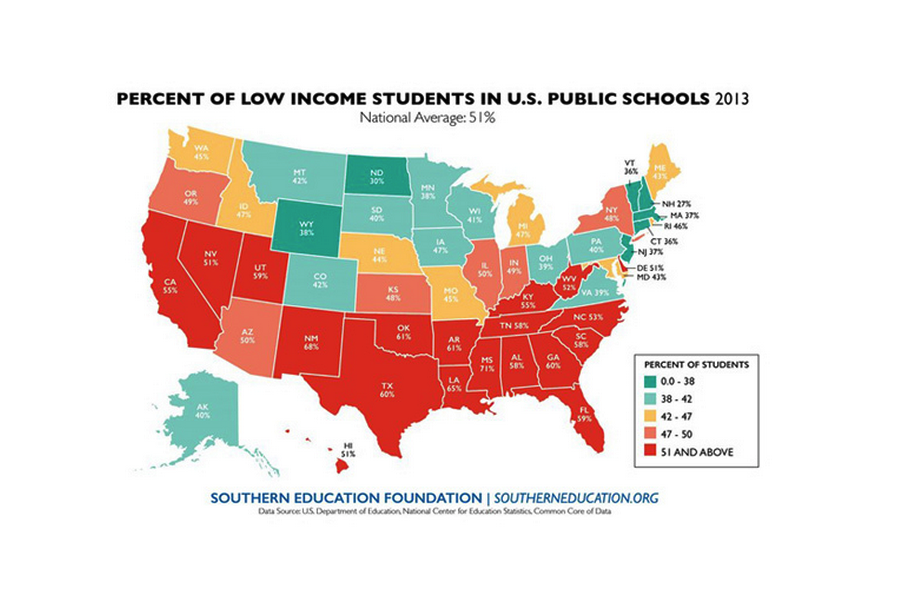
Don’t write off impoverished kids
This latest round of test results simply reinforces the fact that we need to change our educational system if we want to improve student learning. A student’s address does not need to define his or her future. And that’s not a truth that is hard for parents to get behind.

Posted inCT Viewpoints
Will the CEA’s position on SBAC testing generate parental support?
As the results of the SBAC Common Core testing across the nation are made public, the backlash from parents could possibly be severe and felt in every state as well as by the Department of Education in Washington, D.C. The failure of many students, especially in urban areas, could serve as the catalyst to end […]
Posted inCT Viewpoints
Bloomfield: We use our state Alliance funds well – and get results
Over the past two years, 98 percent of the state Alliance funds provided to Bloomfield Public Schools – approximately $1.7 million – have been invested in education-reform programs. An Oct. 8, 2015 story published by CT Mirror (“Schools Redirected Money Intended for Reforms, Officials Say”) was misinterpreted by some of our constituents who surmised that Bloomfield was among the districts allegedly misdirecting funds. I would like to reaffirm that Bloomfield Public Schools is in full compliance with how those Alliance funds are spent. Also, any budget carry-over money connected to those funds is invested in reform-related programs, specifically our Extended Learning program, which features 20 additional days of summer school.

Posted inCT Viewpoints
Social emotional learning reduces suspensions and makes schools safer
Out-of-school suspensions are indicative of gaps in supportive services that must be present to ensure students have the necessary supports to thrive and succeed. Social emotional learning drives down high rates of suspension, expulsion, class disruptions and chronic absenteeism and improves school safety
Posted inCT Viewpoints
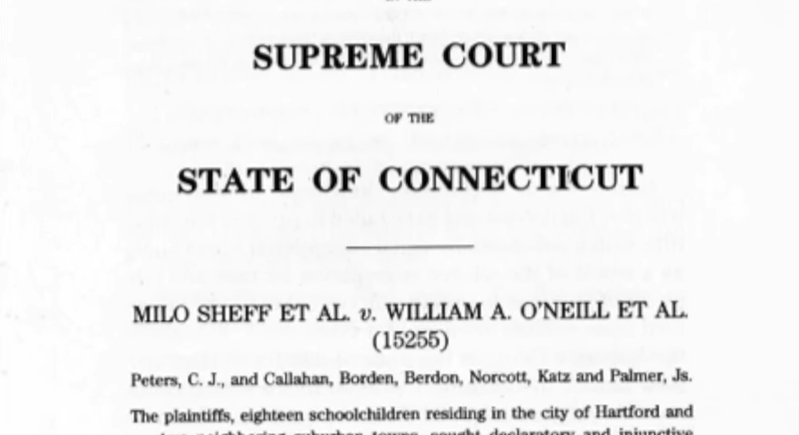
Six reasons not to ‘end’ the Sheff desegregation case
The state of Connecticut is once again trying to avoid its constitutional obligation to provide every Hartford child with a high-quality, integrated education. Just days before kids returned from their summer breaks, the state’s lawyers suggested that the court should withdraw from oversight of the implementation of Sheff v. O’Neill, the case that has created Connecticut’s award-winning two-way voluntary integration system. Here are six reasons why Superior Court Judge Marshall K. Berger should never agree to end court supervision of the case:
Posted inCT Viewpoints
Good leadership, collaborative board, create academic excellence in Bloomfield
As chairman of the board for Bloomfield Public Schools, which our data indicates is the most improved school district in Connecticut over the past four years, I’m often asked what contributed to our academic resurgence. For example, our high school graduation rate increased 16 percentage points from 2011 – 74 percent to 90 percent now. Our middle school registered four consecutive years of academic growth and was recently recognized by the education reform group ConnCAN as a “Success Story” school. Third grade reading, writing and math scores in 2013 were above the state average.
Posted inCT Viewpoints
Smarter Balanced test is validation for CT’s hardest-working teachers
I respectfully disagree with the Ann Policelli Cronin’s recently published opinion, “SBAC: Failing most Connecticut children in more ways than one.” I am currently a high school English Language Arts teacher, and I take issue when people who are no longer in the classroom teaching students each day “advise” the rest of us on what to do for kids. I take issue with administrators and consultants constantly seeking to stay relevant by disrupting the educational process in classrooms, with an approach that is long past its prime. The truth is that our students do not measure up, and neither do many teachers, frankly. It’s a nationwide epidemic. Ms. Cronin reports that Connecticut students have some of the highest NAEP scores in the country, but she’s ignoring the real story: namely, that Connecticut is not really servicing all students equitably.
Posted inCT Viewpoints
Connecticut can learn from Aaden Moreno’s death
Seven-month-old Aaden Moreno’s lifeless body was recovered from the Connecticut River in Middletown on July 7, three days after he was thrown from the Arrigoni Bridge by his father, Tony Moreno. At a court appearance for the father, who faces criminal charges, a lawyer called the death of the child “a bottomless tragedy,” a description that suggests it could not have been prevented, and its reverberations through countless lives will be never-ending. But as a responsible society, we can and must look closely at how two young parents could be so completely failed by a system that had the tools and the knowledge to intervene, but never made the right connections.

Posted inCT Viewpoints
For the sake of Connecticut’s children, embrace the SBAC data
The Washington Post recently published a piece by Superintendent Thomas Scarice, who leads a school district much like the leafy Connecticut suburban town that I grew up in. In fact, I grew up in the town right next door, but I couldn’t disagree more with the superintendent’s piece. Here’s why.
Posted inCT Viewpoints
In Connecticut, let us teachers tell our students stories
Midsummer. Teachers stand metaphorically alongside me on the edge of a precipice looking out over a deceptively vast pool of summer’s blue water. Eager to dive back in, we gaze at the path we have traveled these past months. The allusion to Frost’s “The Road Not Taken” fits life’s many transitions. But while Frost’s speaker […]
Posted inCT Viewpoints
SBAC: Failing most Connecticut children in more ways than one
The Connecticut SBAC scores will be released by the State Department of Education any day now. The scores will be low. You will be told that the low scores are because the SBAC tests are rigorous and our students don’t measure up. Don’t believe it. … It is our job as citizens and parents to tell students the truth about SBAC. It is our job as educators to keep teaching and assessing students in real and honest ways. Otherwise, we adults are the failures.

Posted inCT Viewpoints
SBAC: Data but no meaning, when meaning matters most
“Statistical calculations based on warped figures lead to confusion, frustration and wrong decisions.” These wise words from W. Edwards Deming are most timely as the educational community awaits the next batch of big data to be delivered, the results of the latest test promising to revolutionize schooling, the SBAC. A hollow promise, based on warped figures, that will certainly deliver hollow results. What will the SBAC data mean? Nothing. Absolutely nothing at all. Numbers in isolation, lacking story and context.