

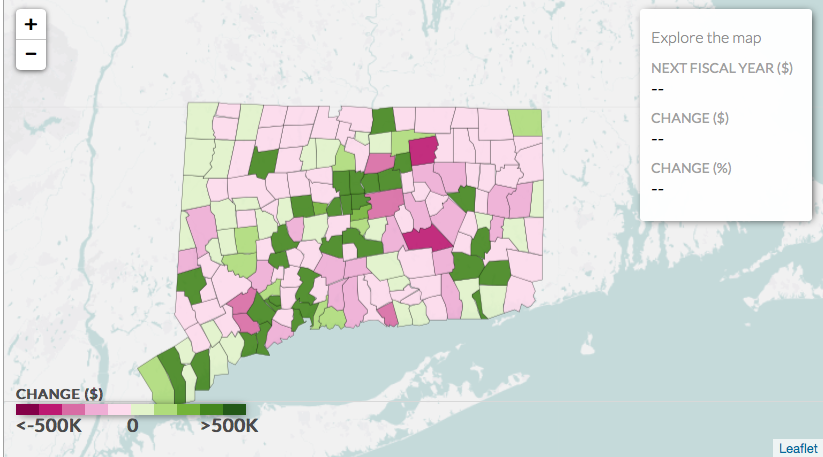

The $43.4 billion biennial budget expected to receive final approval Tuesday includes more than $4 billion for Education Cost Sharing grants. Here’s where that money goes.
See how your town fares in the new CT budget

Posted inHealth
Watered-down public option bill heads to Senate after House approval

A deeply diluted version of a public option health care bill moved through the House Tuesday, drawing bipartisan support but abandoning its ambitious goals.
Posted inMoney
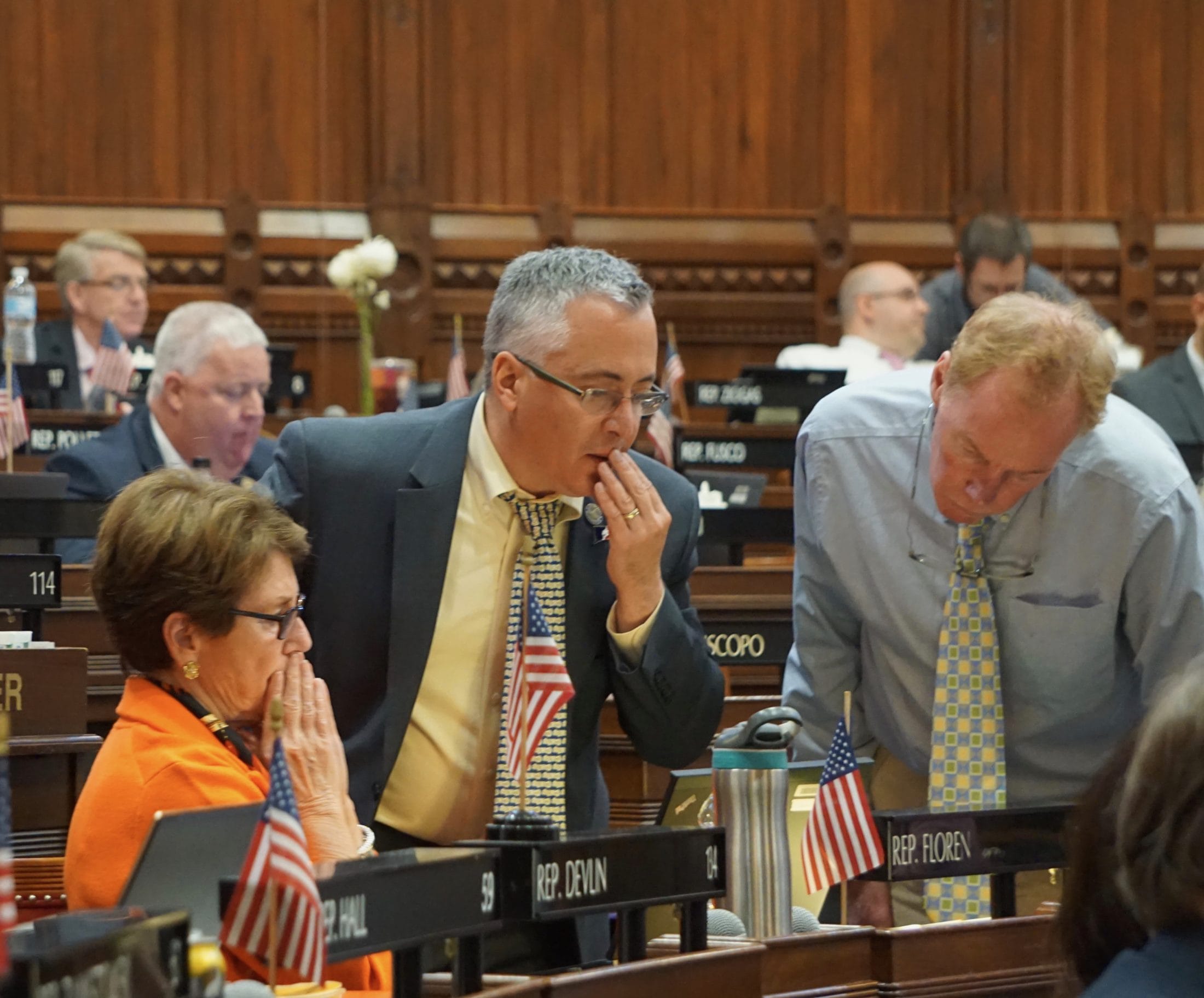
House adopts $43B budget, Senate approval expected Tuesday


The House of Representatives approved a new state budget late Monday that averts a major projected deficit without increasing income tax rates, but does shift billions of dollars in pension debt onto the next generation of taxpayers.

Posted inEducation
Panel overseeing Dalio’s investment in CT schools would be exempt from ethics, disclosure laws

The panel overseeing $300 million in private and public funding would be exempt from ethics and disclosure rules.

Posted inMoney
On page 547 of the budget, a favor to Cigna

A provision in the budget is potentially worth millions to Cigna, even if the insurer’s name appears nowhere in the legislation.

Posted inNews
Lawmakers press for new redevelopment agency in state budget
Tucked away in the budget bill is a provision to form the Municipal Redevelopment Authority, a quasi-public agency that could bond for city and town development efforts across Connecticut.

Posted inEducation, Money
Cost-free college is in the budget, but is it in the cards?
A plan to help thousands of first-time students – regardless of income – attend college cost-free is in the proposed state budget, but its success depends on a complex funding scheme involving the legalization of online lottery games.

Posted inMoney
In a $43B budget, there’s always room for pork
Supporters call the designation of $9.4 million for small projects a way of meeting local needs. Critics call it “pork-barrel” spending.

Posted inCT Viewpoints
Give cities better tools to address blight

In every Connecticut city and many Connecticut towns, you can find neighborhoods weighed down by blight – collapsed roofs, boarded windows, graffiti, overgrown vegetation. Sometimes it’s just a single blighted property, standing out among well-cared-for homes and businesses. Sometimes it’s property after property, whole blocks that have fallen victim to the contagion of unaddressed blight. Wherever it exists, blight is a major quality of life issue in Connecticut communities.

Posted inCT Viewpoints
Birth mothers deserve to have their IDs kept private
This is a direct response to the article: Repeal this archaic law sealing birth records. I am both adopted and found my mother in 2011, ironically when this bill last reared its ugly head.
Posted inCT Viewpoints
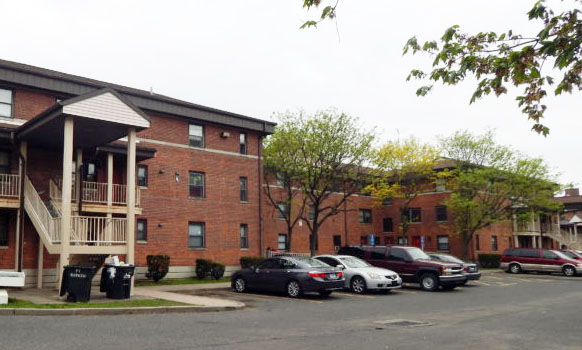
Help teachers live in the cities and towns where they teach
When I decided to take time to travel after graduating college, I didn’t think I would end up discovering my future career. While traveling, I met many people who were teaching English in other countries, which inspired me to spend a year in China teaching English myself. The experience pushed me to return to the United States to continue teaching.
Posted inCT Viewpoints
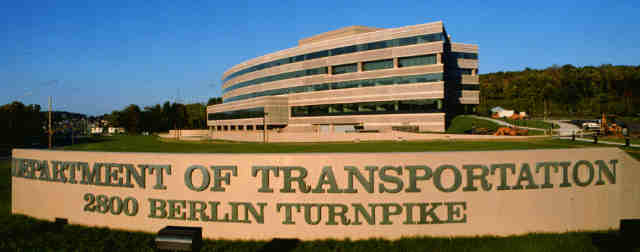
Rebuttal: Connecticut DOT does not have a car culture
In his May 30 submission, Robert Hale of New Haven submits that Connecticut DOT “remains wedded to investment decisions that prioritize private vehicle use instead of transit.” The fact that 64 percent of the ConnDOT operating budget is eaten up by transit subsidies (even though only about 5 percent of Connecticut commuters take transit to work) says otherwise.

Posted inCT Viewpoints
Little merit to the Merritt Monorail idea

What is this fascination that people have with monorails? I can’t tell you how often people suggest them as “the answer” to our state’s clogged roads and rails. “Why don’t we build a monorail down the middle of The Merritt Parkway?,” asked an architect at a recent meeting. To my astonishment, such an idea was once studied!

Posted inCT Viewpoints
Lawmakers should place limits on on-call staffing practices
The legislature is currently debating bills that would limit on-call scheduling, (S.B. 764 and H.B. 6924) letting employees like me have the chance to know when they will have to go to work. Instead of scrambling day to day with class schedules, care for loved ones, or different responsibilities, we will be able to plan ahead, instead of living from shift to shift. It is time for the state to put limits on these practices.

Posted inCT Viewpoints
Give teachers incentive to live where they teach
As is the case for much of the nation, Connecticut’s urban public schools face unique challenges relative to their suburban counterparts, not among the least of which are underfunding, overcrowding, and poor attendance. Since moving to New Haven for school this past August, I have spent a good deal of time learning about these challenges.