


As part of a major new health care law, a state board has until December to recommend ways to address rising health care costs and market changes.
health care costs

Posted inHealth
How well will new rules on health care cost transparency work?
Lisa Freeman recently tried an experiment: Before having a medical diagnostic test, she tried to figure out what it would cost. “It took no less than five phone calls, and I still never got to the end of the thing,” she said. A major transparency law intended to change that is taking effect this year. How will it work in practice? Health care providers say it might be bumpy at first.

Posted inCT Viewpoints
New medicines lower health-care costs

While some new drugs are costly, other new medicines represent an upfront, one-time cost to rid patients of vicious diseases that would ultimately cost the healthcare system far more in the long run.

Posted inHealth
Specialty drug prices threaten health care affordability
The state employee health plan has tailored its design to encourage people to manage chronic conditions, get preventive care and avoid emergency room visits. But costs are being driven up by the rising expense of specialty drugs for conditions including Hepatitis C, multiple sclerosis and cancer. It’s a challenge that’s not unique to the state employee health plans, health care experts said Tuesday.
Posted inHealth
Premiums grow modestly for employer insurance coverage, but deductibles grow faster
The cost of employer-sponsored insurance premiums grew by 4 percent this year, continuing a trend of relatively modest growth, but the share of medical costs patients pay when they get care continued to rise far faster, according to a survey released Tuesday by the Kaiser Family Foundation and Health Research & Educational Trust.
Posted inCT Viewpoints
Don’t blame medicines for higher health care costs

The insurance industry’s blame-everything-on-medicines rhetoric simply does not hold up to the facts. Just this week, the federal government projected that, even with new treatments for hepatitis C, high cholesterol and cancer, medicines will continue to account for just 10 percent of health care spending through the next decade, the same share as in 1960. It is time for a more balanced discussion of health care costs that moves beyond simple sound bites and political rhetoric and considers the big picture.
Posted inHealth
Op-Ed: Connecticut needs transparency in health care
Without transparency of quality data and health care costs, patients cannot make informed decisions nor be fully engaged in their own health care.

Posted inHealth
In controversial health care bills, some agreement on transparency
Patients are increasingly being asked to take on a larger share of their health care costs. But for even the most avid bargain-hunters, comparison shopping for medical care can be a challenge, if not impossible. Can legislation change that?
Posted inHealth
As patients pay more of their medical bills, many unclear on the costs

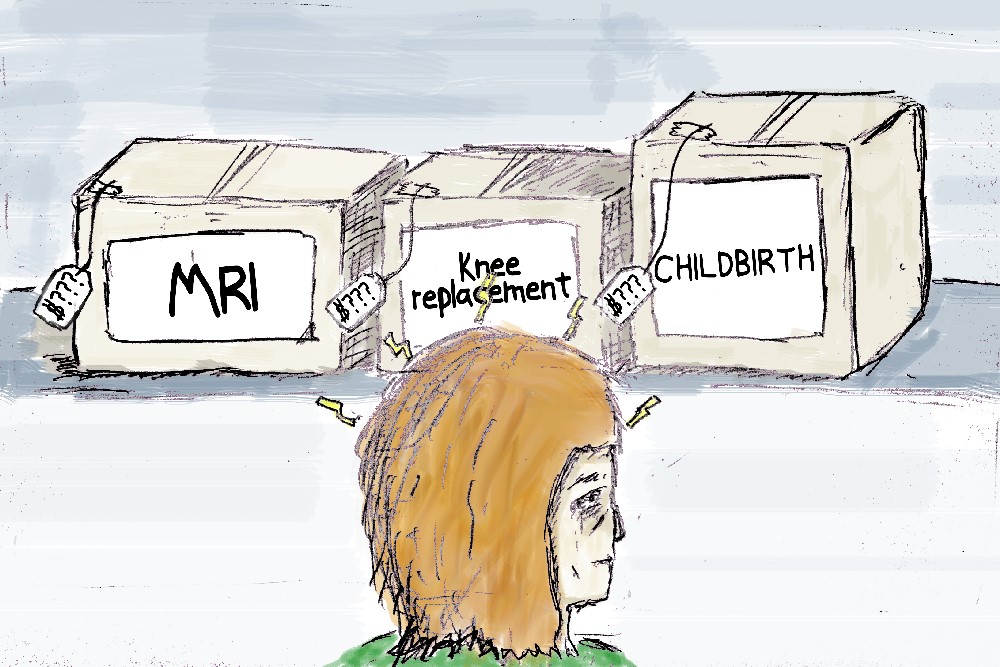
Many patients now have insurance plans that require them to pay a larger share of their medical bills. But finding out what their care will cost remains difficult, if not impossible.
Posted inHealth
How to (try to) find out what your medical care will cost
Want to know how much a medical procedure is going to cost? Experts say it’s not easy. But if you try, there are some things that you should know.
Posted inHealth
As hospitals buy medical practices, patients face thousands of dollars in new charges
At first, the $4,000 medical bill didn’t worry Susan Ferro. She was certain it was a mistake. Two years ago, when she’d gone to the same radiology office for the same procedure — a needle aspiration biopsy of a lump in her breast — Ferro’s insurance paid. But when Ferro called the doctor’s office, she […]