


The governor, who sent his adjustments to legislative leaders Thursday, also would reduce state contributions to a supplemental retirement health care program for teachers, potentially boosting costs for future retirees.
Labor

Posted inMoney, Politics
House GOP renews pitch for its own version of next CT budget

Minority Republicans in the House renewed the pitch Tuesday for their own budget, a plan that relies on $2 billion in labor savings mandated by statutory changes — and not bargained collectively.

Posted inMoney
Another state employee union not voting on wage concessions
The nearly 175 assistant attorneys general won’t be casting ballots on the three-year wage freeze and three furlough days per worker that Gov. Dannel P. Malloy has requested. The 990-member state police union also is not voting on wage givebacks.

Posted inMoney
CT troopers aren’t casting ballots on 3-year wage freeze
While unionized state employees have begun voting on a major concessions package, nearly 1,000 state police troopers aren’t casting ballots on the biggest cost-saver in that plan — a three-year wage freeze.
Posted inMoney
GOP, Dems both claim the middle for their visions of a budget
While unionized state employees vote this month on proposed concessions, legislative leaders with opposing views on how to cut labor costs both say they’re gaining support for a new state budget based on their respective strategies.

Posted inMoney, Politics
A new complication: moderate Democrats’ doubts on concessions
Several moderate Democrats in the General Assembly have told their leadership they agree with Republicans that concessions negotiated by Gov. Dannel P. Malloy are insufficient, a potential complication in the intertwined efforts to pass a budget and win ratification by state employees.

Posted inMoney, Politics
House, Senate Democrats unable to agree on provisional budget
Connecticut’s prospects of enacting a state budget — even a provisional one — before the new fiscal year begins July 1 appeared to slip away late Monday night as House and Senate Democrats were unable to agree on a path forward.

Posted inMoney
Malloy, unions agree on sending tentative concessions to a vote
A tentative concessions framework between Gov. Dannel P. Malloy and state employee unions took a step forward Monday with the news that all bargaining units have agreed to submit the proposed concessions to a vote by rank-and-file members. Ballots are expected to be cast in mid- or late July.
Posted inNews
Charter Oak Health Center reaches agreement over whistle-blower firings

WASHINGTON — The U.S. Labor Department has determined the firing of three Charter Oak Health Center employees, who blew the whistle on the facilities’ failure to adequately respond to a tuberculosis exposure, was unlawful. Under a consent order, Charter Oak agreed to pay the three fired employees back pay and “take other corrective action,” the Labor Department’s Occupational Safety and Health Administration said.

Posted inMoney, Politics
GOP forces debate, but no vote, on budget, revamping labor laws
Updated at 11 p.m.
Senate Republicans used the final night of the 2017 session to make a political statement, forcing a debate on their budget plan, which would dramatically reshape Connecticut’s labor laws.

Posted inCT Viewpoints
State lawmakers should prioritize job-creating legislation in final hours

Connecticut is at risk of losing an opportunity to boost the state’s economy and create hundreds of jobs unless lawmakers act quickly on pro-growth legislation. With just hours before the regular legislative session comes to a close, the legislature has yet to pass a bill seeks to change existing laws related to vehicle sales, allowing manufacturers — such as Tesla — to open brick-and- mortar stores across Connecticut where they can sell cars directly to consumers.

Posted inCT Viewpoints
Licensing reform bills cut red tape, aid CT economy
If there were a proposed policy that would create more jobs in our state, would you support it? If you could cut taxes and regulations on small businesses and entrepreneurs, would you do it? If you could help ex-offenders stay in a job and out of prison, would you help them? Thankfully, the General Assembly is considering two licensing reform bills that would accomplish these goals by cutting red tape.
Posted inMoney, Politics
Analyses show concessions would save $24B over two decades
The tentative concessions framework struck by Gov. Dannel P. Malloy and state employee union leaders would save $4.8 billion over the next five years and $24.1 billion over the next two decades, according to analyses prepared by the administration, Connecticut pension actuaries and its healthcare consultant.

Posted inCT Viewpoints
The moral case for letting Connecticut go under
Amidst growing concern over the shaky financial conditions of California, Illinois, and New Jersey, my home state of Connecticut is often overlooked. Its size and population are relatively small, and its position between Manhattan and Boston make the state appear unimportant. Moreover, with some of the nation’s wealthiest communities — Darien, New Canaan, and Greenwich — how bad could things really be? Very bad, according to a 2016 study for the Mercatus Center at George Mason University. The study calculated the fiscal health of each state according to its short- and long-term debt, unfunded pensions, and other key fiscal obligations. Connecticut came in the sickest of all.
Posted inCT Viewpoints
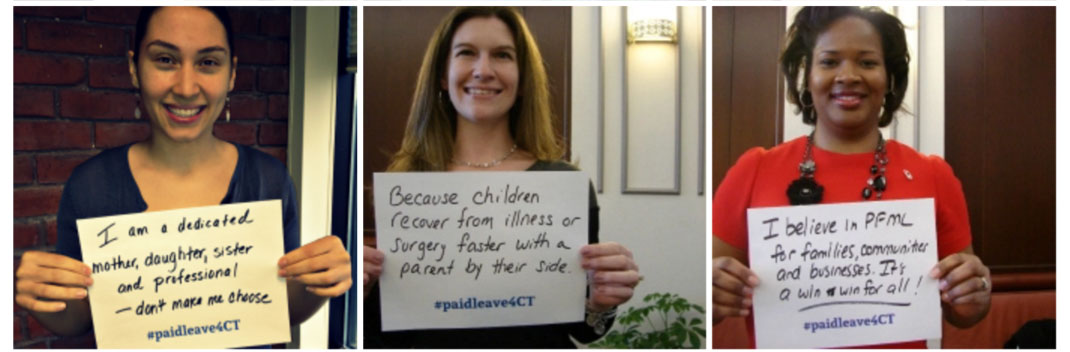
Support small business: Pass paid leave this year
As the owner of a small business in Colchester, I support paid family and medical leave as a critical safety net that will support workers during times of financial insecurity, when their last concern should be missing a paycheck. Contrary to the narrative spread by the big business lobby, a new poll shows that 77 percent of small business owners in Connecticut support paid family and medical leave. When respondents learn more about paid leave, including how a range of research has demonstrated its benefits for businesses, support for legislation climbs to 85 percent. And it’s easy to see why.