


The ACLU of Connecticut’s Smart Justice team wants applicants for the chief state’s attorney job to answer a 17-question survey measuring where they stand on a broad range of criminal justice reforms.
Surveying candidates vying to be the next chief state’s attorney speaks to a burgeoning public understanding that prosecutors play a big role in reforming the criminal justice system.
David McGuire, the executive director of the ACLU of Connecticut, said advocates see the vacancy as an opportunity to build on Connecticut’s reforms, and hope they’ll find a willing partner in whomever is appointed to be the next chief state’s attorney.
“I think there’s a feeling of optimism that this person can be a collaborative partner in making the system more fair,” he said, “not someone who is dragged along for the ride, or an obstacle in some places.”
“These are commitments we intend to hold these folks to if they become the next chief state’s attorney,” he added.
“I think there’s a feeling of optimism that this person can be a collaborative partner in making the system more fair, not someone who is dragged along for the ride, or an obstacle in some places.”
David McGuire
Executive Director, ACLU
The survey attempts to gauge each applicant’s commitment to transparency and fairness in the criminal justice system. It asks if they support setting a uniform standard for criminal discovery, creating an independent conviction integrity unit to review and investigate innocence claims made by people convicted of violent crimes, ending mandatory minimum sentencing, and investing in diversionary programs.
It also questions whether the applicant would support closing Northern Correctional and Manson Youth Institutions, two prisons with rapidly declining populations. The conditions of confinement at both penitentiaries are under federal scrutiny and the Department of Justice is investigating housing conditions for youth held at Manson. Last August, a judge ruled Northern officials are incarcerating former death row inmates under cruel and unusual conditions.
“There’s a pretty clear case out there that these facilities embody and represent some real problems with our criminal legal system,” McGuire said.
The state’s Criminal Justice Commission is charged with appointing the next chief state’s attorney, a powerful position that gives support to Connecticut’s 13 state’s attorneys, oversees the Division of Criminal Justice’s administrative responsibilities and plays a big role in crafting the state’s criminal justice policies.
There hasn’t been a new chief state’s attorney in 13 years, when Kevin Kane was first appointed. Kane, the longest-serving top prosecutor in state history, retired earlier this month.
The job listing closed last Friday. Supreme Court Justice Andrew McDonald, who serves as commission chair, said his personal goal is to whittle the applicants down to three to five finalists, all of whom would be interviewed, in public, at the Legislative Office Building. He hopes to have someone appointed toward when the next legislative session kicks off in February.
“In my view, we should have a number of qualified candidates that gives the commission a significant choice between candidates,” McDonald said, “but one that is small enough that we can have the in-depth interviews that are necessary to determining who is the most qualified.”
“The more input we have about the views and the credentials [of] candidates, the better.”
Andrew McDonald
Chairman, Criminal Justice Commission
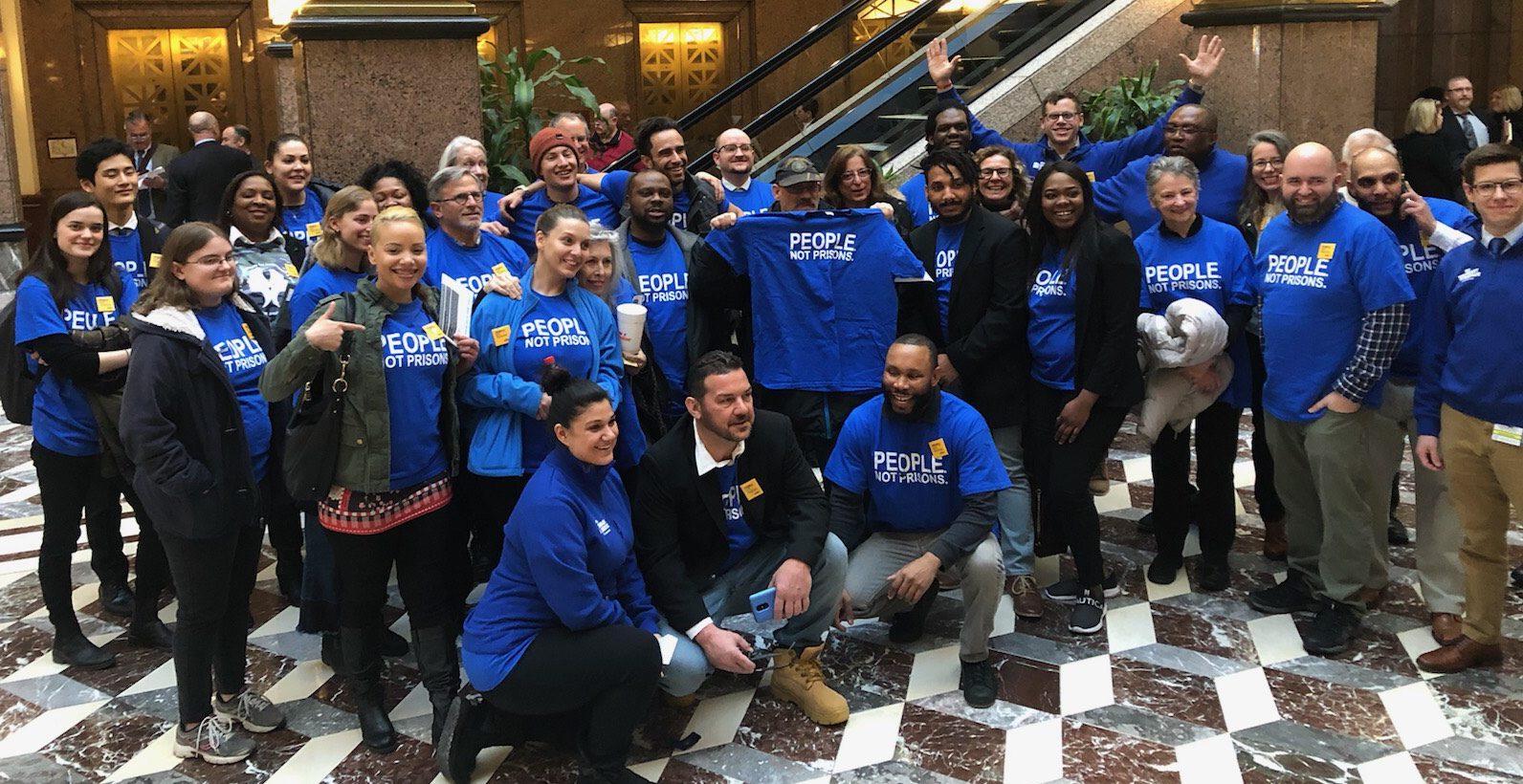
The Smart Justice team is comprised of people who have spent time behind bars or been under state supervision. The idea, said Field Organizer Gus Marks-Hamilton, echoing a common refrain, “is that those who are closest to the problem are closest to the solution,” but farthest from the resources and power to effect change.
That firsthand knowledge, Marks-Hamilton explained, gives team members a unique perspective that can help policymakers and criminal justice stakeholders — the chiefs state’s attorney included.
“Those people have seen, not simply witnessed, what the criminal justice system looks like in Connecticut,” he said.
Figuring out where the candidates stand on issues like closing a prison forces the chief state’s attorney to take a public stance on topics that greatly affect people impacted by the state’s criminal justice policies, McGuire said.
“We’re going to push the next chief state’s attorney to weigh in on decisions that impact the populations that they engaged with,” he said.
Smart Justice isn’t the only group interested in a chief state’s attorney who shares their principles. During an October forum, a slew of state officials and advocates publicly stated the qualities they hope to find in Kane’s successor. Groups like the George Crawford Black Bar Association implored the commission to appoint someone who understands issues facing people of color involved in the criminal justice system. The Connecticut Juvenile Justice Alliance wanted a prosecutor who considers court involvement as the last possible option for children who break the law.
Pedestrian advocates also wrote letters to the Criminal Justice Commission asking the next chief state’s attorney to help end traffic violence and protect cyclists and street walkers.
McDonald said he’s not aware of any other interest groups that have released surveys, but he wouldn’t be surprised if others did before the appointment process is completed.
“The commission is not asking any candidate to fill out any questionnaires from external sources,” he said.
“Those people have seen, not simply witnessed, what the criminal justice system looks like in Connecticut.”
Gus Marks-Hamilton
However, that doesn’t mean their answers to a poll, should they choose to respond, won’t be helpful to the commission. “The more input we have about the views and the credentials [of] candidates, the better.”
Smart Justice’s poll mirrors the open letters Smart Justice sent gubernatorial candidates in October 2018. Then-candidate Ned Lamont published a criminal justice platform shortly after the needling. His opponent, Oz Griebel, did the same shortly thereafter.
“We saw there was a void in the governor’s race,” Marks-Hamilton said. “That was putting candidates on record because, at that time, questions about the criminal legal system were simply not a part of the conversation.”
The appointment process is much more public this time around than when Kane got the job.
A bill passed during the last legislative session requires the commission to hold meetings related to the hiring process at the Legislative Office Building and offer an opportunity for the public to testify. That creates a space for advocates like McGuire to publicly call on applicants to embrace reforms to the criminal justice system and reduce its racial disparities.
“When Kevin Kane was selected as chief state’s attorney, a survey like this would have been just straight up ignored and also pointless because Kevin was chosen as part of a very insulated, shielded process,” McGuire explained. “We’re hoping these questions lead to a more rich public dialogue.”

Who died and put the ACLU in charge of determining who the next Chief State’s Attorney should be?
It’s all well and good to ask candidates for Chief State’s Attorney their views on issues that pertain to criminal justice in general and prosecution in particular. Asking candidates to “weigh in” on what to do with specific correctional institutions is ridiculous; that has to be an administration decision between the Commissioner of Correction and the Governor based on inmate population and other factors. And insisting that CSA candidates answer surveys from some group or other is going too far. It’s one thing to ask candidates for elective office such things so you can decide for whom you will vote. But this is not an elective office. The Criminal Justice Commission is more than qualified to pick the best candidate.