


Disparaging the U.S. government and election system, with menacing warnings and occasionally occupation and weaponry, is in season…. Would-be rebels and gun zealots revive one reason the U.S. Constitution was created: to counter conflicts like Shays’ Rebellion, when Massachusetts farmers burdened by debt took up arms against the Commonwealth in 1786–87.
civil rights

Posted inCT Viewpoints
Politics in 2016: The unthinkable can happen here
On Oct. 27, 1936, Connecticut theater-goers watched It Can’t Happen Here, performed by the Federal Theater Project, one of the New Deal’s progressive jobs programs. The Nobel prize winner Sinclair Lewis had refashioned his dystopian novel into a dramatic play. It premiered simultaneously in 21 cities across the country, including Hartford and Bridgeport. Americans in the 1930s were being groomed to accept fascism as a macho solution to the troubles faced by the United States. Lewis’s It Can’t Happen Here was a roadblock to that disturbing movement.

Posted inCT Viewpoints
Disability and invisibility in Connecticut

I was in the park, enjoying the roses when a good-looking man said to me, “I’m an orthopedist. I’ve taken care of your type of people. I know what wrong with you.”
No, he didn’t.
I’m often short tempered, a procrastinator and not detail oriented. I’ve bombed out writing poetry and can’t seem to learn how to structure a novel. These are real flaws. Athetoid cerebral palsy, though, is just a physical difference. In a world free from prejudice, the issues it creates would only be logistical – how to get from here to there, how to pour without spilling, how to make yourself understood by strangers when you’re nervous.
The casual comment made me feel the invisibility that disability rights advocate Anastasia Somozo would later refer to at the Democratic National Convention.
Posted inCT Viewpoints
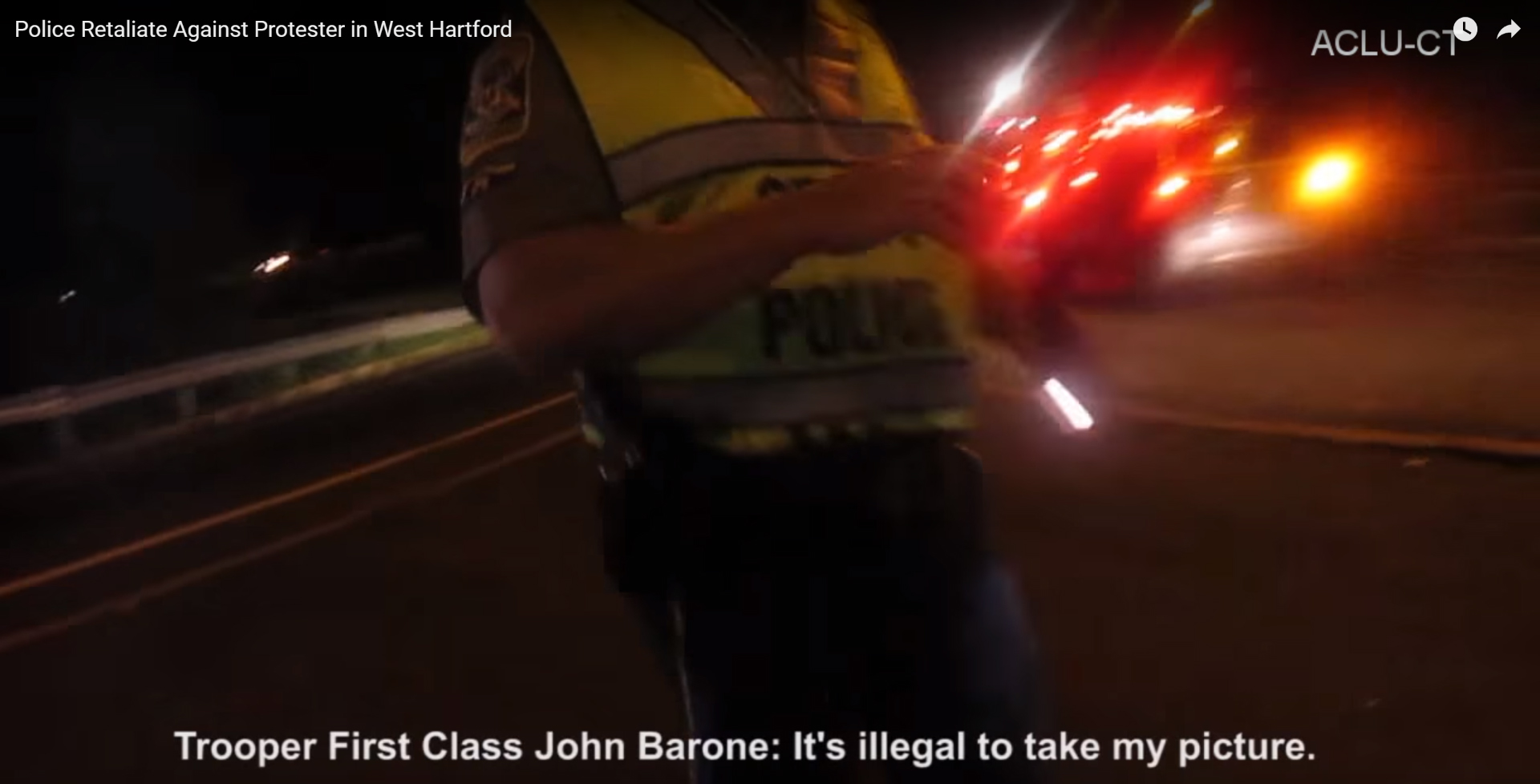
It shouldn’t take a viral video to secure justice
This week, jaw-dropping footage of three Connecticut state police officers appearing to fabricate criminal charges against a protester made international news. Meanwhile, two families lost loved ones to police violence in Oklahoma and North Carolina. Each of these incidents was caught on video. All have inspired outrage from people around the world. It still might not be enough to ensure justice—and that should frighten all of us.
Posted inCT Viewpoints
Is this justice for Aymir Holland?
Nearly all of the ways that the judicial system serves justice are unfair, and it is the poor, underprivileged citizens who are suffering.
According to NAACP.org, “African Americans now constitute nearly 1 million of the total 2.3 million people incarcerated population. African Americans are incarcerated at nearly six times the rate of whites.” Seeing those statistics, I can’t help assume that the justice system seems to have a bias that black people are all the same: that they’re all agitators of civilization. This bias isn’t the truth and is displayed by many African Americans including 17-year-old Aymir Holland.

Posted inCT Viewpoints
Gag me with Calhoun
After weeks of embarrassing publicity and political mobilization, Yale University has been forced to rehire Corey Menafee, an African American employee who was fired for smashing a stained glass window at Yale’s Calhoun College that depicted slaves shouldering bales of cotton. For over a year, Calhoun College has been the subject of intense national controversy because it is named after one of America’s foremost defenders of slavery and white supremacy. Menafee’s actions, firing, and now rehiring gave expression, and amplification, to the controversy. But now there’s a new source of controversy…

Posted inCT Viewpoints
CT Muslims and ex-Islamophobe unite to counter extremism
Our new brothers Dr. Jeffrey Cohen and Ted Hakey Jr., a former marine, are thrilled to join this year’s Jalsa Salana USA alongside myself, Dr. Mohammed Qureshi, our families, and the entire Ahmadiyya Muslim Community CT from Baitul Aman “House of Peace” Mosque in Meriden. In a world exuding hatred, strife, and bloodshed, we sorely look forward to being a part of another moving demonstration “love for all, hatred for none,” and hope to bring that promising remedy to the rest of Connecticut.

Posted inCT Viewpoints
With rights and Connecticut lives at stake, words matter
Quiet down, class. It’s time to review some definitions. This time, let’s focus on current events: “Black Lives Matter.” Here’s a phrase that has been incorrectly defined with increasing frequency. To insist on the value of African American lives is not to say that “all lives” don’t matter.
Posted inEducation, Politics
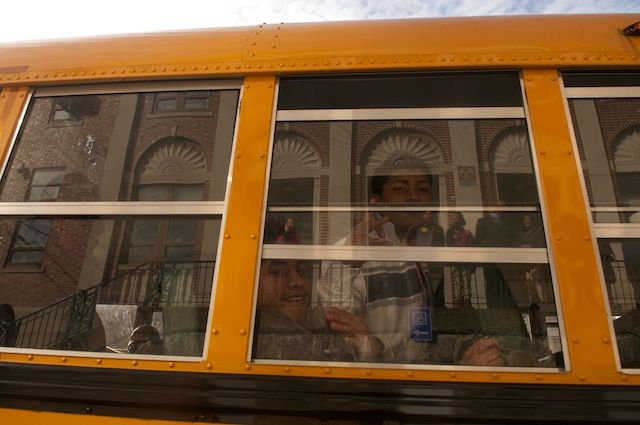
Teachers object to Obama administration plan for poor schools

WASHINGTON — As the Obama administration rolls out rules on how to implement the nation’s new federal education law, one proposal could shake up how money is spent on schools in the state’s poor neighborhoods.

Posted inPolitics
On MLK Jr. Day, a look in Connecticut at challenges ahead

A suburban pastor recalled Monday how Connecticut was the place where a teenaged Martin Luther King Jr. first escaped the Jim Crow laws of the racially divided South, a bittersweet experience that would profoundly shape King’s view of racial injustice in America. And a gay, white adoptive father of three black sons spoke of living a “transcultural life.” It was all in observance of the 30th Martin Luther King Jr. Holiday.

Posted inJustice
Hartford police begin New Year with old civil rights problem
It was the late 1960s and many American cities were ablaze with racial tensions involving police that often resulted in rioting and violence. Hartford was no exception. The result was a lawsuit and a legal agreement for the city to make a number of changes, including hiring more minority police officers. But after more than 40 years, the police force is still bound by the agreement and struggling to more closely mirror its community.

Posted inEducation
Murphy helping Congress scrap ‘No Child Left Behind’
WASHINGTON – U.S. Sen. Chris Murphy is part of a team of House and Senate lawmakers who hope to finish work on a bill this week that would overhaul federal education policy and eliminate the No Child Left Behind law.
Posted inCT Viewpoints
Body cams will help protect police from troublesome citizens, too
I have been a law enforcement officer with a mid-sized municipal agency for almost five years. The debate over whether officers should be wearing body cameras to me seems long overdue, but not for the reasons most are talking about. The reason I believe police should wear body cameras is to me not just a matter of checking our integrity and conduct (although that certainly will be a benefit), but is more a matter of checking the integrity and conduct of the people we come into contact with.
Posted inNews
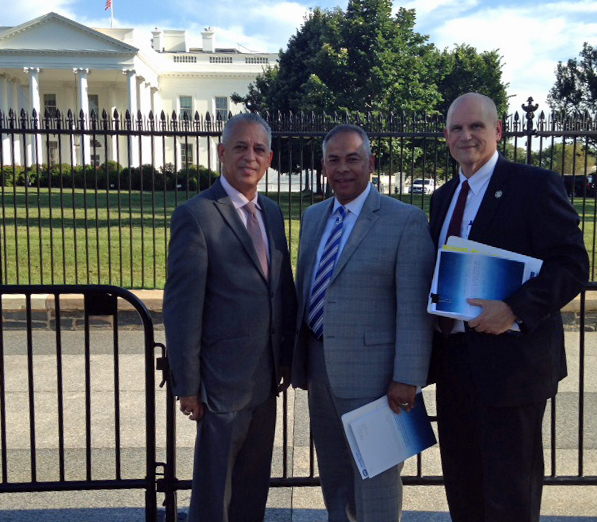
Hartford mayor, police chief, help Obama sell policing initiative
WASHINGTON – Mayor Pedro Segarra and Hartford Police Chief James Rovella were among dozens of officials invited to the White House Thursday to help President Obama promote a policing initiative aimed at preventing the types of police shootings that touched off riots in Ferguson, Mo., and Baltimore.
Posted inEducation, Politics
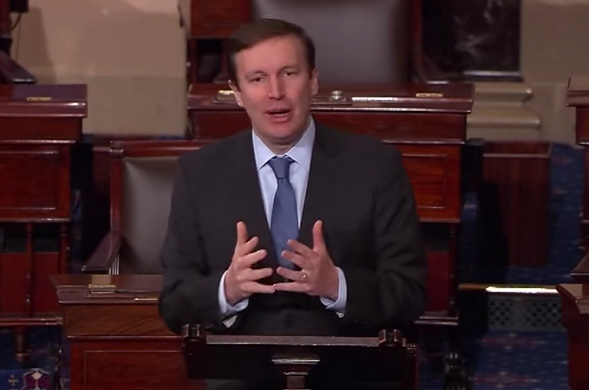
Murphy hopes to amend education bill to address civil rights concerns
WASHINGTON – Sen. Chris Murphy hopes to amend a new federal education bill so that problem schools and under-performing students could be more clearly identified — and given the help they need. The new bill before the Senate would replace the controversial No Child Left Behind Act.